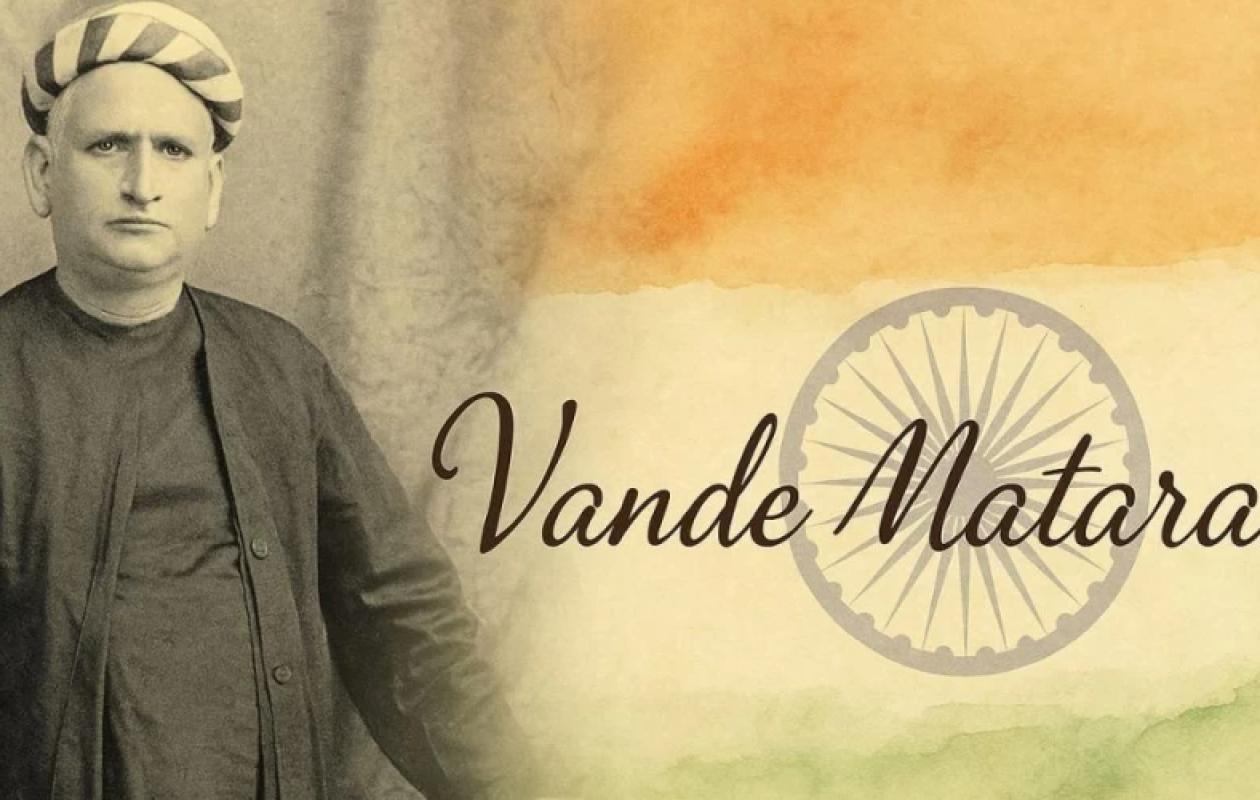
Vande Mataram à 150 ans : un hymne vivant de la foi d’une nation (par S.E. M. Dinkar Asthana, Ambassadeur de l’Inde au Sénégal)
There are moments in a nation's life when a song becomes much more than just a song. It becomes a memory, a message, and a movement. For India, Vande Mataram is one of those enduring expressions of the nation's collective consciousness.
India's independence was achieved after a long and arduous struggle for freedom, involving people from all walks of life who made significant sacrifices. Across regions, languages, communities, and generations, countless Indians contributed to the independence movement. At the heart of this awakening was a growing awareness of the dignity of the motherland and the right of its people to determine their own destiny.
Over time, a song became the rallying cry of this movement, a song born from a literary work but destined to occupy a central place among freedom fighters: Vande Mataram . Vande Mataram emerged during a period of profound social, cultural, and political transformation in India. The song is believed to have been written on November 7, 1875 , before being published in the literary journal Bangadarshan , as part of Bankim Chandra Chatterjee's novel Anandamath .
His strength lay not only in his poetry. By evoking the motherland as an embodiment of strength, prosperity, and divinity, Vande Mataram gave poetic expression to a burgeoning spirit of unity and self-respect. He transformed love of the homeland into a powerful collective sentiment. The motherland, Maa Bharati, was not conceived as an abstraction, but as an entity worthy of devotion, service, and sacrifice. The song became a call to awakening, unity, and the reclaiming of the dignity that the colonial regime had sought to suppress. The history of India's independence movement is inextricably linked to that of Vande Mataram. The song quickly resonated in public gatherings, within political movements, and among generations of freedom fighters. Its lyrics transcended linguistic and regional boundaries and became a shared expression of patriotic feeling.
The significance of Vande Mataram did not end with independence. On January 24, 1950 , as India prepared to become a republic, Dr. Rajendra Prasad, President of the Constituent Assembly and the first President of independent India, made a historic declaration concerning the status of Vande Mataram. Recognizing its historic role in the struggle for freedom, he declared that it would be honored in the same way as India's national anthem, Jana Gana Mana, and would enjoy the same status . This constitutional moment reflected a deeper reality: the recognition that nations are not built solely on institutions and laws, but also on shared memories, symbols, and cultural expressions.
Vande Mataram has thus continued to hold a special place of honor in Indian public life. It is sung at official ceremonies, public gatherings, and in schools. For many Indians, their earliest memories may not be of a historical political gathering, but of their childhood when they stood in the schoolyard and sang together with their classmates.
It is in this historical context that India is organizing a year-long national commemoration, from November 7, 2025, to November 7, 2026, to mark the 150th anniversary of the composition of the anthem. The commemoration was launched in New Delhi on November 7, 2025, with the issuance of a commemorative stamp and coin, as well as a collective performance of the National Anthem across the country.
As Indian Prime Minister Narendra Modi pointed out at the opening of this 150th anniversary commemoration, Vande Mataram has become a powerful expression of the nation's consciousness, a source of confidence in the present and determination for the future.
The enduring popularity of Vande Mataram stems from its ability to transcend eras. India in 2026 is profoundly different from India in 1875. We are now a democratic, diverse, and rapidly developing nation, increasingly engaged in the world and aware of our place within it. Yet, the core ideas embodied by Vande Mataram—love of the motherland, unity, dignity, collective determination, and service—remain remarkably relevant.
The 150th anniversary is therefore not simply an occasion to look back. It also offers an opportunity to reflect on the meaning of these values for India today. Honoring the sacrifices of previous generations also means accepting responsibility for the present. Patriotism is not merely an emotion; it is expressed through service, integrity, compassion, and a commitment to the well-being of society. National pride takes on its full meaning when it is accompanied by the determination to build a more just, inclusive, and prosperous society.
This is why the commemoration seeks to involve people of all generations and from all segments of society. Collective singing and various other activities have been organized throughout India, transforming remembrance into a participatory national experience.
The reach of Vande Mataram extends far beyond the geographical borders of India. Millions of Indians and people of Indian descent live, work, and contribute to the development of societies around the world. For them, expressions of Indian identity can take on a special significance when experienced far from the land of their ancestors.
The Indian diaspora in Senegal and elsewhere has an important role to play in this 150th anniversary commemoration. Collective singing, cultural programs, and community initiatives offer an opportunity not only to celebrate India's history but also to share an important part of Indian cultural heritage with our friends and fellow citizens in our host countries.
In this sense, Vande Mataram carries a particularly significant message for Indians living abroad. He reminds us that identity can be both deeply rooted and forward-looking: rooted in history and heritage, while also being open to friendship, cooperation, and shared aspirations with the rest of the world.
The relationship between India and Senegal, based on mutual respect and a shared commitment to cooperation among developing countries, gives this message particular resonance. Cultural exchanges help deepen understanding between peoples, and music has a unique ability to transcend the boundaries that geography and language might otherwise create.
As we celebrate the 150th anniversary of Vande Mataram, we must remember that the greatest tribute to the generations who fought for India's freedom is not just to remember their sacrifices, but to live according to the values for which they fought.
For us today, this responsibility means serving India with dedication; upholding the values of justice, inclusion, and democratic participation; strengthening the bonds that unite our extraordinary diversity; and ensuring that the fruits of progress benefit all components of society.
This also means carrying this spirit beyond our borders. The contribution of the Indian diaspora is an important part of India's international history. Those living abroad remain important ambassadors of India's culture, values, entrepreneurship, and spirit of service, while also making significant contributions to the societies in which they live.
His words carry the memory of a people who yearned for freedom. His story recalls the sacrifices that made independence possible. And his enduring popularity invites us to reflect on the India we wish to pass on to future generations.
Let us make this 150th anniversary more than just a commemoration. Let us make it a renewed commitment to honor those who came before us, to serve our society today, and to build an India defined by unity, ambition, inclusion, dignity, and respect .
I am certain that Senegal, like many other countries that have experienced foreign domination, possesses songs, poems, and artistic compositions extolling loyalty to the motherland, which galvanized their people to fight for independence and claim the rights that had been denied them. We pay tribute to them.
And as we sing Vande Mataram together in India and around the world, let us remember that the true strength of a national song lies not only in the voices that sing it, but in the values to which those voices pledge to remain faithful.
Vande Mataram.
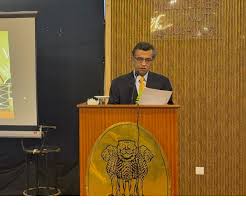
Author: H.E. Dinkar Asthana, Ambassador of India to Senegal and Guinea-Bissau, and High Commissioner of India to The Gambia





















Commentaires (0)
Participer à la Discussion
Règles de la communauté
💡 Astuce : Utilisez des emojis depuis votre téléphone ou le module emoji ci-dessous. Cliquez sur GIF pour ajouter un GIF animé. Collez un lien X/Twitter, TikTok ou Instagram pour l'afficher automatiquement.
Se connecter
Commentez avec votre profil, votre photo, et soyez averti des réponses.