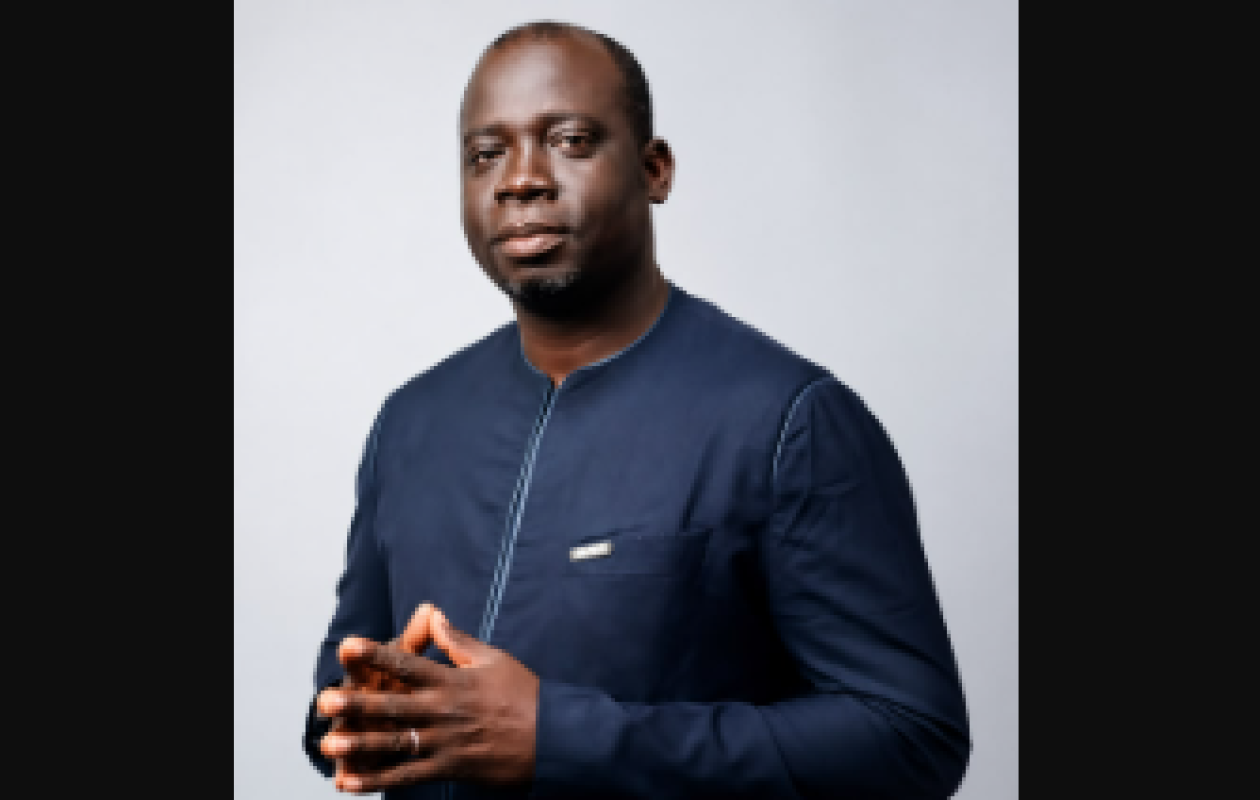
Xeel-Koom : pourquoi le Sénégal a besoin d’une nouvelle doctrine de développement (Par Pr Balla Diop Ngom)
Senegal is often portrayed as a land of paradoxes. We have a large youth population, enviable institutional stability, significant natural resources, a dynamic diaspora, renowned universities, a rapidly evolving private sector, and an exceptional geographical location. Yet, despite these numerous advantages, our country still struggles to cross the threshold that separates developing economies from truly emerging economies.
This contradiction deserves to be examined with clarity.
For several decades, our public debate has been dominated by questions of personalities, coalitions, political shifts, and economic conditions. With each election, promises are made one after another, programs multiply, and speeches sound alike. Yet, structural difficulties persist: youth unemployment, weak industrialization, dependence on imports, insufficient processing of our raw materials, a fragile productive sector, inadequate scientific research, and a mismatch between education and the real needs of the economy.
These difficulties are not solely due to a governance deficit. They primarily reflect the absence of a coherent national doctrine capable of uniting all the country's vital forces around a common vision.
It is precisely this reflection that led to the development of the Xeel-Koom doctrine, the intellectual foundation of the New Covenant.
The term Xeel-Koom is deeply rooted in our culture. In Wolof, Xeel refers to intelligence, reflection, wisdom, and the ability to understand and anticipate. Koom evokes wealth, resources, and, more broadly, the tangible and intangible heritage of a nation. Together, these two concepts express a simple yet crucial idea: a country's resources only have value if its collective intelligence is capable of transforming them into lasting prosperity.
Global economic history confirms this fact. The nations that dominate the international economy today are not necessarily those with the largest reserves of oil, gold, or gas. They are primarily those that have invested in education, research, technology, innovation, and the quality of their institutions. Their wealth stems less from what they extract from their subsoil than from what they produce through knowledge.
Senegal has no shortage of resources or talent. What it lacks is a coherent organization of these resources and talents around a long-term national project.
For a long time, we conceived of development through redistribution. We debated how to share wealth before even questioning how to produce it. This approach is now reaching its limits.
The real economic question is not: how to share more? It is: how to produce more?
This distinction is essential.
In our country, a worker's salary far exceeds its economic function. It often constitutes the main income for several families. Behind the salary of a teacher, a nurse, a civil servant, or a private sector employee, there are sometimes elderly parents, brothers, sisters, nephews, or relatives living in rural areas. A single income supports several people.
This solidarity constitutes a remarkable social asset. But it also reveals a worrying economic reality: our productive system does not create enough wealth to allow each household to have independent income.
Increasing wages without increasing productivity is tantamount to distributing wealth that has not yet been created. In the long run, this strategy becomes unsustainable.
This is why the Xeel-Koom doctrine states that wages will always remain insufficient as long as national productivity remains low.
This statement is not a criticism of workers. On the contrary, it constitutes a call for a profound transformation of our economic model.
For the New Alliance, this transformation rests on four inseparable pillars: youth, science, industry and governance.
Youth is our greatest asset. It must no longer be viewed solely as a population to be trained or employed. It must become the primary force for value creation. The real challenge is not only to create jobs for young people, but to cultivate a generation capable of creating businesses, technologies, industries, and solutions tailored to the needs of Senegal and Africa.
Science represents the second pillar. In many countries, scientific research remains confined to university laboratories. Xeel-Koom proposes placing science at the heart of public decision-making. Every national policy should be informed by data, evidence, experimentation, and innovation. Universities and research centers must become permanent partners of the state and the private sector.
The third pillar is industry. No country has ever achieved sustainable development without processing its resources locally. Exporting raw materials only to import manufactured goods later means ceding the most value-creating part of the economy to others. Industrialization is therefore not an option; it is a strategic necessity.
Finally, governance constitutes the fourth pillar. A high-performing economy cannot prosper sustainably without strong institutions, a credible justice system, transparency, and a culture of evaluation. Governing is no longer simply about administering; governing is about producing measurable results.
These four dimensions must not evolve in isolation. They must function as an integrated system. A well-educated youth fuels research. Research drives innovation. Innovation strengthens industry. Industry creates jobs. Jobs sustain growth. Growth funds education and research. This is the virtuous cycle proposed by Xeel-Koom.
This doctrine does not merely seek to address economic challenges. It also aims to reconcile politics with knowledge. For too long, public action has been conceived in response to emergencies, driven by crises or electoral deadlines. It is time to rehabilitate strategic planning, foresight, and the scientific evaluation of public policies.
Senegal now has a historic opportunity. Digital, energy, industrial, and demographic transitions are reshaping the global economy. Countries that invest in artificial intelligence, advanced technologies, innovative materials, clean energy, healthcare, smart agriculture, and the knowledge economy will be the major powers of tomorrow.
Our ambition is for Senegal to be among these nations.
The Xeel-Koom doctrine does not claim to provide definitive answers. It primarily offers a method of reflection and a clear direction. It encourages moving beyond traditional divisions to build a national vision based on knowledge, work, production, and responsibility.
Because, ultimately, true development depends neither on luck nor on the abundance of natural resources. It depends on a people's ability to organize its collective intelligence around a common project.
This conviction is what drives the New Alliance.
And it is this conviction that is summarized by the Xeel-Koom doctrine:
"Where knowledge informs decision-making, where science fuels innovation, where industry creates wealth, and where youth embodies collective ambition, a sovereign nation is born, prosperous and master of its own destiny."
















Commentaires (6)
Participer à la Discussion
Règles de la communauté
💡 Astuce : Utilisez des emojis depuis votre téléphone ou le module emoji ci-dessous. Cliquez sur GIF pour ajouter un GIF animé. Collez un lien X/Twitter, TikTok ou Instagram pour l'afficher automatiquement.
Se connecter
Commentez avec votre profil, votre photo, et soyez averti des réponses.