
Jambaar : la concession du Môle 4, un ancrage sénégalais pour une vision continentale
A terminal, rivers, a nation reconnecting with itself. The Jambaar consortium is redrawing the map of Senegalese trade. An analysis of a project worth over 120 billion CFA francs, entirely financed by national and international private sectors.
On September 18, 2025, the Board of Directors of the Autonomous Port of Dakar (PAD) approved the concession of Pier 4 to the Jambaar consortium for the design, financing, construction and operation of a multi-purpose multimodal terminal, the implications of which will profoundly transform the Senegalese maritime and port ecosystem.
An international consortium
Jambaar is a consortium of companies comprising Senegalese, Belgian, and Spanish partners. It includes AIG Marine & Terminal (Senegal), a subsidiary of the Maor Group and the majority shareholder with 33.3% of the shares; the shipping company Conti-Lines (Belgium); the port operator Ership Group (Spain) – which controls more than 40 terminals worldwide; and the Port of Antwerp-Bruges International (PoABI), one of Europe's leading port hubs. The capital structure stipulates that PoABI and PAD each hold 20% of the capital (10% each), with the remainder distributed among the private shareholders.
This project wasn't completed in a few months. It took over three years to develop, passing through three successive directors general of the Port Authority of Dakar (PAD) and a major political shift, without Jambaar ever losing its way. Initiated under one administration, developed under another, and approved under a third, it prevailed thanks to its technical soundness, economic ambition, and strong institutional support. Review by the Public Procurement Regulatory Authority (ARCOP) and the use of a Temporary Occupation Authorization (AOT) – a legally regulated procedure, capped at 25 years and subject to the payment of fees – ultimately transformed it into a nationally significant, competitive, inclusive, and consensual project with the support of all stakeholders.
The crux of the problem: the Port of Dakar is suffocating
To understand Jambaar's vision, one must begin with a simple yet far-reaching observation: 99% of goods entering Senegal pass through the Port of Dakar. Of this volume, 65% remain in the capital, while only 35% reach the interior of the country and sub-regional markets. The Port alone accounts for two percentage points of GDP growth. With oil and gas production now underway, this strategic value increases even further.
The tangible result of this concentration: thousands of trucks clog Dakar's arteries daily, damaging roads, polluting the air, and slowing the delivery of goods to the regions. Carriers lose entire days waiting at the port before they can reach the interior of the country. The expected benefits of Jambaar are not solely financial. They are also, and above all, operational: improved fluidity of port operations, reduced congestion within the port area, and the establishment of a seamless logistics interconnection linking Dakar to regional ports, in a model of decongestion and decentralization of port activities.
A historical debt to the inland territories
This logistical imbalance is not accidental. It is the legacy of a deliberate colonial strategy. Upon leaving the African continent, the colonial powers methodically dismantled inland connectivity infrastructure—starting with the railways—to ensure that no strong, self-reliant African economy could emerge in their wake. The objective was clear: to maintain structural dependence by concentrating trade flows on coastal ports at the expense of inland territories, condemning them to isolation. Senegal's once-flourishing regional ports—Kaolack was the second largest in the sub-region—were thus progressively drained of their vitality, their agricultural hinterlands disconnected from markets, and their populations deprived of the added value generated by trade. Decades later, Senegal inherits this intentionally mutilated infrastructure. It is precisely this observation that led AIG Marine & Terminal, majority shareholder of the Jambaar consortium, in view of the vision of the authorities of Senegal, to build a project which aims to repair what history has broken: to give back to the rivers, waterways and regional ports the economic role which has been confiscated from them.
What Jambaar actually proposes
Phase 1 - The Pier 4 Multimodal Terminal. Immediate investment of 54 billion FCFA (out of a total of 120 billion), with an initial investment of 2.5 billion FCFA. Pier 4, currently underutilized, will be transformed into a terminal capable of accommodating vessels of 50,000 to 60,000 tons, with a quay dedicated to river and maritime traffic. This terminal anticipates the gradual relocation of activities to the future Port of Ndayane: it is designed to serve the Dakar population, who will not be displaced by these infrastructures.
Phase 2 – River-sea routes. Barges will connect the Dakar terminal to regional ports via inland waterways. Goods will thus be transported by water, freeing up urban roads and reducing delivery times to the regions. A dredging phase will be necessary to restore the navigability of the waterways, following detailed studies.
Phase 3 – Rehabilitation of regional ports. Kaolack, Ndakhonga, Ziguinchor, and Saint-Louis are the priority targets. Jambaar intends to restore their role as local economic catalysts: agriculture, fishing, hydrocarbons, and Malian transit traffic. The project also aligns with the national ambition for a deep-water port in Casamance.
A direct impact on the daily lives of Senegalese people
Beyond the figures presented and the technical aspects, Jambaar addresses very concrete realities for the population. Senegalese consumers currently bear the indirect cost of port congestion: longer supply delays and inflated food prices due to truck transport and parking fees. By streamlining the supply chain, the project aims to have a direct impact on household budgets. For dockworkers and port employees, job opportunities will no longer be concentrated solely in Dakar: the project anticipates the creation of over 500 jobs at the Môle 4 terminal and, more broadly, thousands of jobs around the rehabilitated regional ports; it will also open up new economic hubs in areas that are currently economically marginalized. For farmers in Casamance, Sine-Saloum, and the Senegal River Valley, access to functional port infrastructure represents the opportunity to sell their produce at competitive prices and finally access sub-regional and international markets.
A financial model with no burden on the State
The Jambaar project is financed without any public funding. The entire 120 billion FCFA is provided by the consortium members. In return, the Port Authority of Douala (PAD) will receive fixed port fees (for land use) and variable fees (based on the volume of traffic handled).
The state, for its part, will benefit from the tax revenue: customs duties, VAT, and social security contributions linked to the jobs created, both in Dakar and in regional ports. Beyond the infrastructure, Jambaar also represents a major social driver: the project anticipates the creation of thousands of jobs, generating a significant payroll that will replenish state coffers with social security contributions and taxes, while simultaneously reducing unemployment in areas long neglected. This is a rare business model in the landscape of major African infrastructure projects, where state participation in financing is often the norm, to the detriment of social budgets.
A logic of sub-regional integration
Beyond Senegal, Jambaar is part of a vision for a regional logistics hub. Malian traffic already transits massively through Dakar. The rehabilitation of regional ports and the development of river-sea routes will reposition Senegal as a preferred gateway for landlocked Sahelian countries whose agricultural economies need access to international markets. The project aligns with the priorities of the Senegal 2050 Vision, which identifies eight economic hubs, four of which have port access. In this sense, Jambaar is not just a Senegalese project—it is a project for West Africa, built from Dakar.
A project for national economic sovereignty
Jambaar breaks with a pattern that has been repeated for far too long: that of foreign investors coming to the Port of Dakar solely to capture existing traffic, without creating new value for the national economy. Here, the logic is reversed. Not only does the consortium capture traffic, but it also creates it where it didn't exist before—particularly on the connections between Dakar and the historically sparsely populated regional ports. It is precisely this capacity to generate new traffic that distinguishes Jambaar from all other port concessions known to date. And this project is Senegalese, led by a Senegalese national, with a majority shareholder deeply rooted in the national business community—a first in the history of the Port of Dakar. National sovereignty over the infrastructure, guaranteed by the Temporary Occupation Agreement (AOT) and the ARCOP legal framework, as well as the PAD's (Port Authority of Dakar) entry into the capital, aim to consolidate this break and make it a sustainable model for the governance of the country's strategic infrastructure.
With Jambaar, Senegal is equipping itself with an integrated multimodal logistics network -- port, river, region -- which revives an overall vision abandoned for decades. The President of the Republic has a vision: to build a deep-water port in Casamance. This is a sound idea. Jambaar is currently working to bring this vision to fruition, for the benefit of Senegal and for connectivity within the sub-region. The launch of construction on Pier 4 will mark the beginning of a new era for national logistics, serving the people, transporters, regional economies, and the country's continental ambitions.
To Jambaar's detractors
Jambaar is not an opportunistic setup , but the result of a shared analysis: the same causes produce the same effects and the same observations logically lead to the same solutions.
Jambaar embraces its role as a developer , because the goal isn't to bring together stakeholders who lack the vision and resources to entrust them with a terminal. Look at the current state of Pier 4. It's not generating revenue for the port of Dakar; quite the opposite, it's costing the Senegalese government a great deal of money…
Jambaar will not be the concessionaire trapped by acquired situations, refusing to open itself up to new investments and greater competitiveness.
Jambaar did not sign its concession agreement without a thorough legal analysis that led to the selection of the Temporary Occupation Authority (AOT) whose criteria aligned with the project's core principles. It is important to note that Law 2021-23 on Public-Private Partnerships (PPPs) does not supersede Law 92-63 on AOTs.
Jambaar will stand against past controversies that may have affected investors' perceptions of the principle of continuity of state services. Any questioning of administrative or contractual commitments already made must always be assessed with caution, taking into account its consequences for legal certainty, the country's attractiveness, and public finances. It should also be noted that the Jambaar agreement is by far the least restrictive of all the concessions signed at the Port of Dakar (PAD), as it alone does not require exclusivity.
Jambaar responds , with scrupulous respect for local content, to an issue that therefore goes beyond the defense of an individual or a company at the expense of the general interest, the status quo on Môle 4 is over! He questions Senegal's ability to bring forth national champions capable of carrying out strategic development projects.
BOX — WHO IS THE PROMOTER OF JAMBAAR?
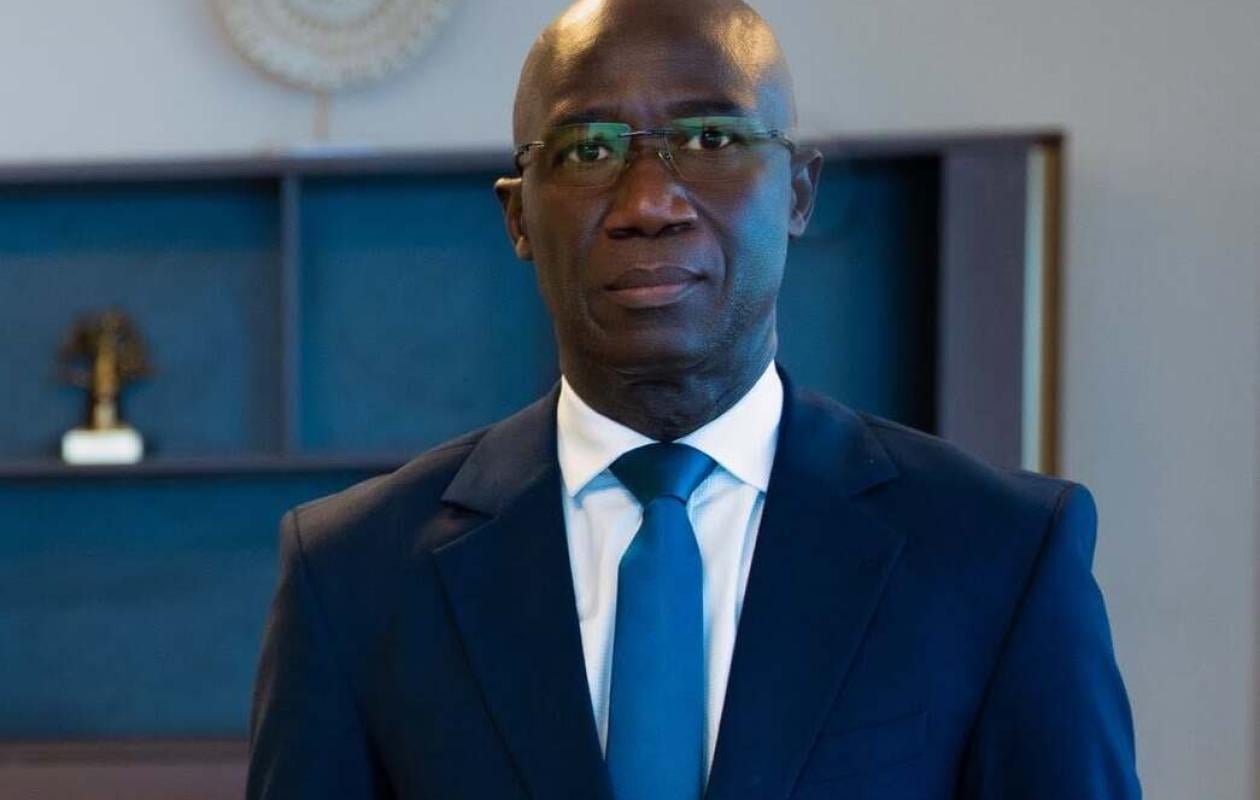
Modou Mamoune Sène is a Senegalese entrepreneur from a Baol-Baol family with a long entrepreneurial tradition. He is the son of Alla Sène, a pioneering figure in Senegalese business, founder of the National Union of Senegalese Importers-Exporters (UNIMES) in 1973 and a founding member of the National Confederation of Employers of Senegal (CNES). Drawing on these pan-African and economic influences, Modou Mamoune Sène defines himself not as a business leader, but as a developer—a builder of projects serving his country.
It was with this in mind that he founded AIG Marine & Terminal, a subsidiary of the Maor Group, whose primary ambition is the development of ports in Africa. Driven by this vision, he dedicated three years to designing, structuring, and leading the Jambaar project, convinced that Senegal's natural geography—its coastline, its rivers, its position as a sub-regional crossroads—is an underutilized asset. "A struggle," he says, "that taught him the essentials about the true economic challenges facing his country."










![[Exclusif] : Ass Dione confronté par le juge d’instruction à 3 de ses présumés amants](https://image.seneweb.com/content/news/2026-26-25//thumb_1260x800_6a3d4ac0555d3_9OCWAjqjOR.jpeg)









Commentaires (7)
Participer à la Discussion
Règles de la communauté :
💡 Astuce : Utilisez des emojis depuis votre téléphone ou le module emoji ci-dessous. Cliquez sur GIF pour ajouter un GIF animé. Collez un lien X/Twitter, TikTok ou Instagram pour l'afficher automatiquement.