
Bilan prénuptial : Les examens indispensables à faire avant de se dire « oui »
In Senegal, marriage remains an institution deeply rooted in social, cultural, and religious realities. But as health challenges evolve, one question is increasingly prominent in the journey of future spouses: that of the premarital health check-up. Long relegated to the background, sometimes perceived as an intrusion into the private sphere or a sign of distrust, it now appears as an essential preventative tool, at the crossroads of medical imperatives, individual responsibilities, and religious values.
Recent HIV transmission scandals, exposed in a major legal case involving mostly HIV-positive men, have reignited the debate. Partners or spouses of the accused were forced to undergo testing to determine their HIV status.
Beyond HIV and sexually transmitted infections, other conditions such as hepatitis B and genetic or hereditary diseases (like sickle cell anemia) pose significant challenges. A premarital health check-up is neither mandatory nor a mere formality, but rather an act of foresight that is useful for prevention and beneficial for the couple and their future children.
A comprehensive biomedical tool for anticipating risks
“It’s not a single test, but a series of examinations,” emphasizes Dr. Babacar Ndiaye, a medical biologist and pharmacist. The premarital assessment relies on a dual approach, clinical and, above all, biological, allowing for the identification of situations that could compromise the health of the spouses or that of their future children.
Two main categories of diseases are primarily targeted: infectious diseases and genetic diseases. For infectious diseases, tests focus on HIV, hepatitis B, and, depending on the context, hepatitis C or syphilis. These diseases share a mode of transmission through blood and bodily fluids, which makes them a concern for couples. Genetic diseases, on the other hand, primarily aim to detect hereditary abnormalities.
The challenge of hepatitis B and HIV
The case of hepatitis B is emblematic. Senegal is among the areas of high endemicity, with prevalence rates estimated at around 12%, meaning approximately one in ten people are chronic carriers of the virus. Knowing one's status allows individuals to protect their partners through vaccination and to anticipate appropriate care.
Regarding HIV, although the national prevalence remains relatively low, it varies by region, with higher rates in the south of the country. Early detection is crucial to prevent transmission within couples.
Sickle cell disease: a genetic disease at the heart of concerns
Widespread in West Africa, sickle cell disease is a hereditary condition that constitutes a major public health challenge. It is linked to an abnormality of hemoglobin, the protein responsible for transporting oxygen in the blood, where normal hemoglobin (A) is replaced by an abnormal form (S).
Its transmission follows an autosomal recessive pattern. If both parents carry the AS gene, the couple has a 25% chance of having a child with the severe form (SS), a 50% chance of having a child who is a healthy carrier (AS), and a 25% chance of having a child who is unaffected (AA). Conversely, if one parent is AA and the other is AS, the couple cannot have a child with the severe form (SS).
Dr. Ndiaye clarifies, however, that genetic risk is not a formal contraindication to marriage. Premarital screening is used to assess risks and to access genetic counseling, even though advanced assisted reproductive technologies such as the selection of embryos free from the anomaly remain relatively unavailable in Senegal.
HIV: Testing for prevention and support
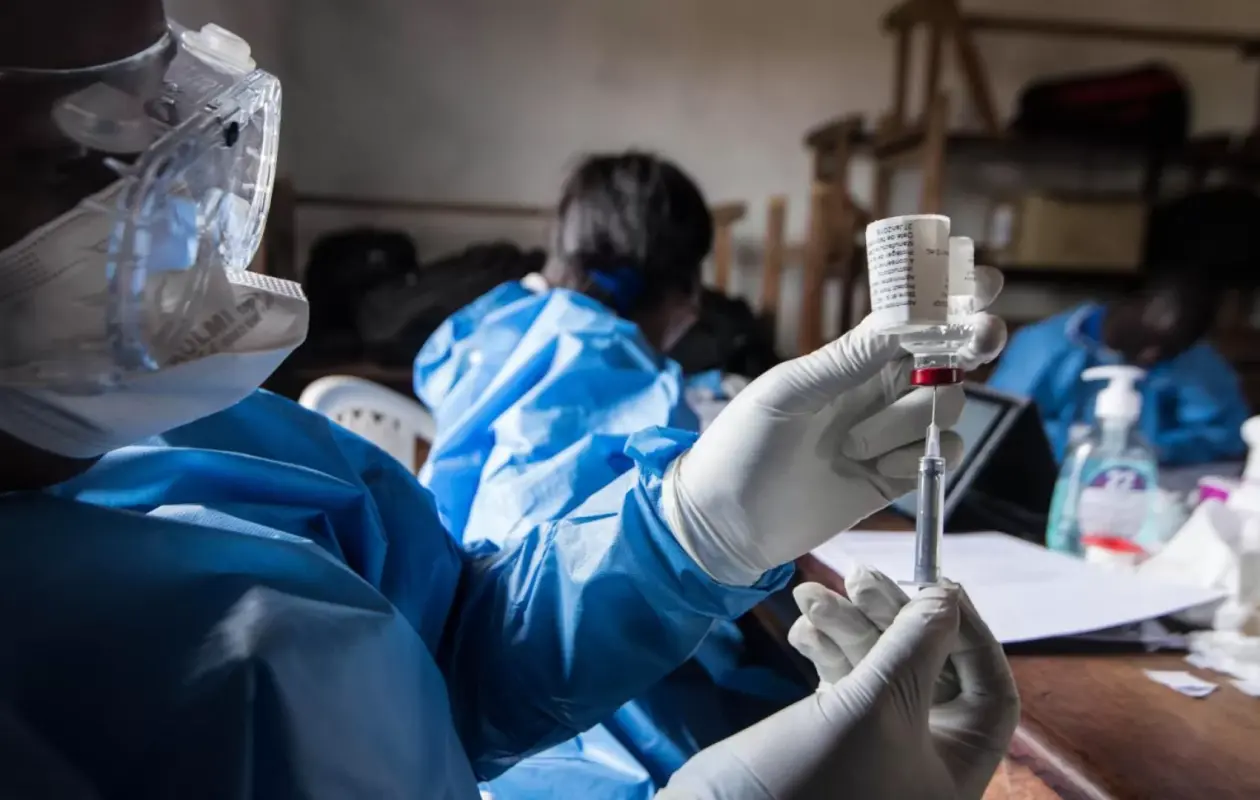
Dr. Fatima Ly, an infectious disease specialist and public health expert, emphasizes the central role of premarital HIV testing. In Senegal, this testing offers numerous advantages because it is free, anonymous, and accessible in all health facilities and at the community level. Furthermore, results are available in 15 minutes, either through a blood test or oral tests, and are accompanied by pre-test counseling for couples to provide information on modes of transmission and treatments.
Medical Outcome Management and Progress
Three types of results are possible: negative, positive, or indeterminate. In the event of a positive result, support is offered immediately. Thanks to early initiation of antiretroviral treatment, the viral load can become undetectable within six months. A person with an undetectable viral load no longer transmits the virus, allowing serodiscordant couples to lead a normal sexual and reproductive life.
Furthermore, significant progress has been made regarding mother-to-child transmission. HIV and hepatitis B screening is integrated into prenatal consultations in Senegal. With antiretroviral treatment during pregnancy and appropriate prophylaxis at birth, the risk of transmission is considerably reduced. The mother may not transmit HIV to her child, and the child can breastfeed safely, as Dr. Ly points out.
A recommended but not mandatory practice
Premarital health assessments are not mandatory in Senegal. They are a voluntary process that is strongly recommended, described by professionals as demonstrating a "high sense of responsibility." Although the practice is still not deeply ingrained culturally, professionals are observing a positive shift in attitudes and are seeing an increasing number of couples for consultations.
A religious perspective: between prevention, morality and freedom
Senegalese religious authorities do not oppose prenuptial health checks; quite the contrary.
From an Islamic perspective, Imam Ahmadou Mactar Kanté explains that, even without explicit text in the Quran or Hadiths, Islamic law permits this practice. Concealing a serious illness before marriage is considered deception, endangering others, and a moral failing that can invalidate consent to the marriage. However, Islam does not mandate abandoning the union based on medical probabilities; the final decision rests entirely with the prospective spouses.
Regarding the Catholic Church's position, Father Alphonse Diogoye Diouf emphasizes that premarital health assessments are strongly encouraged as an act of truth and responsibility, fostering responsible parenthood. Except in exceptional circumstances, no illness constitutes an automatic impediment to marriage; the Church prioritizes human dignity, the confidentiality of results, and providing support to couples.
Between love, faith, and the usefulness of an informed choice
The premarital health assessment is purely preventative. Far from stigmatizing or discouraging, its aim is to inform future spouses so they can build their home with full awareness. The major challenge now is the social acceptance of this approach by dismantling taboos, raising awareness on a large scale, and facilitating access to testing so that this step becomes a natural part of marriage preparation. Because ultimately, to love is also to protect.



















Commentaires (25)
Participer à la Discussion
Règles de la communauté
💡 Astuce : Utilisez des emojis depuis votre téléphone ou le module emoji ci-dessous. Cliquez sur GIF pour ajouter un GIF animé. Collez un lien X/Twitter, TikTok ou Instagram pour l'afficher automatiquement.
Se connecter
Commentez avec votre profil, votre photo, et soyez averti des réponses.