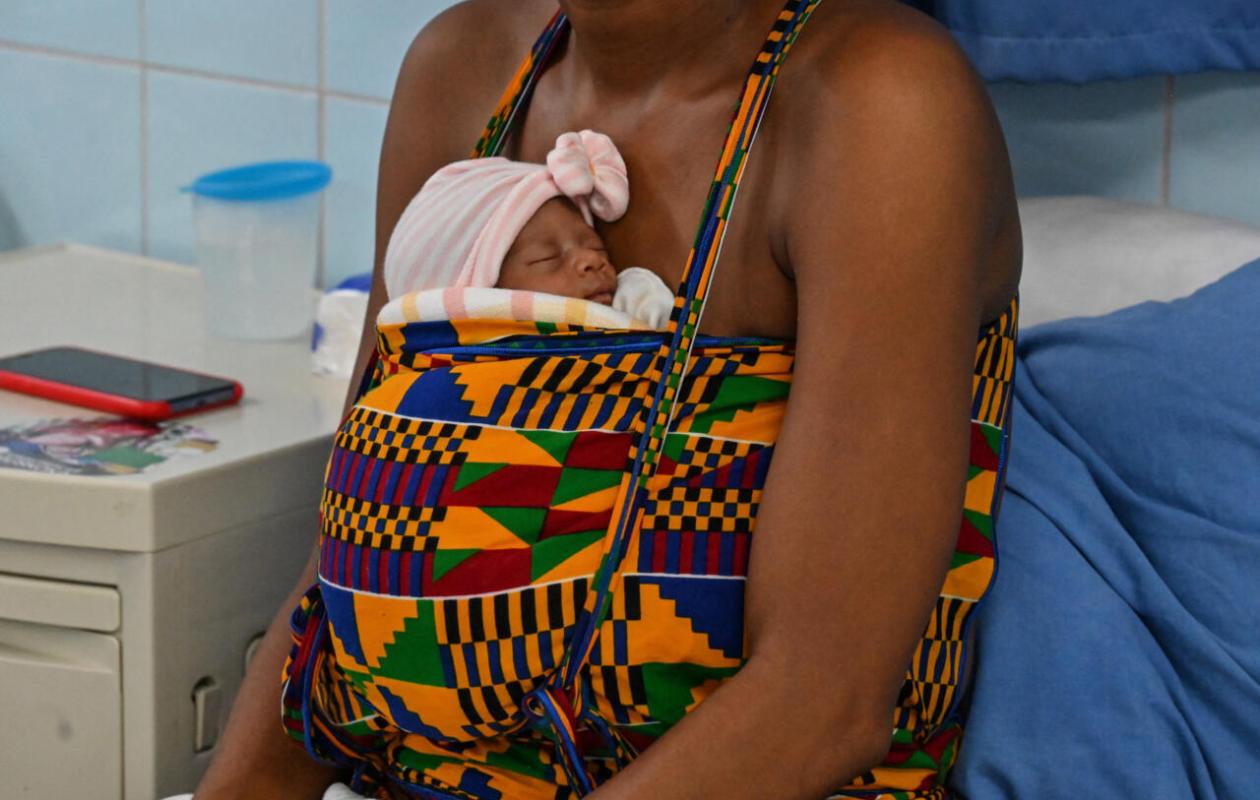
Congé de maternité : 14 semaines de calvaire, 18 semaines d’espoir… et une nouvelle peur chez les femmes (1/2)
Fourteen weeks. For some new mothers, that's barely enough time to recover from childbirth, survive sleepless nights, and find childcare for a baby still entirely dependent on them. When it's time to return to work, some give up their careers, others go back with their baby in tow, while still others cobble together solutions to avoid losing their jobs.
Senegal is preparing to extend maternity leave from 14 to 18 weeks. Four more weeks, long demanded by working women. A relief, certainly. But also a new concern: could these additional weeks make women less "employable" in the eyes of some employers?
There are times when becoming a mother forces you to make a choice you never imagined you'd have to make. For some women, returning to work comes while the baby is still entirely dependent on them, and the question of childcare remains unresolved.
In 2022, after four years working for a private company, 27-year-old Gina Henriette faced this dilemma. She had given birth by cesarean section. At the end of her maternity leave, her body wasn't fully recovered. Her young daughter was frequently ill and only calmed down when breastfed. There was no one to look after the baby. She had to choose between returning to work or staying with her child.
"I had a cesarean section. I wasn't in a position to go back to work after my three months of leave because I wasn't fully recovered yet and I couldn't entrust my baby to another person. My daughter was too small, sickly, and cried all the time. Only breastfeeding could calm her," she says.
"I knew that if I went back to work at that time, I wouldn't be as productive as before because I wouldn't have a clear conscience leaving it behind. That's why I buried my professional career," adds the young mother.
Then came difficult times, during which Gina Henriette faced intense psychological pain: "I spent almost a week crying. I even sometimes resented my baby, who is innocent. I sometimes thought that if he hadn't come, maybe I wouldn't have had to give up my job."
Today, her daughter is grown. But Gina is still struggling to find a job. With her husband's support, she runs a cosmetics shop and a convenience store in front of their home: "It's a whole dream shattered despite all the degrees I've earned. Women don't deserve this. It's really time this law was enforced and, if possible, childcare facilities should be opened in companies to save the professional careers of these brave women," she asserts.
Returning to work: an uphill battle
Many mothers have faced painful experiences like these. Other young mothers have experienced them in different ways. Ms. Dia, for example, is a teacher at a Franco-Arab school in Keur Massar. Having become a mother in 2022, she was able, unlike Gina, to keep her job. But she had no childcare options. Wishing to continue exclusive breastfeeding, she chose to bring her baby to school.
"I had no one to help me and I couldn't leave him in daycare because I'm very keen on exclusive breastfeeding. So, I brought him with me to school every day," she told us.
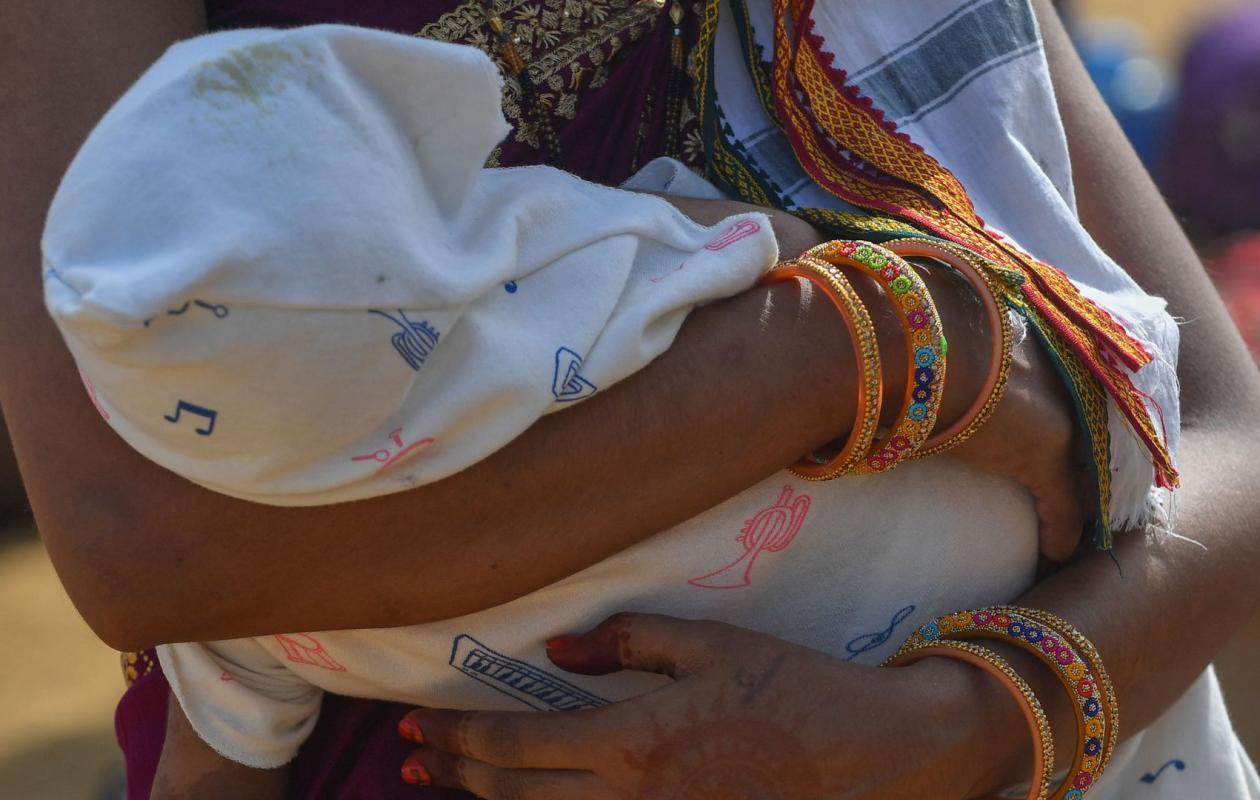
The baby was placed in a corner of the classroom. She sometimes held him in her arms. But minor incidents were not uncommon, as the little one's crying occasionally interrupted the lessons: "I suffered for at least six months. I was already spending sleepless nights, and during the day school was waiting for me. It was very difficult. But I fought on anyway."
It was an experience that left its mark on the young mother: "When I think about those three months of leave, it doesn't make me want to get pregnant again. It's really not enough."
For Binetou Ndiaye (not her real name), a young mother who became a mother in 2024, the return to work took a different form. Living far from her office and without the possibility of relying on her family to look after her child, she negotiated teleworking with her employer.
"I started working remotely because I live very far from the office. It would be complicated to leave the baby and go to the office every day. He was really understanding and granted me the option to work remotely."
She thus worked for almost a year with her daughter by her side, before entrusting her to a nursery and gradually returning to the office.
These are three women and three different experiences. One sacrificed her career, another kept her job at the cost of several months of exhaustion. The third was able to rely on her employer's flexibility. Different stories, but the same difficulty: how to work when the baby still needs its mother?
The inadequacy of 14 weeks
Fatou Binetou Yaffa is the president of the National Network of Working Women of Senegal (RENAFETS). She explains why working women have long been demanding an extension of their leave:
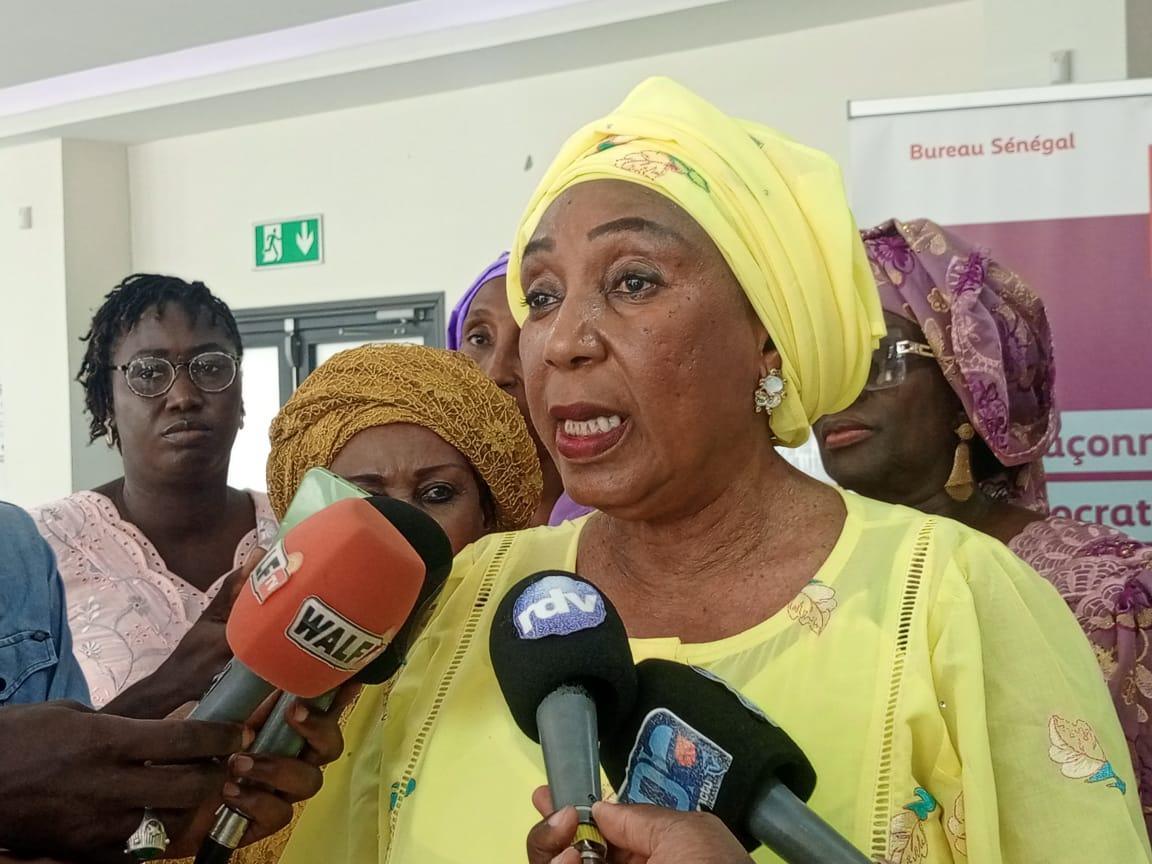
“We fought to have it extended because, quite simply, we found these 14 weeks insufficient. At this stage, the child is still very young. And in order to be able to leave him at home, the mother is forced to look for a nanny or to deal with nurseries, which are very expensive,” she says.
The President of RENAFETS points out that when these mothers returned to work, some were not fully recovered. This is because during pregnancy, there is a surge in hormones, and "everything is not immediately back to normal after childbirth."
RENAFETS had therefore advocated for six months, particularly in the name of exclusive breastfeeding. However, funding constraints led to the adoption of 18 weeks.
“We fought for six months of maternity leave for exclusive breastfeeding. But we realized that it wasn’t possible because it’s the employers who contribute. So we opted for 18 weeks, which is one more month on top of the three months after childbirth.”
For Fatou Binetou Yaffa, this reform must be accompanied by community nurseries. This is to make women feel comfortable, to "allow them to have their babies by their side, and to have peace of mind, especially for those who work."
Four more weeks… and a new worry
The Minister of Public Service, Labour and Public Service Reform, Mamadou Lamine Dianté, announced that the new Labour Code now provides for 18 weeks of maternity leave.
This progress was welcomed with relief. However, it also raises questions among some female workers.
Ms. Mbow, a transit agent at the Autonomous Port of Dakar, welcomes a demand that has finally been heard: "We applaud because we have always demanded it, always pleaded for it. Today, the authorities have finally decided to respond to our plea."
But she calls for greater security for women: "It's good to provide support, but it's better to protect and secure women. Because this decision is sure to upset some employers. Some of them might even stop recruiting women who, in the end, risk suffering as a result," she says.
RENAFETS reassures women
But on this point, Fatou Binetou Yaffa is reassuring. For her, women should in no way fear that this reform will harm them: “They should be reassured because it’s well-protected. With the 18 weeks, women are better protected than before. No need to worry, no fear, because discrimination against women based on their status has been fully addressed in the new Code. These are well-established guarantees and clauses. We are more protected than ever,” she asserts.
Protecting motherhood and changing mindsets
For Dr. Seynabou Mbaye, president of the Senegalese Women's Council (COSEF), the problem goes beyond the mere length of leave. In her opinion, this situation reveals a "lack of support mechanisms allowing women returning from maternity leave to dedicate themselves to their work with peace of mind, knowing their child is in safe and well-cared-for conditions."

While welcoming the move to 18 weeks, she emphasizes the perception of maternity in the professional world: "This is a step forward that must be welcomed since it gives pregnant women an additional month of leave. Especially since it is the culmination of a long process of demands led by working women united in the same dynamic."
Regarding the risk of discrimination in hiring, Ms. Mbaye offers reassurance. She cites the terms of the recent reform of the Labor Code, adopted on August 18, 2026, which formally prohibits discrimination against women, even in hiring. The text "includes very clear provisions for legal recourse and sanctions."
For her, the challenge now is to change attitudes and make people understand that motherhood should not be seen as an obstacle to professional life.
“We need to continue training and awareness-raising so that motherhood is not perceived by employers as an obstacle to productivity, but rather as a social role that allows society to exist. Without motherhood, there are no children and no human resources,” she explains.
Dr. Seynabou Mbaye also supports the idea of company-run childcare facilities. However, this is contingent on affordability: "Yes, if these childcare facilities are free or if the contribution required from the employee is minimal. But the reality is that they are beyond the reach of average incomes, especially in our society where the cost of living is very high."
A position shared by Ms. Mbow. For her, nurseries are needed in companies to allow women to work safely, comfortably and serenely, alongside their children.
And for RENAFETS, the fight now continues at this level: "After obtaining these 18 weeks of leave, our fight continues and this time focuses mainly on the accessibility of nurseries. We advocate for community nurseries," says its president.
The app battle
Today, one question remains unanswered: How can we ensure that the rights enshrined in the new Code will actually be enforced?
In this regard, COSEF calls for rigorous application of the new provisions of the Labour Code, concerning the protection of maternity and the strengthening of the control of companies and establishments by the Labour and Social Security Inspectorate.
She also advocates for "the establishment of a functional national system for anonymously reporting violations of workers' rights."
For its part, RENAFETS intends to continue advocacy and work to popularize the new rights: "Our next advocacy will focus first on the promulgation of the law on the 18 weeks and on the missions at the level of the Observatory, to ensure that it can be applied."
After 18 weeks, the fight continues
The extension from 14 to 18 weeks is a major step forward for women who have long been demanding more time with their newborns. But their experiences also show that the length of leave is only part of the problem.
Gina paid a heavy price: her career. Ms. Dia chose to stay employed, at the cost of months of exhaustion, and the anonymous young mother was able to maintain her business thanks to remote work. But she, too, is aware of the fragility of the solutions available to women.
Tomorrow, mothers may have four extra weeks to recover, breastfeed, and enjoy their baby. Now they want to be sure that these four weeks won't cost them their jobs.
The real challenge of the reform is no longer just to give mothers more time, but rather to allow them to remain working women without being forced to choose between their child and their professional future.






















Commentaires (20)
Voila une organisation qui pense aux droits de l'homme.
Et après aménager aux bureaux une crèche pour leurs enfants ou les faire travailler en remote.
Vive la femme, notre maman.
Si je prends ce pays un jour, tout se passera bien inchaAllah
Retourner a notre mode de vie.
On a beaucoup à apprendre du kangourou, ce marsupial de la famille des macropodidés...
Participer à la Discussion
Règles de la communauté
💡 Astuce : Utilisez des emojis depuis votre téléphone ou le module emoji ci-dessous. Cliquez sur GIF pour ajouter un GIF animé. Collez un lien X/Twitter, TikTok ou Instagram pour l'afficher automatiquement.
Se connecter
Commentez avec votre profil, votre photo, et soyez averti des réponses.