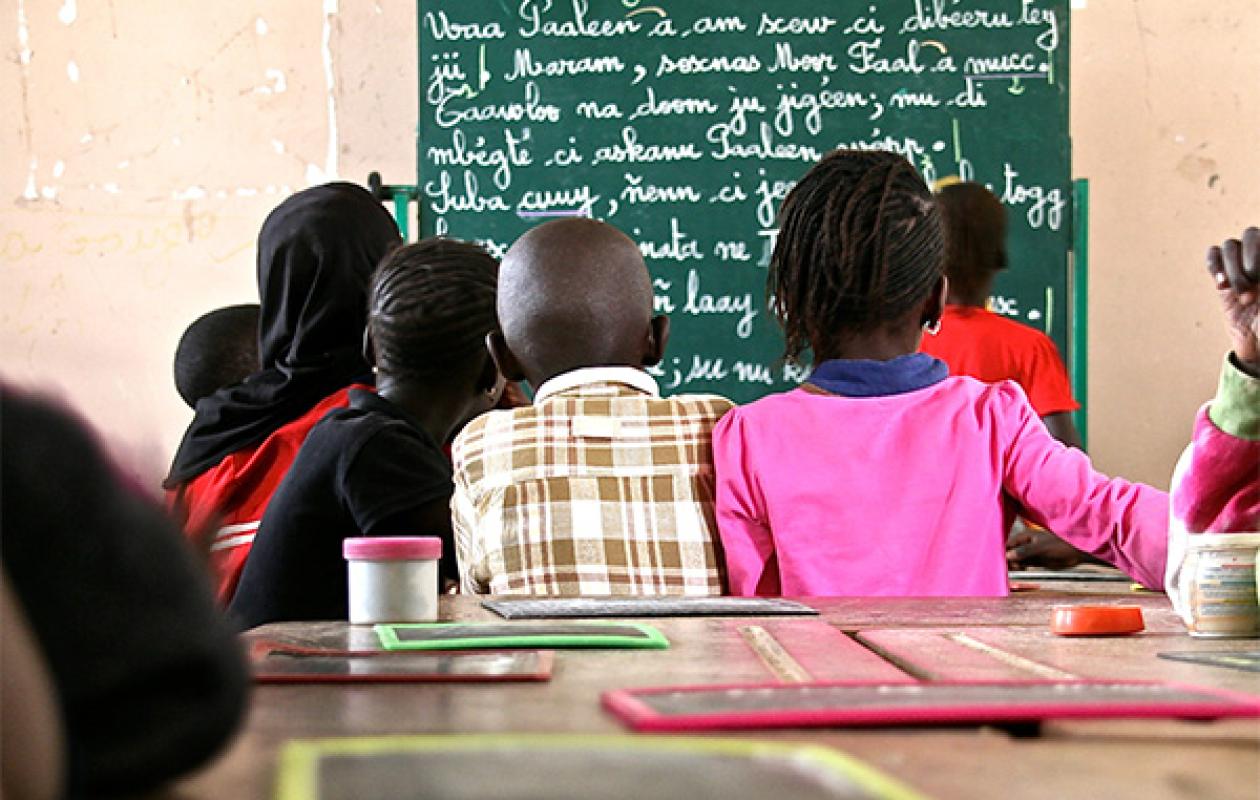
Dès 3 ans, l'école des riches, des pauvres et des territoires oubliés : L'inquiétante réalité du préscolaire au Sénégal
At three years old, some children discover the classroom, games, and their first learning experiences. Others remain at home, either because there is no accessible school or because their parents cannot afford private education. The poor relation of the Senegalese education system, public preschool remains the weakest link in the school system, despite its crucial role in a child's early years. With a gross preschool enrollment rate of only 25.1%, Senegal continues to face profound inequalities in access. From Diourbel to Kaffrine, from Matam to Dakar, family poverty and territorial disparities widen the gaps from the earliest age, even before children enter primary school.
At three, four, or five years old, some children begin to discover the classroom, group games, and early learning. Others remain at home due to a lack of resources or accessible facilities. This inequality emerges well before they even enter introductory classes.
In Keur Massar, the lack of public preschool facilities forces some parents to turn to private schools, despite the prohibitive costs. Angélique Mangane Diatta, a mother, recounts the difficulties she faces in enrolling her 4-year-old daughter in school.
“Here, public preschool is almost non-existent. Facilities are rare and, for those that do exist, the quality is not always there. That’s why I enrolled my 4-year-old daughter in private school, despite the high fees. These can reach up to 50,000 or 100,000 FCFA, not counting the monthly fees, which represent a third of our family budget. It’s a difficult expense to bear, which is not within everyone’s reach,” she says.
For many families, this bill is insurmountable. Lacking the means, some parents keep their children at home until they are old enough to start elementary school.
"The majority of families here cannot afford to pay for a private preschool. From ages 2 to 6, many children stay at home until they are old enough to enter elementary school, because their parents cannot afford these costs," she continues.
For Angélique Mangane Diatta, this situation exacerbates inequalities from the earliest years and calls for a response from public authorities.
“This injustice must end. The State must make early childhood a priority. Preschool is the foundation of the Senegalese education system, and it is essential to invest more in the education of toddlers. This sector remains the poor relation of the system, when it should occupy a central place. The State must build more preschools in every locality to guarantee access to preschool for all children, especially those from low-income families who cannot afford private schools,” she said.
Angélique Mangane Diatta's testimony illustrates the dilemma some families face: paying for a private school due to a lack of accessible public options, or giving up preschool while waiting for entry into elementary school.
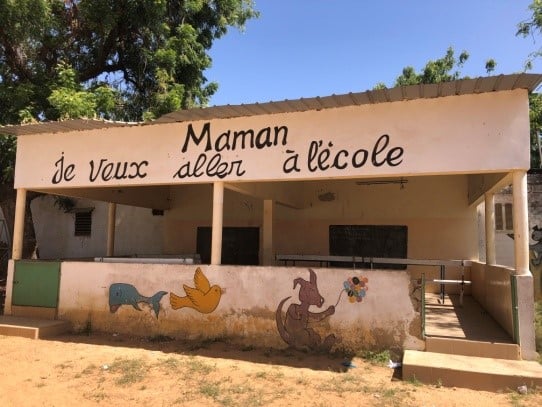
In Pikine, Moussa Diop, a mason by trade, experiences this reality firsthand. In his neighborhood, he states that there is no public preschool, while private schools remain out of reach for many low-income families.
He laments: “My income doesn’t allow it. My three- and five-year-old children will have to wait six or seven years to enter public elementary school directly. Where we live, there are no public preschools, and private schools are too expensive. We, the poor, don’t belong in private schools. Lacking the means, we are forced to keep our children at home until they are seven. It’s unfair.”
Beyond the lack of accessible facilities, it is the family budget that comes under pressure. For parents with modest incomes, paying for schooling can compete with a more immediate need: feeding the family.
“We are faced with a difficult choice: pay for schooling or keep that money to feed the family. Due to a lack of resources, my children risk staying home, unprepared for primary school. It is painful to see your child deprived of this opportunity simply because you don't have enough money. I truly feel that the State has abandoned us,” he confided.
For these families, the choice is not between two educational models, but between paying and waiting. A wait that can deprive children of their first learning experiences even before they enter elementary school.
The first hurdle: finding a school
In 2024, the gross preschool enrollment rate stood at 25.1% nationally. However, this average masks significant regional disparities. Ziguinchor had a rate of 67.3%, ahead of Dakar (38.8%), while Diourbel recorded a rate of approximately 10%. Kaffrine and Matam also remained at considerably lower levels, with 14.1% and 14.4% respectively.
Senegal had 5,116 preschools in 2024, including 1,283 in Dakar. These figures give an idea of the existing supply, but are not sufficient on their own to explain the disparities between regions. The availability of facilities, their distribution, their capacity, and families' financial resources are all factors that need to be examined.
Because even when a school exists nearby, the cost of private education, the lack of classrooms or insufficient staff can still limit children's access to this first step in their schooling.
In terms of public policy, the "Preschool Education" program has been allocated 10.335 billion FCFA in payment appropriations for the 2026 fiscal year, according to state budget documents. Commitment authorizations amount to 11.335 billion FCFA. These allocations demonstrate the budgetary resources planned for preschool education. It remains to be seen to what extent these funds will actually improve access to childcare facilities, particularly in underserved areas and for low-income families.
"We are sometimes overwhelmed"
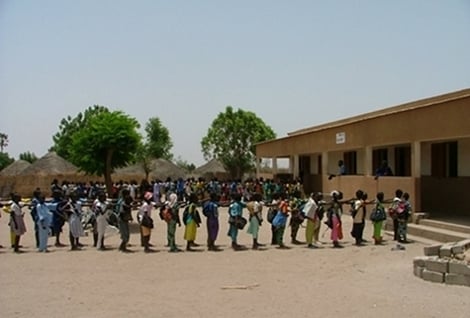
Adja Guèye, an educator in a preschool in Grand-Yoff, describes the difficulties encountered on a daily basis: lack of classrooms, high numbers and insufficient staff.
“We work in very difficult conditions. There are not many preschools in Senegal. We sometimes even have to refuse to take in children because we don’t have enough classrooms. We sometimes find ourselves with overcrowded classes and insufficient staff. In these conditions, it is difficult to take good care of the children,” she explains.
In her establishment, there are only two of them to supervise the children. A situation that puts the educators under considerable strain.
She adds: "There are only two of us in this nursery school and we work in very difficult conditions. With so many children, we are sometimes overwhelmed. That's why we often refuse to take certain children. There isn't enough staff and all the necessary conditions aren't in place."
Despite these difficulties, the educators are trying to maintain the program with the available resources, even if it means drawing on their own resources.
“We make do with what we have, but it’s very difficult. Salaries are ridiculously low and resources are limited. Sometimes we invest our own funds to make up for the shortfall, for the happiness of the children. The State must support us,” she says.
This testimony reveals another facet of inequalities in access to preschool: beyond children who cannot find a place, some are accommodated in structures facing a lack of human and material resources.
In Diakhaye, a private nursery school has lost its play areas
The preschool in Diakhaye exists, but its outdoor spaces are far from providing a suitable environment for toddlers. Weeds have overgrown the area, stagnant water occupies some areas, and holes have riddled the ground. The play areas are unusable. Where children should be running, laughing, and discovering the world, the terrain has become impassable.
At this age, learning also means playing, exploring, and growing up with others. Deprived of a functional play space, children miss an essential opportunity to move, discover their environment, and share moments with their peers.
This situation is worrying families. Oumou Khairy Ndiaye, a parent of a student, is raising the alarm about the risks linked to the state of the school.
"Our neighborhood preschool is flooded. It's full of stagnant water and tall grass. No one is going to let their child go to a school where there's grass. You never know, there might be snakes and it's dangerous," she explained.
The presence of a school alone does not guarantee a suitable environment for toddlers. For preschool to fully fulfill its role, children must be able to learn in a safe environment, but also play, explore, and thrive.
A fracture that begins before the CI
For some children, school starts as early as three years old. For others, it waits until six or seven. In between, the experiences differ: discovering life in the classroom, socializing, and becoming familiar with early learning.
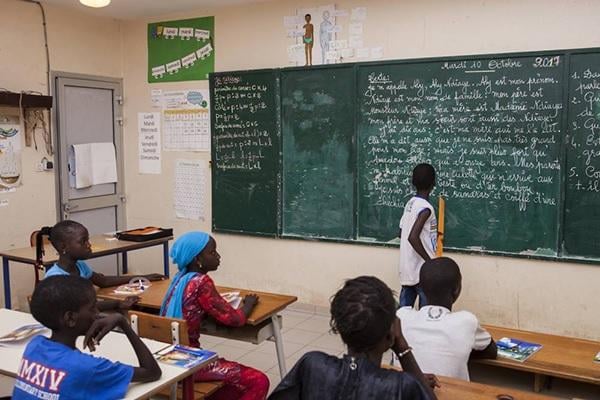
A child who stays home due to lack of resources or a suitable childcare facility nearby does not necessarily benefit from the same opportunities to prepare for elementary school as one who attends preschool. These differences do not, on their own, determine future academic success, but they do raise the question of equal opportunities from the earliest years.
In Dakar, the urgency goes beyond mere observation.
The challenges observed in Senegal reflect a broader regional concern. From January 20 to 22, 2026, Dakar hosted a meeting dedicated to early childhood education and development in West and Central Africa. Representatives of governments, experts, technical and financial partners, and civil society actors discussed ways to accelerate policies, investments, and coordination for young children.
At the opening of the meeting, UNESCO's regional director for West Africa, Dimitri Sanga, warned of the consequences of security and climate crises for education systems.
"We are facing problems of insecurity and climate change which are causing massive displacements of populations, internal or cross-border. These dynamics create major challenges for our education systems," he said.
He also questioned the countries' ability to meet children's needs: "Do we have enough infrastructure? Do we have enough qualified teachers?"
For UNESCO, the early years are crucial for the rest of a child's educational journey. However, early childhood development continues to face several challenges in the region, including insufficient funding, a lack of qualified staff, and limited capacity for childcare.
The assessment presented at this meeting highlighted the still very limited access to pre-primary education in sub-Saharan Africa. According to reports relayed by experts, preschool education remains largely underfunded by public investment in the region. Indeed, the report states that nearly 70% of children in West Africa do not have access to pre-primary education (nursery and early childhood).
For the participants, the challenge is therefore no longer just to recognize the importance of early childhood, but to accelerate the implementation of policies and strengthen investments.
"Investing in early childhood is investing in the eternity of our nations."
In Senegal, Khady Diop Mbodj, then chief of staff to the Minister of National Education, had also placed early childhood at the heart of national priorities.
“Investing in early childhood is investing in the eternity of our nations,” she declared. “These are not options, they are imperatives,” she added.
The discussions in Dakar highlighted, in particular, the need to improve the qualifications of supervisors and educators, to strengthen coordination between sectors, to identify investment priorities and to consolidate national and regional action plans.
Khady Diop Mbodj had also established a link between early childhood and social cohesion: "By reducing inequalities from birth, we sow the seeds of tolerance and social cohesion."
These statements take on particular significance in light of the difficulties described on the ground: tuition fees that are difficult to bear, flooded structures, insufficient classrooms and educators who say they work with limited resources.
ECOWAS facing its commitments
The issue extends beyond Senegal's borders. In June 2019, ECOWAS adopted a Child Policy and a framework for action covering the period 2019-2030. This framework aims in particular to promote children's rights to survival, development, protection and participation.
Among the challenges is improving young children's access to early childhood development programs and quality pre-primary education.
In September 2026, a regional meeting held in Abuja from September 23 to 25 allowed member states to review progress made in implementing this policy. Discussions focused in particular on the impact of poverty, population displacement, disasters, food insecurity, and malnutrition on children's rights in West Africa.
At the conclusion of the workshop, participants called for continued resource mobilization, capacity building, and regional coordination. They also stressed the need to strengthen national child protection systems.
“Let us ensure that no child is left behind and that every child in West Africa fully enjoys their rights to survival, development, protection and participation,” said Mariam Fitumi Shaibu, speaking on behalf of Senegal, the current ECOWAS chairman, at the meeting.
These regional commitments raise a question for Senegal: how are they translated into national policies and what concrete results allow us to measure their effects on children's access to preschool?
There is still a long way to go between promises and reality.
In Dakar, experts called for accelerated investment in early childhood education. In Abuja, ECOWAS emphasized the need for resource mobilization and coordination among member states. On the ground in Senegal, the obstacles described by families and educators remain numerous: the cost of enrollment, dilapidated infrastructure, a lack of classrooms, and insufficient staff.
Due to a lack of resources or functional structures nearby, some children wait six or seven years before entering elementary school, without having benefited from the same opportunities for preparation as those who attend preschool.
Because if equal opportunity has to start somewhere, it starts well before the CI.



















Commentaires (8)
Il faut qu'on soit raisonnable, le cout de la vie au senegal ne permet d'avoir plus 4 enfants et 2 femmes. A condition qu'on ait 2 maisons. Sinon toute ta vie tu vas quémander, s'endetter, stress (disfonctionnement érectiles et madame cherche ailleurs) .
Soyons réfléchis chers negres ! Le sexe et le mariage n'est pas une fin en soit !! kou meune na deff et ne pas fatiguer Allah
Il s'agit d'une des agences dont la direction devrait faire l'objet d'un appel à candidature.
Dans des des pays comme la Finlande, ce sont les meilleurs élèves qui deviennent éducateurs dans le préscolaire et à l'école primaire.
Par ailleurs, nous savons que les moyens manquent, il faudrait qu'on soit un peu plus créatifs dans les infrastructures que nous construisons pour qu'elle soit à la fois économique et à même de recevoir des enfants en bas âge.
Ma conviction est que si la case des tout petits est bien gérée, avec une formation rigoureuse du personnel éducatif, le problème évoqué dans ce texte sera réglé.
Participer à la Discussion
Règles de la communauté
💡 Astuce : Utilisez des emojis depuis votre téléphone ou le module emoji ci-dessous. Cliquez sur GIF pour ajouter un GIF animé. Collez un lien X/Twitter, TikTok ou Instagram pour l'afficher automatiquement.
Se connecter
Commentez avec votre profil, votre photo, et soyez averti des réponses.