Quand les fournitures coûtent plus cher que la scolarité : Entre débrouille et élans de solidarité face à la vie chère
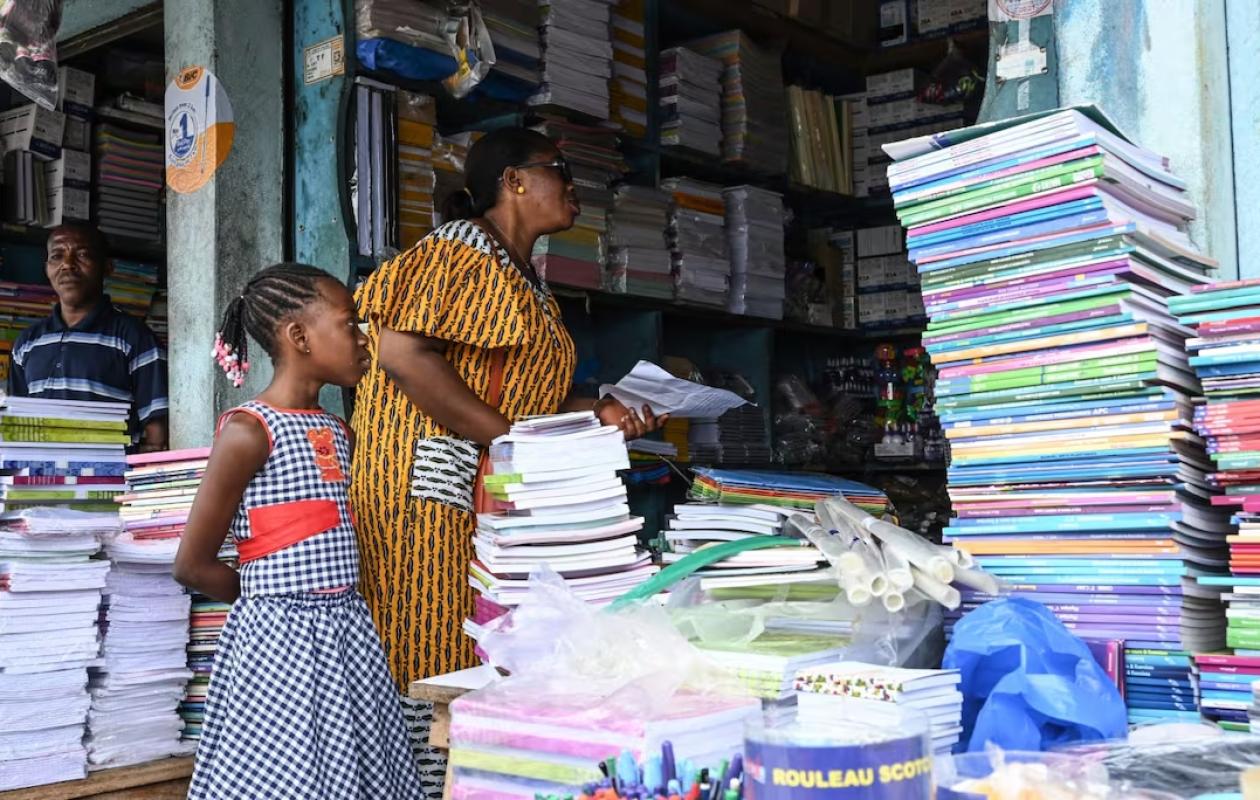
In Senegal, the approach of the start of the school year no longer feels like a celebration in many households. In market aisles and bookstores alike, enthusiasm is giving way to growing dismay. Between the ever-increasing price of notebooks, the purchase of uniforms, and the need to buy new textbooks, the cost of school supplies now exceeds the cost of tuition itself.
In many households, compiling school supply lists puts a severe strain on budgets. On one hand, fathers are exhausted by the accumulation of end-of-year expenses; on the other, single mothers must redouble their efforts to ensure their children aren't disadvantaged in school. Aïssatou Faye, a single mother of three, doesn't hide her anxiety when she talks about the imminent return to school: "Every year, prices go up and the bill gets longer. For my three children, buying school supplies has become a real mountain to climb. We try to save during the holidays, but once we get to the market, the budget we'd planned isn't enough anymore," she laments. Ousseynou Traoré, a father of five, also deplores a situation that has become untenable for heads of households: "When you have a large family, the start of the school year becomes a daunting ordeal." Between notebooks, uniforms, and required books, the overall expenses reach exorbitant sums. This sometimes exceeds the cost of registration. It's a financial burden that many of us can no longer bear,” he argues.
The proliferation of "disposable" textbooks
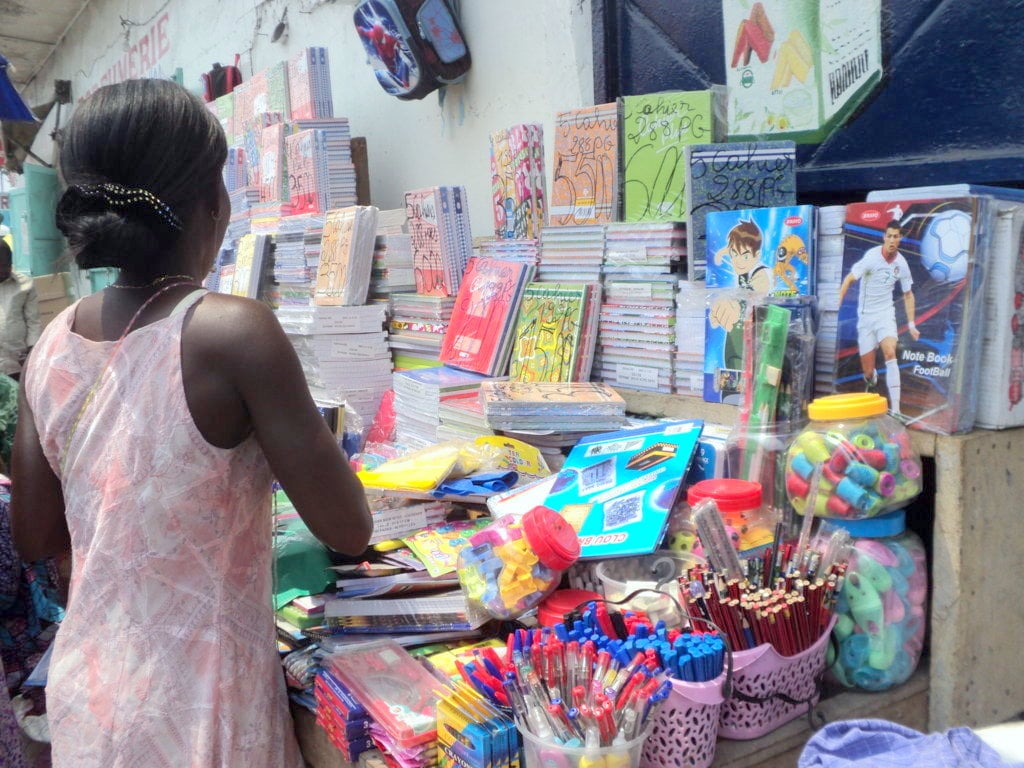
Beyond the general high cost, it's the widespread use of disposable activity books that fuels parents' anger, making it impossible to pass textbooks between siblings or buy them secondhand. Astou Gaye, a parent, has bitter memories of her last trips to the checkout for primary school supplies: "Before, a book could be used by several children in the same family. Now, we're forced to buy activity books with direct transcriptions: they're disposable. These are mainly books like 'Discovering the World,' 'French,' 'Mathematics,' etc. We can't reuse them after a year. Yet, they're expensive. At 3,500 FCFA each, that's 14,000 FCFA just for one child's textbooks. Imagine for someone with four children: that's 56,000 FCFA for the books alone, not counting everything else." And we still have to buy notebooks, bags, and uniforms.
This reality is confirmed on the ground by the vendors themselves. According to Ousmane Gueye, a street bookseller, parents are extremely worried. He explains that the required textbooks can no longer be sold secondhand because they are only usable once, due to frequent edition changes and their high cost. Only literary novels remain accessible on the secondhand market.
The use of Colobane: second-hand clothing as an alternative to ready-to-wear
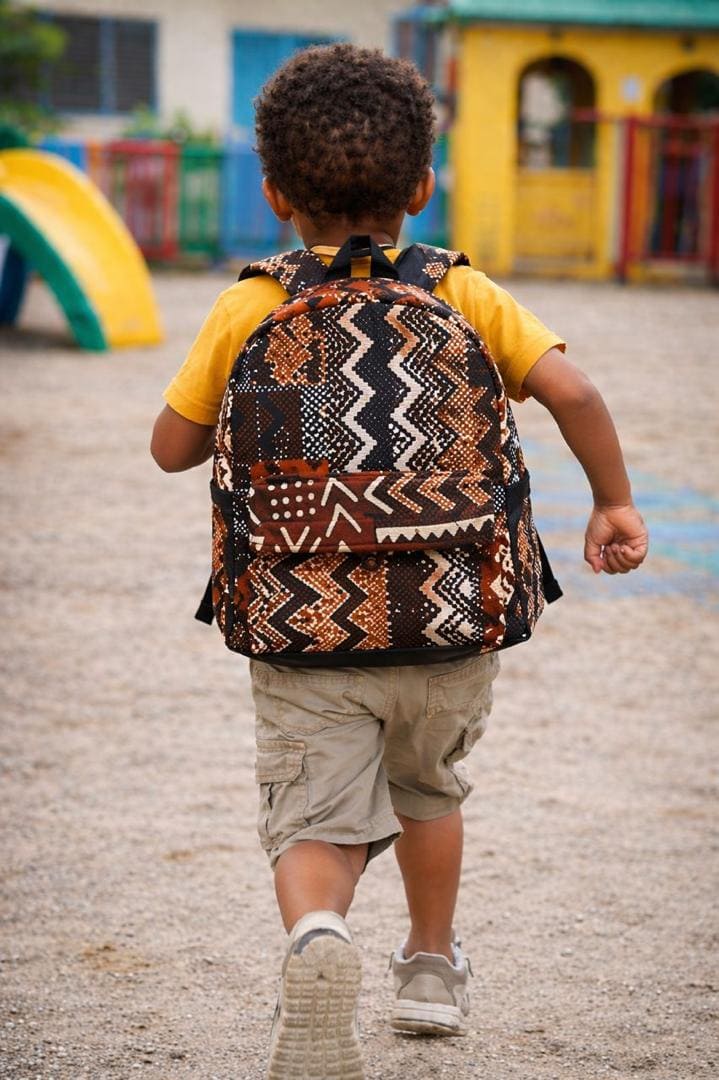
Faced with these crippling expenses, families are becoming increasingly resourceful in dressing their children without breaking the bank. In Colobane, the market is already teeming with people by 7:00 a.m. Many mothers crowd there to buy secondhand clothes, unable to afford ready-to-wear after having already purchased school supplies at exorbitant prices. Fanta Sall is a mother of four: two in primary school and two in middle school. She came to do her back-to-school shopping: "With everything we spent on school supplies, I suggested to my husband that we come to Colobane to buy things for the children. Here, you can find rare and pretty things at a lower cost," she explains, smiling. "Ready-to-wear is no longer affordable for a large family. And there's good quality with secondhand clothes. Once I get home, I'll wash and iron everything." “Even my children’s bags will be taken in the thrift store,” she confides.
The call for regulation and the denunciation of commodification
Faced with this social distress, representatives of parents of students are demanding firm intervention from public authorities to regulate the market. Abdoulaye Fané, president of the National Union of Parents of Students of Senegal (UNAPES), paints a stark picture of the excesses of the commercial sector and local disengagement: “Prices are rising every year. This is detrimental to very poor families, who are already burdened with many expenses. The State must take action at the level of bookstores and notebook manufacturers. A system should be put in place through the Ministry of National Education, and why not public printing offices to reduce costs?”
The president of UNAPES also points to the decline in municipal support and abusive practices within schools: “Previously, town halls intervened, and many supplies were provided by the municipalities as part of their transferred responsibilities. Today, many no longer do so, faced with a very difficult financial situation. But beyond that, there is the commercialization of schools, which is taking hold like a cancer. We are witnessing the arrival of new businesspeople who manage schools simply to make money.”
To restore fairness, Abdoulaye Fané points out that UNAPES fought to ban the mandatory sale of paid workbooks in middle and high schools. He also advocates reviving solidarity initiatives like "Operation Ndeye Jiabar," which organized book exchanges and repair workshops for old books among parents in schools, while advising families to spread their purchases out, prioritizing them over the first term.
" School fundraising": a surge of civic engagement to help families
Faced with the urgent situation on the ground, citizen solidarity networks are organizing to alleviate the difficulties of the most vulnerable households. Nata Dieng, an activist in the social sector, explains that the idea of helping impoverished parents became essential to her in light of the back-to-school season: “It has become very expensive with notebooks, books, and uniforms. They cost more than the school fees themselves, and at this rate, the start of the school year will become a burden for many families. It was in response to this situation that I created the “School Fund” on October 9, 2024.”
The goal of this initiative is to ensure that no child is left behind due to a lack of supplies. Following the success of the first edition, which brought smiles to many students, Nata Dieng and her team are actively preparing the second edition of the campaign: "Our ambition for this new edition is to do more and better: to reach more beneficiaries and distribute complete school kits to guarantee every child the same opportunity to start the year off right."
As the school bell prepares to ring, the initiator launches an appeal for collective mobilization from businesses, associations, and citizens: "Together, let's support our children's education. Let's make the start of the school year a celebration for all."





















Commentaires (17)
Dans les écoles privées, les parents ont fait le choix d'être riches ou paraître riches. Différences de classes que voulait enlever dans l'école par feu Léopold Sedar Senghor le visionnaire.
RIEN pour l'éducation des enfants.
L'Africain et les priorités.
Seneweb dort encore...
Participer à la Discussion
Règles de la communauté
💡 Astuce : Utilisez des emojis depuis votre téléphone ou le module emoji ci-dessous. Cliquez sur GIF pour ajouter un GIF animé. Collez un lien X/Twitter, TikTok ou Instagram pour l'afficher automatiquement.
Se connecter
Commentez avec votre profil, votre photo, et soyez averti des réponses.