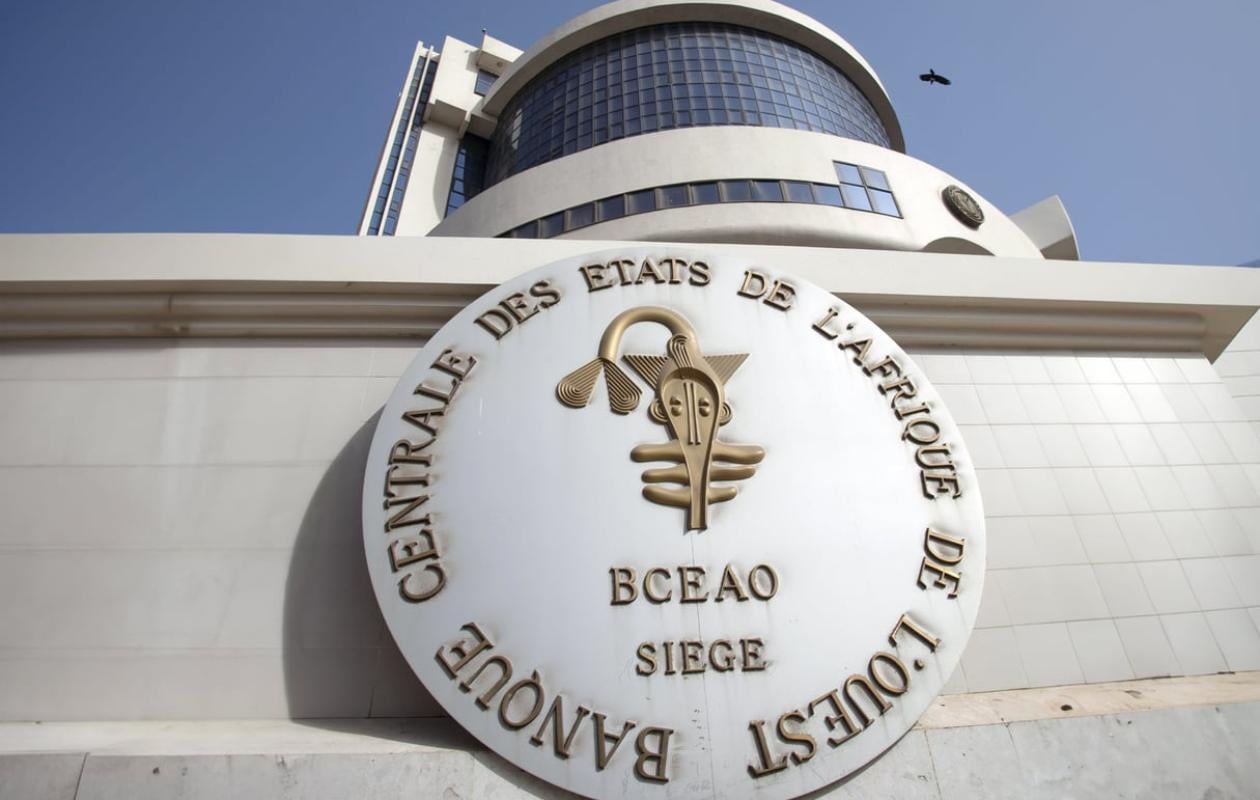
BCEAO, Commission bancaire, fonds de garantie, les gardiens de la stabilité financière
Trust is arguably the most important asset in the banking system. Every day, millions of individuals and businesses deposit their money in financial institutions with the certainty that they will be able to access it when needed. Yet, economic history shows that no banking system is entirely immune to difficulties. Poor risk management, an economic crisis, a sharp decline in credit quality, or a loss of depositor confidence can weaken a bank, sometimes very quickly. The crucial question then becomes: what happens when a banking institution encounters serious difficulties, and who truly protects the depositor?
Within the WAEMU region, this responsibility rests on several levels of control that intervene well before a crisis erupts. Contrary to popular belief, supervisory authorities do not wait until a bank is close to bankruptcy before taking action. The core of their work lies precisely in detecting weaknesses early enough to prevent them from escalating into a systemic crisis.
The first line of defense is provided by the banks themselves, which must comply with a relatively strict set of prudential rules. These requirements relate in particular to the minimum level of capital, risk management, loan diversification, and the liquidity available to meet customer withdrawals. These rules have been considerably strengthened over the last two decades, especially after the 2008 global financial crisis, which revealed the potentially devastating consequences of inadequate supervision.
Within the WAEMU, banking sector oversight is ensured by the WAEMU Banking Commission, an institution established in 1990 and affiliated with the BCEAO. Its role is to monitor credit institutions, verify compliance with prudential standards, and intervene when malfunctions occur. Commission inspectors regularly conduct documentary and on-site audits to assess the actual situation of banks.
This mission concerns a sector that has become particularly important in the regional economy. According to BCEAO data, the Union had more than 170 licensed credit institutions at the end of 2024, while total banking assets exceeded several tens of trillions of CFA francs. The stability of this sector has therefore become a major economic issue for the eight member countries of the Union.
Supervisors pay particular attention to an indicator often overlooked by the general public: the solvency ratio. This measures a bank's ability to absorb potential losses using its equity capital. The higher this ratio, the greater the institution's safety net in case of difficulties. When a bank deviates from regulatory thresholds, the authorities can demand corrective measures well before the situation becomes critical.
Liquidity is also subject to constant monitoring. A bank may appear solvent on paper but still encounter difficulties if too many customers simultaneously attempt to withdraw their deposits. Global banking history is replete with examples of theoretically viable institutions collapsing following a panic. Supervisors therefore ensure that banks maintain sufficient liquid assets to meet withdrawal demands.
This issue gained particular relevance in 2023 with the difficulties encountered by several American banks, notably Silicon Valley Bank. The institution had maintained capital levels that met regulatory requirements, but a massive wave of withdrawals quickly triggered a liquidity crisis. This episode reminded authorities worldwide that trust remains a central element of banking stability.
When a bank in the WAEMU region begins to show significant weaknesses, several tools can be used before reaching an extreme situation. Authorities can impose a recovery plan, require recapitalization by shareholders, restrict certain operations, or strengthen oversight of the institution. In some cases, a merger or takeover by another entity may also be considered.
The goal is generally to avoid a sudden closure that could undermine confidence in the entire banking system. This approach is explained by a principle well known to economists: a banking crisis often spreads more through fear than through figures.
When doubts arise about an institution, depositors may fear that other banks are experiencing the same difficulties, which could fuel mass withdrawals and extend the crisis.
To strengthen this protection, the WAEMU also has a specific mechanism for depositors. The Deposit Guarantee and Resolution Fund in the WAEMU was created to contribute to the protection of savers and the management of potential banking crises. Its role is, in particular, to intervene according to the procedures laid down by regulations when authorized institutions encounter serious difficulties.
The existence of this type of mechanism is based on a simple logic. If savers believe they risk losing all their savings at the slightest banking problem, confidence in the financial system can quickly erode. Conversely, the presence of protective mechanisms helps to limit panic buying and preserve financial stability.
The BCEAO also plays a central role in managing exceptional situations. Like most central banks worldwide, it can provide liquidity to institutions facing temporary stress when certain conditions are met. This "lender of last resort" function is one of the traditional pillars of modern banking stability.
Banking crises remain relatively rare in the WAEMU region compared to certain periods observed in other parts of the world. This does not mean that the risk is nonexistent, but it reflects the importance given to prudential supervision for several decades. Authorities have progressively strengthened the requirements applicable to institutions in order to support the growth of the financial sector while limiting vulnerabilities.
Ultimately, when a depositor entrusts their money to a bank, their protection doesn't rely solely on the bank's financial strength. It also depends on a set of institutions, prudential rules, control mechanisms, and intervention tools designed to prevent an isolated difficulty from escalating into a widespread crisis. This architecture remains largely invisible in everyday life, but it forms one of the cornerstones of the trust that allows the financial system to function.





















Commentaires (1)
Participer à la Discussion
Règles de la communauté
💡 Astuce : Utilisez des emojis depuis votre téléphone ou le module emoji ci-dessous. Cliquez sur GIF pour ajouter un GIF animé. Collez un lien X/Twitter, TikTok ou Instagram pour l'afficher automatiquement.
Se connecter
Commentez avec votre profil, votre photo, et soyez averti des réponses.