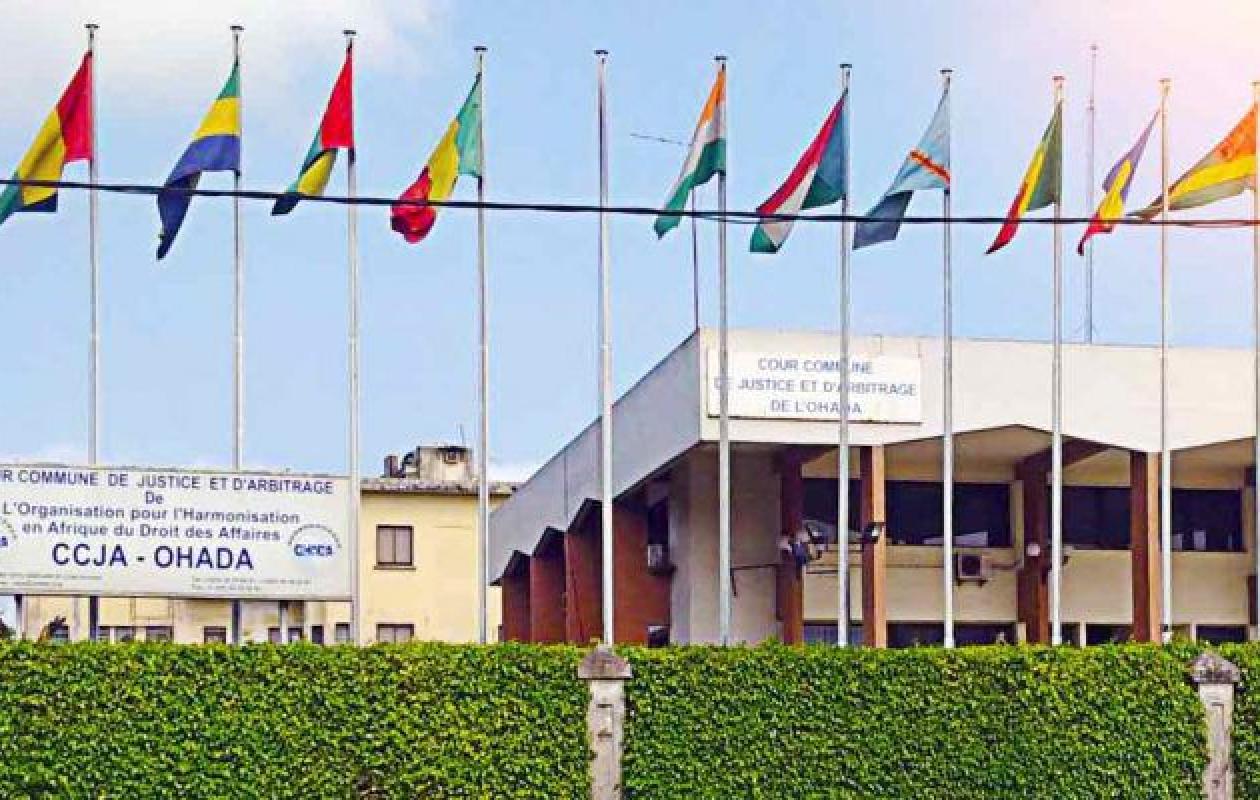
L’intégration économique africaine passe aussi par l’harmonisation du droit
When a company is established in Senegal, Ivory Coast, Cameroon, Benin, or Togo, many of the rules governing its operations are not solely based on national law. Behind the formation of a company, the signing of a commercial contract, the search for bank financing, or the resolution of a dispute between companies, there is often a regional organization with considerable influence. This organization is the Organization for the Harmonization of Business Law in Africa, better known by its acronym OHADA.
Established on October 17, 1993, in Port Louis, Mauritius, OHADA was created by several African states seeking to build a more coherent legal environment for economic activity. At the time, differences between national laws complicated cross-border investments and increased legal costs for companies wishing to operate in multiple countries. Investors often had to contend with different rules concerning companies, bank guarantees, legal procedures, and commercial contracts.
Rather than limiting themselves to cooperation between administrations or simply coordinating national legislation, the member states chose to adopt common rules directly applicable throughout the OHADA area. Today, the organization comprises 17 member states, to which the Democratic Republic of Congo has been added since 2012. Together, they represent more than 250 million inhabitants and several hundred billion dollars in combined gross domestic product.
The main tool for this harmonization is the Uniform Acts. These legal texts define the applicable rules in several areas of business law and replace national provisions when they enter into force. Companies operating in member countries thus operate within a largely common legal framework for such important subjects as general commercial law, company law, security interests, insolvency proceedings, arbitration, mediation, and accounting.
The economic impact of this harmonization is far from negligible. A Senegalese company wishing to invest in Benin, Togo, or Côte d'Ivoire will find itself subject to rules similar to those it already applies in its home country. This predictability reduces the costs associated with regional expansion and facilitates economic exchanges between member states.
This legal stability is of particular interest to banks and investors. When a financial institution grants a loan or when an investment fund participates in financing a project, it seeks to assess the risks involved. The existence of harmonized rules in several countries helps to limit certain uncertainties and makes transactions more transparent for economic actors.
OHADA also has its own regional court. The Common Court of Justice and Arbitration, located in Abidjan, ensures the uniform interpretation of legal texts across all member states. Its role is crucial, as a common rule would lose some of its effectiveness if interpreted differently by each country. By ensuring consistent case law at the regional level, the Court helps strengthen legal certainty for businesses and investors.
The influence of OHADA is also evident in areas that business leaders encounter daily. The conditions for creating a limited liability company, the rules applicable to public limited companies, debt recovery procedures, and the guarantees required for bank financing are largely governed by community legislation.
The SYSCOHADA system is one of the most visible examples of this harmonization. Companies within the OHADA zone use a common accounting framework to prepare their financial statements. This standardization facilitates the work of banks, tax authorities, auditors, and investors, who can compare the performance of companies located in different countries using the same accounting rules.
International organizations often consider OHADA to be one of the most advanced experiences in legal integration on the African continent. The World Bank, the African Development Bank, and UNCTAD have regularly highlighted its contribution to improving the business environment in the countries concerned. Even though challenges related to the application of the texts remain in certain areas, the existence of a shared legal framework is an advantage rarely seen on such a scale on the continent.
The organization also continues to adapt its texts to economic developments. Several reforms have been adopted in recent years, particularly concerning company law, arbitration, mediation, and accounting rules. These changes aim to take into account the transformation of African economies, the rise of digital technology, and the new demands of investors.
OHADA thus occupies a unique place in the African economic landscape. Unlike monetary or financial institutions that influence interest rates, credit, or investments, it intervenes in the rules that structure economic activity itself. Its actions influence how businesses are created, grow, finance themselves, and resolve their disputes.
Thirty years after its creation, the organization has become one of the legal foundations of economic integration in a significant part of Francophone Africa. Its influence is sometimes less visible than that of institutions like the BCEAO or the BOAD, but it shapes the environment in which millions of entrepreneurs, investors and businesses operate across the continent on a daily basis.











![[Exclusif] : Ass Dione confronté par le juge d’instruction à 3 de ses présumés amants](https://image.seneweb.com/content/news/2026-26-25//thumb_1260x800_6a3d4ac0555d3_9OCWAjqjOR.jpeg)










Commentaires (0)
Participer à la Discussion
Règles de la communauté :
💡 Astuce : Utilisez des emojis depuis votre téléphone ou le module emoji ci-dessous. Cliquez sur GIF pour ajouter un GIF animé. Collez un lien X/Twitter, TikTok ou Instagram pour l'afficher automatiquement.