Qui protège les investisseurs sur le marché financier de l’UEMOA ?
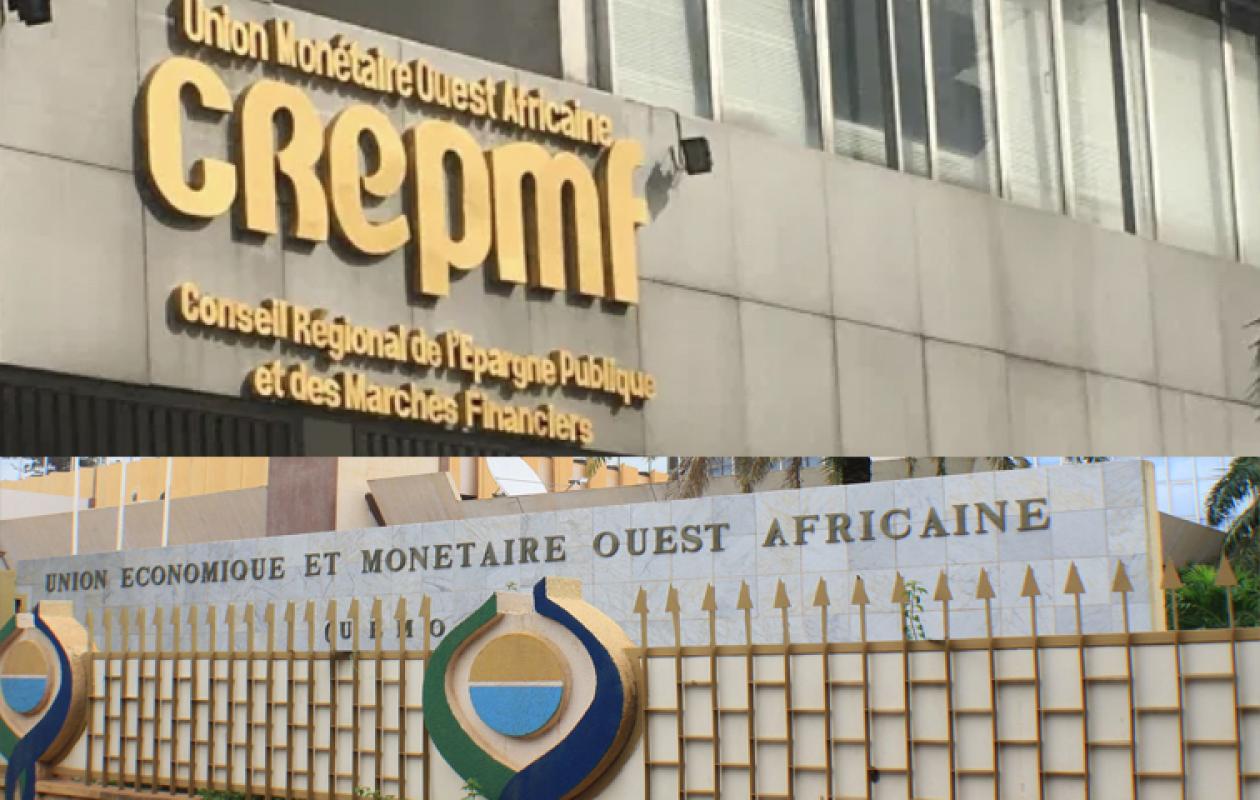
When Senegal, Côte d'Ivoire, Benin, or another WAEMU country launches a bond issue on the regional market, the operation relies not only on investor confidence or the issuer's financial strength. It operates within a regulatory framework designed to guarantee transparency, protect savers, and ensure the proper functioning of the market. At the heart of this system is the Regional Council for Public Savings and Financial Markets, better known by its acronym CREPMF.
Although its name is rarely mentioned outside financial circles, this institution plays a role comparable to that of market authorities in major global financial centers. In the United States, this mission is carried out by the Securities and Exchange Commission (SEC). In France, it falls under the purview of the Financial Markets Authority (AMF). Within the WAEMU region, this responsibility rests with the CREPMF.
Established in 1996, following the creation of the West African regional financial market, the CREPMF is responsible for overseeing activities related to public savings and capital markets. Its scope of action covers all eight countries of the Union, making it one of the most advanced symbols of regional financial integration.
Its importance has increased considerably in recent years. According to data from the Regional Stock Exchange (BRVM), the market capitalization of the equity market exceeded 10 trillion CFA francs in 2025, while the bond market represented several trillion additional CFA francs. This is further bolstered by regular government bond issuances, corporate fundraising, and the gradual development of new financial instruments.
In this context, the CREPMF acts as the guardian of the rules of the game. When a company wishes to go public or when a state considers an issue open to investors in the regional market, the operation must comply with a set of requirements designed to guarantee the quality and reliability of the information made available to the public.
This mission is particularly important because a financial market relies first and foremost on trust. An investor agrees to buy a stock or a bond because they believe they have sufficiently reliable information to assess the risk they are taking. If this trust disappears, the ability of businesses and governments to mobilize savings becomes much more difficult.
The CREPMF thus examines issuance files, verifies the compliance of published financial information, and ensures adherence to transparency obligations imposed on market participants. Listed companies must, in particular, regularly publish their financial results and inform investors of any event likely to affect the value of their securities.
This oversight also applies to financial intermediaries. Management and brokerage firms, asset management companies, financial advisors, and other professionals operating in the market are subject to specific rules designed to protect investors and preserve the integrity of transactions.
The importance of this function becomes even more apparent in a context where WAEMU member states are increasingly turning to financial markets to finance their budgetary needs. According to UMOA-Titres, the outstanding amount of government securities in circulation within the Union exceeded 20 trillion CFA francs in 2025, compared to less than 5 trillion CFA francs in the early 2010s. This growth reflects a profound transformation of public financing in West Africa.
Companies are following a similar trajectory, although their use of the market remains more limited. Several regional groups have issued bonds or raised capital in recent years to finance their development. This trend is gradually contributing to a diversification of financing sources beyond traditional bank loans.
Investor protection is another important aspect of the regulator's work. When a transaction presents particular risks or when a market participant fails to meet its obligations, the CREPMF has investigative and sanctioning powers. This oversight capacity is essential for maintaining the credibility of the regional market, particularly with institutional investors who manage significant volumes of savings.
The stakes are further heightened by the emergence of new financial products. Green bonds, sukuk, specialized investment funds, and securitization transactions are gradually gaining ground in the WAEMU region. Each of these instruments requires appropriate regulation to ensure that investors fully understand its characteristics and associated risks.
The recent rise in the use of securitization mechanisms provides a good example. The listing on the BRVM in May 2026 of bonds from the "Agricultural Growth 2025-2032" Securitization Fund, backed by agricultural financing amounting to 80 billion CFA francs, demonstrates the increasing sophistication of the regional market. The more complex financial products become, the more important the role of the regulator becomes.
This development is part of a broader trend observed across the continent. African authorities are seeking to develop financial markets capable of mobilizing more local savings to finance investment needs. According to the African Development Bank, the continent's annual infrastructure needs are estimated at between $130 and $170 billion, while the financing gap remains significant.
From this perspective, investor confidence becomes a valuable economic asset in its own right. A market perceived as transparent and well-regulated more easily attracts savings from individuals, pension funds, insurance companies, and international investors. Conversely, even the slightest regulatory failure can permanently damage the attractiveness of a financial center.
The CREPMF therefore occupies a strategic position within the financial architecture of the WAEMU. It does not directly finance states or businesses, but it helps create the conditions that allow these actors to access capital. As the regional market becomes deeper and more sophisticated, this mission becomes increasingly important to support the Union's economic development and strengthen confidence in long-term financing mechanisms.






















Commentaires (0)
Participer à la Discussion
Règles de la communauté :
💡 Astuce : Utilisez des emojis depuis votre téléphone ou le module emoji ci-dessous. Cliquez sur GIF pour ajouter un GIF animé. Collez un lien X/Twitter, TikTok ou Instagram pour l'afficher automatiquement.