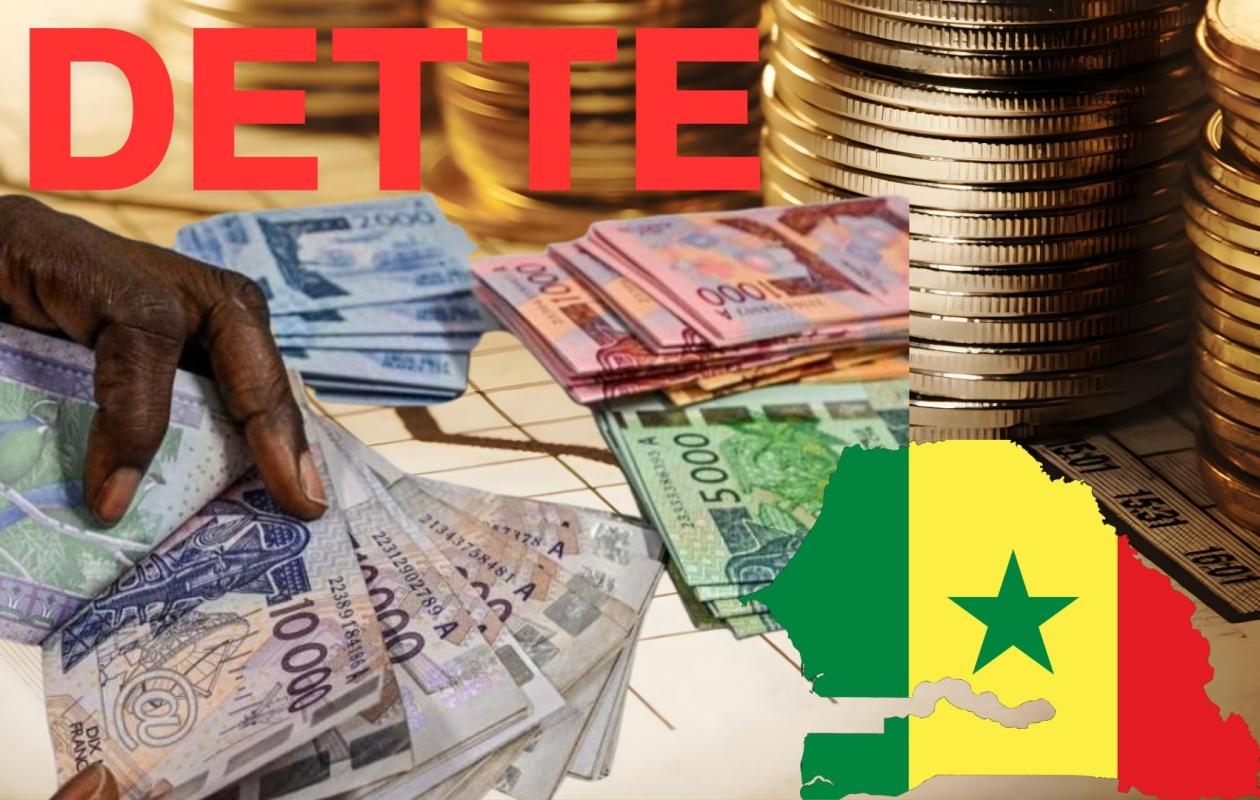
UEMOA : Quand la dette du Sénégal fragilise l’équilibre financier régional
The regional debt market has long been touted as one of the great successes of West African financial integration. By allowing member states to mobilize available savings within the Union, it reduced their dependence on external financing and offered banks a relatively safe investment. But the situation in Senegal, which has been facing budgetary pressures and a reassessment of its public debt for the past two years, now highlights a different reality. By massively purchasing Senegalese government bonds, WAEMU banks have become closely tied to the financial trajectory of the Union's second-largest economy.
This interdependence is at the heart of the concerns expressed by Fitch Ratings in a note published on June 25, 2026. The agency estimates that WAEMU banks hold claims on Senegal representing between 25% and 35% of their assets. At the banking level, such a level of concentration is far from insignificant. It means that a substantial portion of the regional banking system's financial stability now depends on Senegal's ability to continue honoring its commitments under the agreed terms.
To understand this situation, it is necessary to look back at the events that have affected Senegalese public finances since 2024. Following the reconciliation of public accounts undertaken by the new authorities, the level of public debt was found to be higher than that previously communicated to financial partners and investors. This revision led several international institutions and rating agencies to revise their assessment of Senegal's sovereign risk.
The consequences were quickly felt in the markets. International investors became more cautious, and external financing costs increased. In this context, Dakar turned more to the WAEMU regional market to meet its financing needs.
The use of this market intensified particularly at the beginning of 2026. In February, several issues of Senegalese government bonds met with strong demand from regional investors, especially commercial banks. These transactions allowed the State to raise several hundred billion CFA francs as important maturities approached.
The stakes were considerable. On March 13, 2026, Senegal was due to repay an international bond of €333.3 million, or approximately 219 billion CFA francs. A few months later, the authorities also made early repayments on two external bonds totaling around $100 million. These decisions were interpreted by many investors as a signal demonstrating the country's ability to meet its financial obligations despite the questions raised by the review of public accounts.
While these operations have helped to avert the most pessimistic short-term scenarios, they have also increased the regional banking sector's exposure to Senegalese debt. This is precisely what Fitch highlights in its June 2026 report.
The agency does not claim that a restructuring of Senegal's debt is imminent. Rather, it highlights a risk of concentration. In the banking sector, this type of risk arises when a large number of institutions simultaneously hold a significant proportion of the same assets. As long as these assets retain their value and continue to be repaid normally, the situation remains manageable. However, if their quality deteriorates, several institutions can be affected at the same time.
The issue extends far beyond the case of Senegal. For the past fifteen years or so, banks have become the main buyers of public debt throughout the WAEMU. According to data from UMOA-Titres, the outstanding amount of regional public securities was projected to exceed 20 trillion CFA francs in 2025, compared to less than 5 trillion CFA francs in the early 2010s. This dramatic increase reflects the growth of the regional market but also the increasing dependence of member states on this financing method.
For banks, these securities offer several advantages. They generally provide higher returns than the safest investments, benefit from favorable regulatory treatment, and can be used as collateral in certain refinancing operations with the BCEAO (Central Bank of West African States). In an environment where demand for private credit sometimes remains insufficient or riskier, sovereign bonds often represent an attractive solution.
But this logic gradually creates a close link between public finances and banking stability. Economists refer to this as a "sovereign-bank loop." This mechanism was dramatically observed during the Greek crisis starting in 2010. Greek banks held significant amounts of bonds issued by their own government. When the country's solvency was called into question, the value of these securities plummeted, simultaneously weakening the banking sector.
The comparison naturally has its limitations. Senegal is not in the same situation as Greece was in the early 2010s, and the authorities are still meeting their debt obligations. However, the Greek example serves as a reminder that significant bank exposure to public debt can become a source of vulnerability when a fiscal shock occurs.
Another factor is attracting investors' attention. According to several financial analyses published in June 2026, nearly 46% of Senegal's regional debt is expected to mature before the end of 2027. The average remaining maturity of this debt is less than two years. This structure forces the country to regularly return to the markets to refinance its maturing bonds.
However, refinancing has become a major concern for sovereign wealth fund investors worldwide. High debt can remain sustainable if repayments are spread out over a sufficiently long period. Conversely, concentrated repayments over just a few years increase pressure on public finances and make governments more dependent on market conditions.
Regional regulatory authorities are therefore monitoring this situation closely. According to the latest data from the BCEAO (Central Bank of West African States), the banking sector in the Union maintains solvency ratios above regulatory requirements. Institutions thus have sufficient buffers to absorb potential shocks. The issue therefore does not pose an immediate threat to regional financial stability.
The question today is more structural. How far can WAEMU banks continue to finance member states without excessively increasing their own exposure to sovereign risk? As budgetary needs grow and international markets become more selective, this balance is becoming one of the Union's main financial challenges.
The Senegalese episode ultimately acted as a catalyst. It demonstrated the extent to which public procurement, commercial banking, and regional financial stability are now closely intertwined. What was once a national budgetary matter has become an issue monitored across the entire monetary union, as the potential consequences now extend far beyond Senegal's borders.


















Commentaires (2)
Participer à la Discussion
Règles de la communauté
💡 Astuce : Utilisez des emojis depuis votre téléphone ou le module emoji ci-dessous. Cliquez sur GIF pour ajouter un GIF animé. Collez un lien X/Twitter, TikTok ou Instagram pour l'afficher automatiquement.
Se connecter
Commentez avec votre profil, votre photo, et soyez averti des réponses.