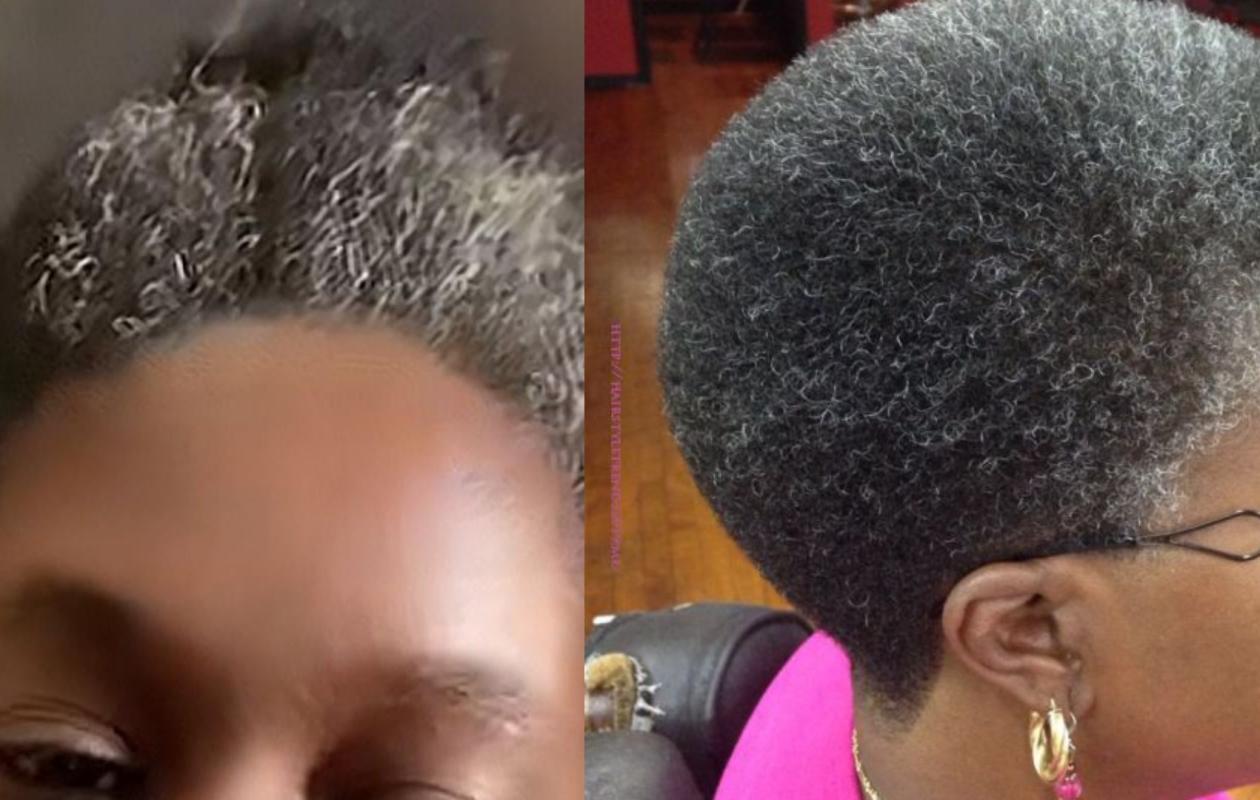
Apparition précoce des cheveux blancs : Génétique, tabac, carences et stress, les vraies causes dévoilées
Graying hair is not simply an inevitable aesthetic consequence of aging. In an exclusive interview with Seneweb, geriatrician Dr. Rokhaya Diakité debunks common misconceptions about graying hair. From the devastating impact of smoking—which quadruples the risk of going gray before the age of thirty—to genetic factors and the role of chronic stress, the expert offers a humanistic perspective on the evolution of our bodies.
White hair, grey hair: what's the difference?
It's the same thing biologically. White hair no longer contains any melanin. "Gray" hair is an optical illusion: it's a mixture of white and colored hairs side by side. The term canities is used to describe the entire phenomenon.
As we get older, what causes gray hair to appear?
Our melanocytes, the tiny color factories located in the hair bulb, become exhausted. Over the years, they produce less melanin, and eventually stop altogether. The hair then grows without any pigment.
If melanocytes slow down their melanin production, why doesn't the skin also lose its color?
Because they are not the same cell populations. Hair melanocytes are very active and regenerate with each hair cycle, which causes them to wear out more quickly. Skin melanocytes are much more stable. Furthermore, we have two types of melanocytes that age at different rates.
At what age do white hairs appear?
On average, they appear between the ages of thirty and thirty-five in Caucasians, between thirty-five and forty in Asians, and between forty and forty-five in people of African descent. However, this is only a statistical average and not an absolute rule.
Can we automatically equate white hair with old age? At thirty-five, you're not old, are you?
No, absolutely not. At thirty-five, you're a young adult. Graying hair is a marker of biological aging, not a reflection of functional aging. In geriatrics, the World Health Organization (WHO) only defines old age as sixty-five or older, while the geriatric population is generally between seventy and seventy-five. Above all, medicine assesses an individual's functional abilities, not the color of their hair.
Read also: "Beddiaw or White Hair: Embracing one's wisdom or giving in to the dictates of eternal youth?"
Studies have shown that heredity is the determining factor in the age of graying. Is this correct?
Yes, it's the number one factor. 60 to 70% of the age of onset is genetic. If your parents went gray early, you're more likely to go gray early too. Specific genes, such as IRF4, have even been identified as regulating this process.
Oxidative stress damages pigment cells. Is it true that stress accelerates aging and, consequently, the appearance of gray hair?
Yes. Oxidative stress corresponds to an accumulation of free radicals that eventually damage melanocytes. Chronic psychological stress increases the production of these free radicals and raises cortisol and adrenaline levels, hormones capable of driving pigment stem cells out of the hair follicle.
Does chronic stress accelerate this process?
Yes, even more so. Chronic stress maintains low-grade inflammation, which accelerates the aging of all the body's cells, including melanocytes. It's not the occasional stress of a single day that turns hair white, but rather prolonged exposure over time.
Can certain deficiencies lead to premature graying? Which ones?
The most documented deficiencies concern intake of vitamin B12, vitamin D, iron, copper, zinc, and an overall protein deficiency. Vitamin B12 deficiency, in particular, is frequently observed in cases of unsupplemented vegetarian diets or pernicious anemia. Correcting this deficiency can sometimes slow the progression of the disease.
Is it proven that smoking leads to premature graying of the hair?
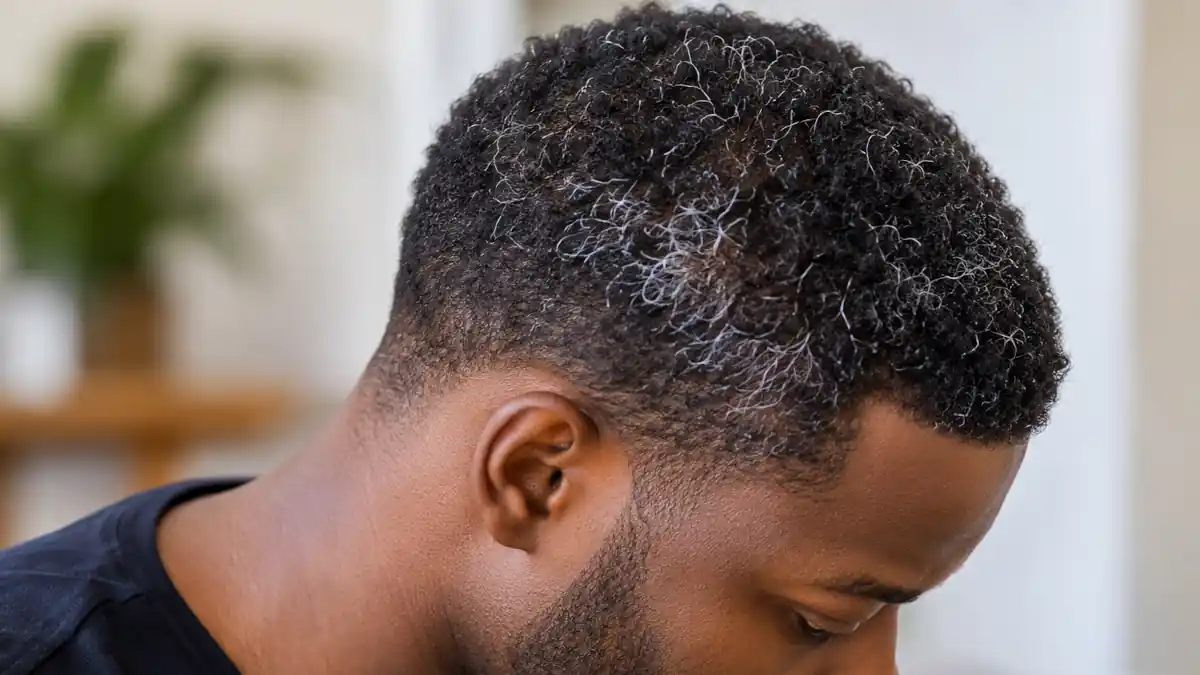
Yes, it's definitively proven. Smoking increases the risk of developing gray hair before the age of thirty by a factor of 2.5 to 4. Cigarette smoke causes massive oxidative stress while significantly reducing blood flow to the scalp.
Are there other factors that can lead to premature graying of the hair in young people under thirty?
Partly, yes. Today, we are seeing a resurgence of premature graying due to a combination of factors including genetics, smoking, chronic stress, pollution, nutritional deficiencies, and thyroid disorders. Premature graying is thus defined as occurring before the age of twenty in Caucasians, before twenty-five in people of African descent, and before thirty in Asians.
If the bleaching is induced by stress, can the hair regain its color when the stress disappears?
This was highlighted by a groundbreaking 2021 study conducted by Columbia University. Researchers demonstrated that graying hair resulting from intense stress can indeed regain its pigmentation if the stressor disappears, provided that the melanocytes are not completely destroyed. Once the cellular reserve is depleted, the phenomenon becomes permanent and irreversible after five to ten years.
In what other exceptional cases can white hair turn black again?
There are three extremely rare cases: correction of a severe vitamin B12 deficiency, therapeutic management of certain thyroid conditions or vitiligo, and regrowth observed following certain anti-inflammatory drug treatments or after alopecia areata. However, these remain the exception and not the general rule.
White hair tends to be dry and rough. Should specific treatments be used?
Yes. Lacking melanin, the hair cuticle becomes more porous, retains less water, and sebum flows less easily. It is therefore advisable to adapt your routine by focusing on hydration, using light oils, and avoiding harsh shampoos and excessive heat exposure.
What about blond hair? How does its graying manifest itself?
Blonde hair also turns gray, but much more subtly. Already containing a minimal amount of melanin, the transition to white is significantly less pronounced. It initially displays off-white shades before evolving into pure white.
Could grey hair be a form of natural defense against skin cancer?
There is a fascinating scientific hypothesis on this subject: when hair melanocytes suffer significant DNA damage, they prefer to self-destruct rather than degenerate into cancerous cells. Graying would thus act as a preventative safety mechanism to avoid the development of follicle melanoma. This phenomenon has been observed in mice and is currently the subject of extensive research in humans.
Does this mean that grey hair is resistant to cancer?
No. It simply means that the body has chosen to sacrifice hair color rather than tolerate the proliferation of a damaged cell. Gray hair itself provides no protection against skin cancer, as the latter depends on melanocytes in the skin, not those in the hair follicle.
Are there any specific medical conditions that cause premature graying?
Yes, several conditions are listed: vitiligo, thyroid disorders (whether hypothyroidism or hyperthyroidism), pernicious anemia, Werner syndrome (characterized by accelerated aging), alopecia areata, and certain autoimmune diseases. When gray hair suddenly appears before the age of twenty, a complete medical evaluation is essential.
Some older people prefer to dye their white hair black. Can we therefore systematically speak of a complex, when it is sometimes simply an aesthetic choice?
Not necessarily. As a geriatrician, I distinguish between two realities: on the one hand, personal aesthetic choice, which remains perfectly legitimate at any age, and on the other hand, the social pressure that sometimes weighs on employees who feel compelled to maintain a youthful appearance in the workplace. It is essential to differentiate between personal pleasure and external pressure. This is not a matter of insecurity, but rather a fundamental right.
Many people are ashamed of their gray hair. Should we demystify this situation today, or is the process already underway?
Yes, and the trend is undeniably underway. The so-called "silver hair" movement has greatly contributed to this evolution. For decades, gray hair was inextricably linked to the approach of old age. Today, it is perceived as a normal, natural, and even elegant stage of life. The role of the media is precisely to address this issue without any value judgment.
How can we approach and serenely embrace this graying of the hair?
It's important to see gray hair as a marker of life lived, not as a pathology. Accepting gray hair means accepting that the body changes. This doesn't mean giving up, but rather adopting a conscious approach: embracing it, opting for a shorter cut, dyeing it, or nourishing it intensely. The key is for the individual to remain in control of their own image.
In the past , white hair served as an age marker, encouraging respect for elders, such as offering them one's seat on public transport. Has this principle become obsolete?
It is true that we have lost some traditional markers of intergenerational respect. Nevertheless, it is important to emphasize that not all elderly people have gray hair, and conversely, many young people are getting it early. Respect should no longer be based solely on hair color. Giving up one's seat is primarily a matter of being mindful of someone's fatigue, responding to a clear need, or simply being courteous, and not a criterion based on hair. Living together in harmony should remain our guiding principle, not physical appearance.




















Commentaires (12)
C est ce genre de documentation, d'articles que nous attendons d'un journal digne.
Bonne continuation et amenez-nou- en beaucoup plus.
Sur l'hygiene, l'alimentation, l'eau, l'alcool, la viande rouge, les graisses, le sommeil, le poids etc...
c'est mieux que de relater des histoires de sexe ou d influenceurs a longueur de journee, pour avoir des centaines de commentaires de gamins inutiles.
Merci
Sinon en tant qu'homme ce n'est pas une priorité... tout ce qui compte c'est d'être tjrs propre à l'extérieur comme en dedans... Un esprit saint dans un corps saint... Ne pas sentir mauvais est cependant un point d'honneur... Salam
ce nest rien . cest juste un signe de sagesse.. maintenant khaleyi amm mois de 40 ans sakh daniou bediaw souff.. motakh niouneh wekh kow wekh souff..
Dou dara.. Jigen yi tamit daniye wekh souff.. mais il faut les enlever avec une creme.. dou touss.. SAGESSE REKK LA SI GUISS.
Participer à la Discussion
Règles de la communauté
💡 Astuce : Utilisez des emojis depuis votre téléphone ou le module emoji ci-dessous. Cliquez sur GIF pour ajouter un GIF animé. Collez un lien X/Twitter, TikTok ou Instagram pour l'afficher automatiquement.
Se connecter
Commentez avec votre profil, votre photo, et soyez averti des réponses.