
Bras de fer autour du PLFR… : L’Économiste Seydou Sow décortique les « dégâts » potentiels d’un rejet
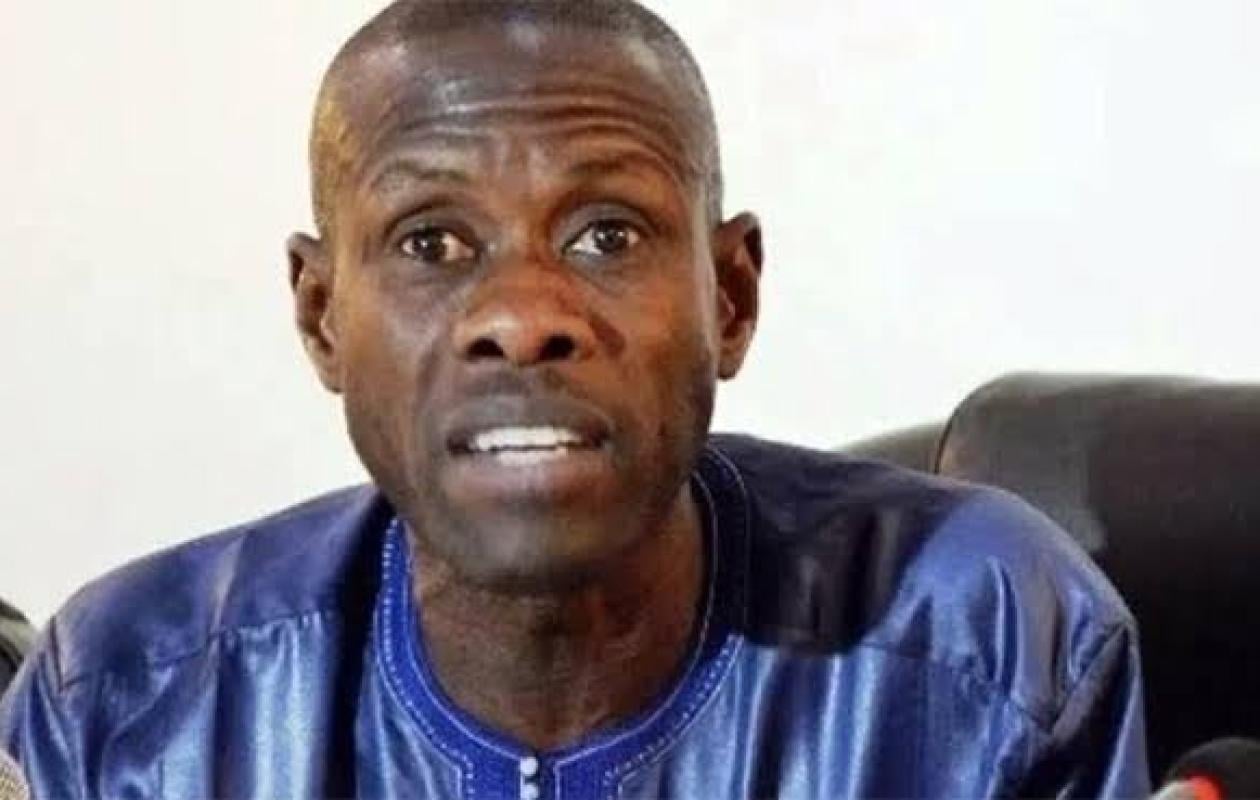
Next Tuesday, the National Assembly will examine the 2026 supplementary budget bill. Already rejected twice in committee, the bill risks not being adopted in plenary session, amid disagreements between the government and the Pastef parliamentary majority, which has made no secret of its intention to block it. What signal would another rejection send to Senegal's creditors and financial partners, particularly the IMF, whose Executive Board has yet to approve the $2.2 billion program? What consequences could such a decision have on public finances and, beyond that, on the daily lives of Senegalese citizens? Financial economist and quantitative analyst Seydou Sow, a doctoral candidate in public economics, offers his analysis of the risks associated with a potential blockage of the bill.
What signal would a rejection of the Amending Finance Bill send to lenders at a time when the country has begun debt treatment and is awaiting validation of its program with the IMF?
This will signal the state's inability to meet its own budgetary commitments at the worst possible time. The technical agreement reached on September 1st with the IMF is not a free handout: it is conditional on prior corrective measures and obtaining financing assurances from partners. At the same time, Senegal has announced a debt restructuring plan for its external debt within the framework of the G20 Common Financial Framework.
In a restructuring, creditors don't negotiate with a country; they negotiate a trajectory. They want a quantified, approved, and implementable budgetary framework. The Supplementary Finance Law (LFR) is the cornerstone of this framework for 2026. Rejecting it is tantamount to telling them that the figures they are supposed to rely on have no legal basis in Senegal itself.
Parliamentary oversight isn't the issue: demanding justifications for investment cuts or special funds is legitimate. The risk lies in the lack of a solution . An amended and then passed text would even send a better signal than one adopted without debate.
What impact would this have on the IMF Executive Board's review of the $2.2 billion program?
The program is a 36-month Extended Credit Facility of approximately $2.2 billion, still subject to Board approval. However, the Board does not approve based on intentions, but on a credible budgetary framework for the current year. Without a passed Amending Finance Act, there is therefore, in practice, no program.
The initial budget law, which would remain in effect, no longer reflects reality: it overestimates revenues by 340 billion CFA francs and underestimates energy subsidies by 540 billion. The IMF, fresh from a period of misrepresentation regarding Senegal's debt, will not approve a budget executed without any prior authorization.
The most likely scenario is a postponement of the review, not a cancellation. But this postponement already has a measurable cost: according to the finance committee's report, donors have suspended their disbursements due to the lack of a program, and 143 billion FCFA of external financing has been withdrawn from the amended budget law.
Would a potential rejection really have consequences on the lives of Senegalese people (salaries, functioning of public services, payment of debt service, etc.)?
Yes, but not necessarily where one might expect. Salaries and debt servicing are the most protected items: the initial budget law remains applicable, and debt appropriations are subject to estimation within the harmonized framework of the WAEMU. Therefore, a rejection does not automatically mean unpaid salaries.
The first to be affected would be companies that owe money to the state. Approximately 1,956 billion FCFA in arrears remain to be cleared, and the Finance Law allocates 300 billion FCFA to continue paying them. Without a vote, construction companies, suppliers, and subcontractors would face payment delays, with direct consequences for employment and household incomes.
Next come energy prices: the initial law allocates only €250 billion in subsidies for a need of €790 billion. Without authorization, the government will either have to spend outside the budget or pass the increase on to consumers at the pump and in electricity prices. Finally, investment and transfers to local authorities would be cut without any arbitration, to the detriment of local public services.
From a financial perspective, is there a risk that this will somewhat disrupt the budget consolidation work undertaken by the State of Senegal?
Yes, and that's the most underestimated effect. Budgetary consolidation isn't a deficit figure, it's a sequence: a sincere diagnosis, a budget that incorporates it, controlled execution, and then a multi-year trajectory.
The 2026 Supplementary Finance Law (LFR 2026) is the first exercise in transparency following the revelation of the hidden debt. It acknowledges the underperformance of the Regional Economic and Social Development Program (PRES) (311.5 billion expected instead of 762.9 billion), the oil shock, and a deficit that has increased from 5.4% to 7.6% of GDP. While its choices, particularly the 555 billion reduction in investment, may be open to debate, it presents the true figures.
Rejecting it without a voted alternative would amount to implementing an initial budget that has become fictitious. This would recreate a gap between the voted budget and the executed budget: precisely the mechanism that led to the debt crisis.
On the other hand, the Senegalese government is managing, with difficulty, to raise funds on the local market. But at rates exceeding 8%. What will be the consequences of these loans at such high rates?
The signs of strain are clear. On October 23, Senegal raised only 55 billion CFA francs on the UMOA-Titres bond issue, compared to the 90 billion CFA francs planned in the official schedule, at over 8% across all maturities. For five-year bonds, it is paying 8.24%, compared to 7.03% for Côte d'Ivoire. By comparison, World Bank support under the CERP program is granted at 1.31% over 31 years.
The first consequence is simple arithmetic: every billion borrowed at 8% costs 80 million FCFA in interest per year. The second relates to maturities: borrowing for one to five years means building a refinancing wall as early as 2027. The third is a crowding-out effect: banks that obtain more than 8% from the government have little incentive to lend to SMEs.
Are debt burdens likely to increase in the coming years?
Yes, and the starting point is already critical. In 2026, debt servicing will reach 5,801 billion FCFA, compared to 5,517 billion FCFA in general budget revenue: the state is paying its creditors more than it is receiving. Interest payments alone will amount to 1,285 billion FCFA, or 26% of tax revenue.
By 2027, Senegal will need to find over 3.5 trillion CFA francs just to service its debt denominated in CFA francs. Each renewal exceeding 8% will increase the bill. The only way to reverse this trend is through the return of concessional financing, which requires the IMF program. The key indicator to monitor is no longer the debt-to-GDP ratio, but the interest-to-revenue ratio.
Read also: "Further rejection of the supplementary budget bill in committee: Pastef gives its reasons"
What would have been the consequences if Senegal had not been able to rely on this local financial market at a time when all other donors had turned their backs on it (suspension of IMF program, inaccessible international market…)?
The country would very likely have defaulted. Since the suspension of the IMF program in 2024 and the closure of the international market, the WAEMU market has been practically the only accessible source of financing. It has allowed Senegal to meet its debt obligations, including those on Eurobonds. Without it, Senegal would have experienced the same scenario as Ghana in 2022 or Zambia in 2020: massive arrears, salary delays, and stalled investment.
But this safety net has its limits. Senegal owes approximately 10.5 trillion CFA francs to creditors in the region: banks, insurers, investment funds, businesses, and individuals. A default on this debt would weaken bank balance sheets and the value of securities pledged as collateral to the BCEAO, and subsequently household savings. The risk would become systemic for the entire Union.
In short, what is your opinion on this overall situation?
Senegal is at a crucial juncture. The debate surrounding the supplementary budget law pits two legitimate demands against each other: the budgetary rigor expected by its partners, and the protection of purchasing power and investment championed by elected officials. But the real choice is not between voting and abstaining. It is between an amended, responsible, and executable budget, and an execution without direction.
Without a Financial Reform Law (FRL), there is no IMF program. Without a program, there is no concessional financing or orderly debt treatment. And without this, the entire burden falls on a regional market that is already showing signs of strain, with a risk of contagion throughout the WAEMU financial system.
A way out exists: a swift compromise between the government and its majority on a text that takes into account the Assembly's demands for transparency. Senegal can afford a demanding parliamentary debate. It cannot afford a budget deficit.
Interview by Youssouf SANE















Commentaires (4)
C'est d'abord le PM Aminou Lô qui déclare devant l'assemblée (DPG) que son gouvernement maintient le PRES (de Sonko) et n'y change rien. Ce discours ne semble pas plaire au sommet. Lors de la présentation de la LFR, le ministre des finances justifie la soumission au FMI par la non atteinte des objectifs du PRES. Réponse de l'assemblée: faites en l'évaluation, puis revenez, discutons d'elle. Le gouvernement ne veut discuter d'aucune évaluation. Il veut juste maintenir ses chiffres et les faire répéter: le plan Sonko attendait 700 milliards, nous n'avons eu que 300. Donc, il faut le jeter à la poubelle et aller au FMI.
Puisque c'est devenu un pouvoir qui ne compte que sur les médias pour utiliser des éléments de langage faux en direction de l'opinion, l'assemblée commença à donner des explications. En clair, on ne peut reprocher un manque de résultats à un programme qu'on n'a pas correctement appliquer. Pour taxer les jeux de hasard, il faut mettre en place des outils (plate-forme) pour contrôler les jeux en fraude sur le net et récupérer les taxes. Cela n'a pas été fait. On ne peut donc pas prétendre qu'on attendait tant des jeux de hasard et qu'on ne l'a pas eu. La vérité est qu'on n'a pas correctement appliqué la solution. C'est la même chose pour la taxation des transfert d'argent. Et la bonne mise en œuvre attendait de simple décrets de Diomaye, d'arrêtés du ministre des finances, qu'ils n'ont pas fait pour on ne sait pourquoi alors que Sonko était PM. Dans ces conditions, parler d'absence de résultats du PRES sans préciser que Diomaye a refusé de signer des décrets, que le ministre de finances a refusé de signer des arriérés, c'est de la malhonnêteté.
Et voilà où on se retrouve. Le gouvernement refuse une évaluation à analyser avec l'assemblée, le PM refuse tout débat public avec le PAN, et maintenant une certaine presse est chargée de porter la répétition que le PRES a échoué à atteindre ses objectifs.
Si cela n'est pas une manipulation pour vous, je me demande ce que vous allez appeler manipulation.
Participer à la Discussion
Règles de la communauté
💡 Astuce : Utilisez des emojis depuis votre téléphone ou le module emoji ci-dessous. Cliquez sur GIF pour ajouter un GIF animé. Collez un lien X/Twitter, TikTok ou Instagram pour l'afficher automatiquement.
Se connecter
Commentez avec votre profil, votre photo, et soyez averti des réponses.