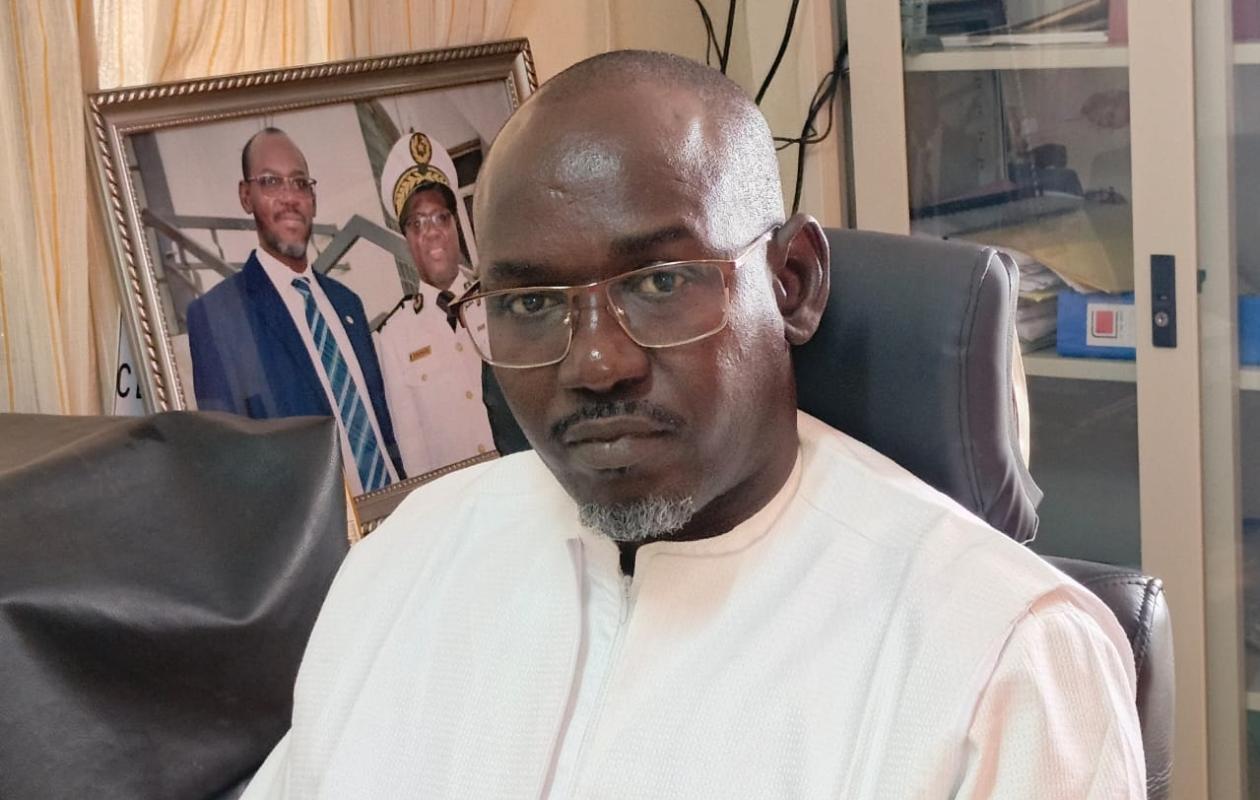
Dr Diabel Dramé (SAMES) : « Les médecins sont prêts à retourner au front si l’État ne respecte pas ses engagements »
Amid social frustrations, a shortage of specialists, contested human resources governance, and concerns about the future of the healthcare system, Dr. Diabel Dramé, the national secretary general of the Autonomous Union of Physicians, Pharmacists, and Dentists of Senegal (SAMES), paints a stark picture. In this interview, he discusses the strained relations with the government, the demands of physicians, the challenges of emergency medical care, the brain drain, and the reforms he deems essential for the long-term preservation of the Senegalese healthcare system. Here is the interview.
The healthcare sector is marked by several protest movements. What is the current state of relations between SAMES and the government?
Relations are currently quite strained. We have lost much hope regarding the commitments made by the State. As a reminder, SAMES submitted a list of demands as early as 2023. Discussions were initiated but then suspended due to the socio-political context at the time. With the arrival of the new regime and the signing of the Social Stability Pact, we agreed, out of patriotism and a sense of responsibility, to give the authorities time to find solutions to our concerns. Unfortunately, it is clear that no significant progress has been made. Today, we are in a phase of remobilization. We are ready to put our list of demands back on the table and, if our concerns continue to be ignored, we do not rule out resuming the union struggle.
Have the doctors' demands received any initial response from the authorities?
No. If we had seen strong signs demonstrating a genuine willingness to address the sector's concerns, we would have acknowledged it. But today, there is no concrete evidence to support this claim. We accepted the Social Pact in a spirit of appeasement and responsibility. However, the tripartite commitments made at that time are slow to be fulfilled. We are therefore perfectly consistent with our initial position: if the commitments are not honored, we will return to the fight.
Does the merger between SAMES and SUTSAS signal a new balance of power in the sector?
Our recent rapprochement stems from a specific situation: the difficulties encountered by our colleagues at the Senegalese Pharmaceutical Regulatory Agency (ARP), particularly in the so-called "Software" case. We felt it necessary to offer them our support. That said, we cannot rule out a broader rapprochement in the future. Health sector unions often share common concerns. When the time comes, it may be necessary to harmonize our positions to jointly defend the interests of healthcare workers.
Is a national strike still a possibility in the coming weeks?
Yes, it remains a possibility if the situation remains unchanged. We have shown patience and responsibility. But social dialogue has not worked as planned. The sectoral committees stipulated in the Social Pact have not been properly established. In the health sector, we even had to exert pressure to secure an initial meeting. Since then, dialogue has practically stalled. If no serious solution is found, we will be forced to resume our union activities.
What are the main concerns of Senegalese doctors today?
There are many concerns. First, there's the compensation system. We belong to the special A category of the civil service, but our salaries don't always reflect this reality. Then there's the review of statutes and career conditions. We refuse to allow decision-makers in the healthcare sector to be left behind while other sectors benefit from substantial improvements. Housing is also a priority. An agreement for the allocation of ten hectares in Bambilor has been signed for our cooperative, but concrete progress is slow. Finally, the issue of retirement has become crucial. The pensions of doctors, pharmacists, and dentists must be increased. We've even noticed anomalies in pension calculations since the retirement age was raised.
The Ministry of Health recently launched the Pikine hospital's emergency medical service (SMUR). What is your opinion of this initiative?
This is a step in the right direction. It's not a competing structure to the national emergency medical service (SAMU), but rather a strategy aimed at bringing emergency care closer to the population. The goal is to reduce response times and enable early medical intervention in emergencies before the patient arrives at a suitable facility.
Some fear that hospital-based mobile intensive care units (SMURs) will weaken the national emergency medical services (SAMU). Do you share this concern?
No. In our view, it's still the same national system. It's primarily the organizational methods that are evolving to improve the system's efficiency. The key is to ensure good coordination between the various stakeholders to avoid duplication and overlap.
How can pre-hospital care be improved?
Human, material, and logistical resources must be strengthened. Emergency medicine relies on significant resources. Coordination between healthcare facilities and medical evacuation services must also be improved. This is particularly true in large urban areas like Dakar.
The shortage of specialist doctors remains a reality in several regions. How can this trend be reversed?
We are still far from the internationally recommended ratios. To reverse this trend, we must act simultaneously on several fronts: improving working conditions, making medical careers more attractive, revising specialist training methods, and above all, recruiting more people. The problem is that we sometimes train specialists who cannot find employment immediately. Some are then forced to go abroad.
How can we retain young doctors in the face of expatriation opportunities?
We need to offer them prospects. This requires decent salaries, better career management, and regular recruitment. For several years now, large-scale recruitment has been lacking. Under these circumstances, it's difficult to blame young doctors for seeking professional opportunities elsewhere.
Is the motivation system still appropriate?
No. It deserves profound reform. Doctors expect greater recognition of their contribution to the functioning of the healthcare system.
Is the main problem in the healthcare system a lack of infrastructure or human resources?
Both are important, but human resources remain crucial. Hospitals can be built and modern equipment acquired. However, without qualified staff properly distributed across the country, these investments will not produce the expected results.
Do the new hospitals have the necessary staff?
Not always. In some cases, institutions face staff shortages that limit their optimal functioning.
What is your assessment of the health policy implemented since the arrival of the new regime?
We are still waiting for concrete results. The President of the Republic has renewed his confidence in the Minister of Health, and we respect that choice. But we will judge him primarily on the results achieved. It is impossible to achieve lasting reform of the healthcare system without fully involving doctors, pharmacists, and dentists.
Is social dialogue functioning properly?
No. Dialogue should be ongoing in the health sector. Unfortunately, this is not the case today.
Is SAMES involved in the major reforms currently underway?
Not enough. We believe that representative organizations must be more involved in reforms that will shape the future of the healthcare system.
You also criticize the human resources management. Why?
Because we are seeing assignments and appointments that are not always based on objective criteria. The healthcare sector needs transparent rules, known to all, and based on skills, experience, and merit. Political considerations must not take precedence over technical requirements.
If you had three priority measures to recommend to the President of the Republic?
The first step would be to establish a clear and transparent regulatory framework for human resources governance in the healthcare sector. The second would be to review the compensation system to provide doctors, pharmacists, and dentists with fairer social conditions. Finally, it is imperative to increase retirement pensions and correct the anomalies observed in their calculation.
One last word?
I urge all healthcare workers to continue their efforts to provide quality care to the population. But I also call on the government to honor the commitments made under the Social Pact. Finally, I implore doctors, pharmacists, and dentists to remain mobilized. If no progress is made, we must prepare for future union action.










Commentaires (12)
Participer à la Discussion
Règles de la communauté :
💡 Astuce : Utilisez des emojis depuis votre téléphone ou le module emoji ci-dessous. Cliquez sur GIF pour ajouter un GIF animé. Collez un lien X/Twitter, TikTok ou Instagram pour l'afficher automatiquement.