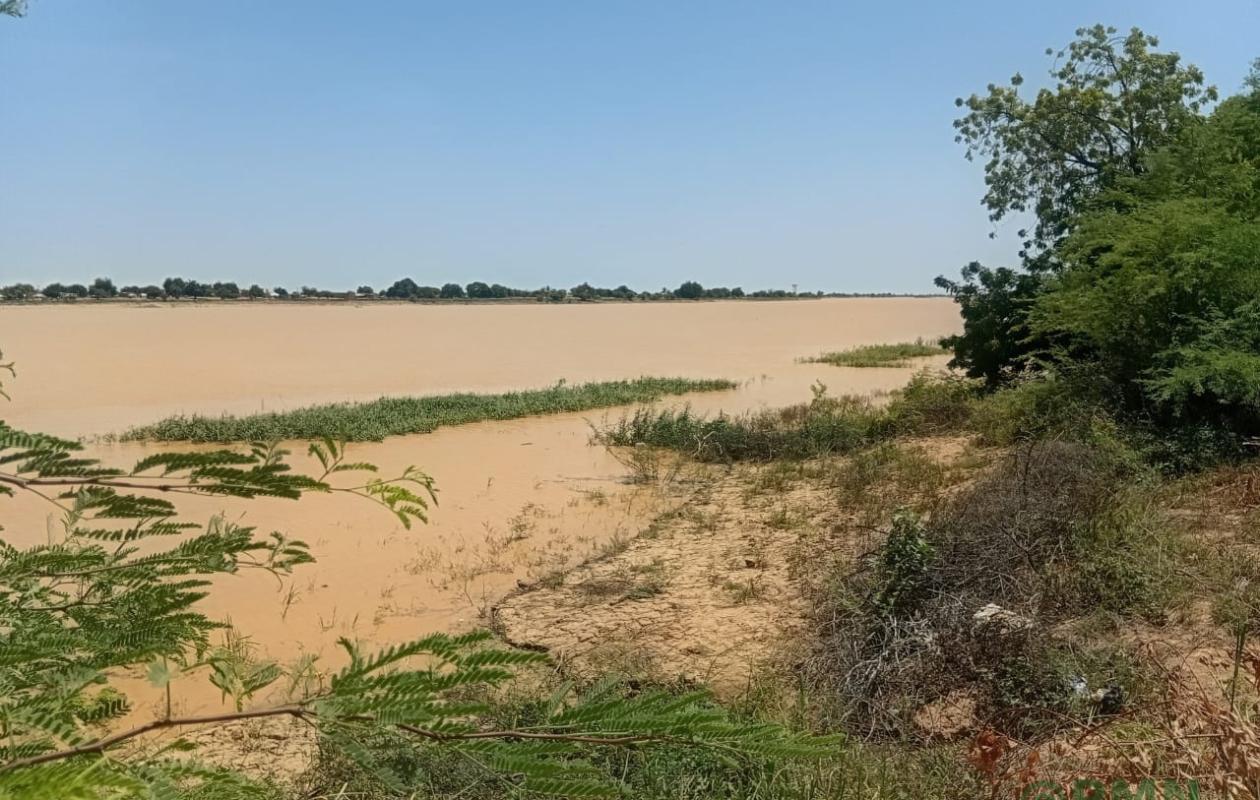
Fleuve Sénégal : La nouvelle crue se confirme, près de 2 m en deux jours à Kidira et 70 cm à Matam
The receding waters have stopped. The Senegal River continues its spectacular rise this Tuesday, September 29, with nearly 2 meters recorded in 48 hours on the Falémé and a wave now reaching Matam.
The Senegal River has decided to rise again. And quickly. Following an initial surge of more than a meter, the new flood was confirmed this Tuesday morning along its entire course, according to the bulletin from the Saint-Louis Water Resources Brigade.
The most telling figure comes from the Falémé, the tributary that sets the tone. At Kidira, the water level is at 7.19 m this morning, compared to 5.21 m two days ago. Nearly 2 m in 48 hours! We're still far from an alert, but the rise is dramatic.
At Bakel, just after the confluence, the rise continues: 7.61 m (up 37 cm in 24 hours). Last year on the same date, it was at 9.78 m, nearing the alert level of 10 m.
The surge is now being felt most acutely in Matam. The water level is at 5.28 meters this morning, compared to 4.58 meters yesterday, an increase of 70 centimeters overnight. This is the largest rise of the day on the main river. The alert level is at 8 meters.
Further downstream, the rise is more modest, but still real. Podor is at 3.39 m, with a rise of 4 cm. Richard-Toll is at 2.74 m (up 8 cm). At Saint-Louis, the river is stable at 0.94 m, well below the alert level of 1.75 m.
After raising hopes of the end of the rainy season, the river is a reminder that the season is not over. The phenomenon is fueled by the weekend rains in the Fouta Djallon region.
At Manantali, the reservoir level is at 205.08 m, with some leeway to absorb the impact. At Diama, the sluice gates are open at 822 m3/s and the upstream level is intentionally lowered to, according to the brigade, "prepare for the passage of the flood without major consequences for Saint-Louis".





















Commentaires (1)
Nous ne pouvons que constater puis commenter.
Nous voulons de l'eau : eau de pluie ou eau de crue mais qu'elle soit sans dégât aussi bien pour les humains que pour le bétail.
Plus elle se signale durant octobre voire novembre plus cela devient davantage inquiétant : étant un phénomène rare s'il n'est pas ou ne sera pas exceptionnel.
Participer à la Discussion
Règles de la communauté
💡 Astuce : Utilisez des emojis depuis votre téléphone ou le module emoji ci-dessous. Cliquez sur GIF pour ajouter un GIF animé. Collez un lien X/Twitter, TikTok ou Instagram pour l'afficher automatiquement.
Se connecter
Commentez avec votre profil, votre photo, et soyez averti des réponses.