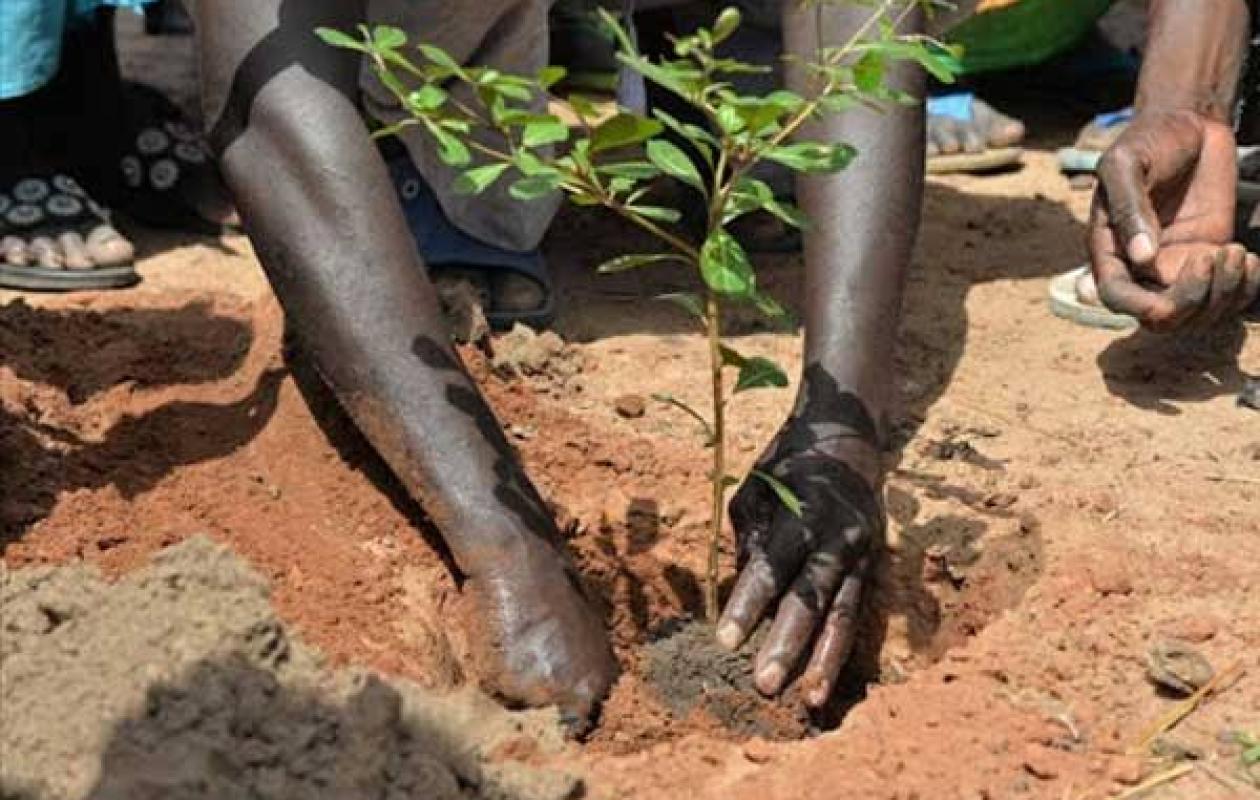
Journée nationale de l’arbre : Le bilan mitigé de la campagne nationale de reboisement 2025
As Darou Salam (Niorio, Kaolack) prepares to host National Tree Day this Sunday, August 9, 2026, the Directorate of Water, Forests, Hunting, and Soil Conservation has released the results of the 2025 National Reforestation Campaign (CNR). In terms of large-scale planting, the objective is far from being met. Indeed, of the 7,126 hectares that the Directorate of Water, Forests, Hunting, and Soil Conservation planned to reforest, only 3,560.6 hectares were ultimately completed, representing an execution rate of 50%.
The assessment by the Reforestation and Soil Conservation Division (DRCS) remains positive for linear plantings. Of a target of 1,860 kilometers, 1,620.5 kilometers have been completed, representing an execution rate of 87.1%.
The result is even significantly higher than forecasts for restoration and rehabilitation plantings. While 2,268 hectares were planned, the actual area planted reached 4,512.1 hectares, representing an execution rate of 198.9%. For mangroves, 263.92 hectares were reforested compared to the planned 245 hectares, representing 107.7% of the target.
Nearly 10 million plants produced
Regarding plant production, the campaign had set a target of 13.78 million plants. In total, 9,918,920 plants were produced in 1,489 nurseries, representing an achievement rate of 72%. However, the number of nurseries exceeded the forecast by 1,400, with a completion rate of 106.35%.
The report also highlights shortcomings in the supply of inputs. Of the 10 million pods planned, 8.5 million were made available, representing 85%. For seeds, the level of implementation is much lower: 2,247.4 kg were distributed out of the 5,000 kg planned, or 44.94%.
Protected species, another point of concern
The campaign yielded 151 species. However, the report notes a low representation of species protected by the Forestry Code.
Of the 11 fully protected species, only Celtis integrifolia was produced, with 702 plants, representing 0.007%. Of the 17 partially protected species, three were not produced at all: Borassus aethiopum, Chlorophora regia, and Grewia bicolor. Several other protected species also showed particularly low production rates.
In light of these results, the report recommends, among other things, strengthening the supply of inputs, improving the layout of nurseries, and placing greater emphasis on the production of species fully protected by the Forestry Code. It also advocates for better monitoring of reforested areas.
This year's theme, "From Plants to Trees: Responsibility to Communities," emphasizes the essential role of local populations in monitoring, maintaining, and ensuring the survival of plants, thereby guaranteeing the success of reforestation campaigns. The featured trees for this 43rd edition are the African locust bean (Parkia biglobosa) and the Nibeday (Moringa oleifera), two species renowned for their numerous ecological, nutritional, and socio-economic benefits.






















Commentaires (3)
Participer à la Discussion
Règles de la communauté
💡 Astuce : Utilisez des emojis depuis votre téléphone ou le module emoji ci-dessous. Cliquez sur GIF pour ajouter un GIF animé. Collez un lien X/Twitter, TikTok ou Instagram pour l'afficher automatiquement.
Se connecter
Commentez avec votre profil, votre photo, et soyez averti des réponses.