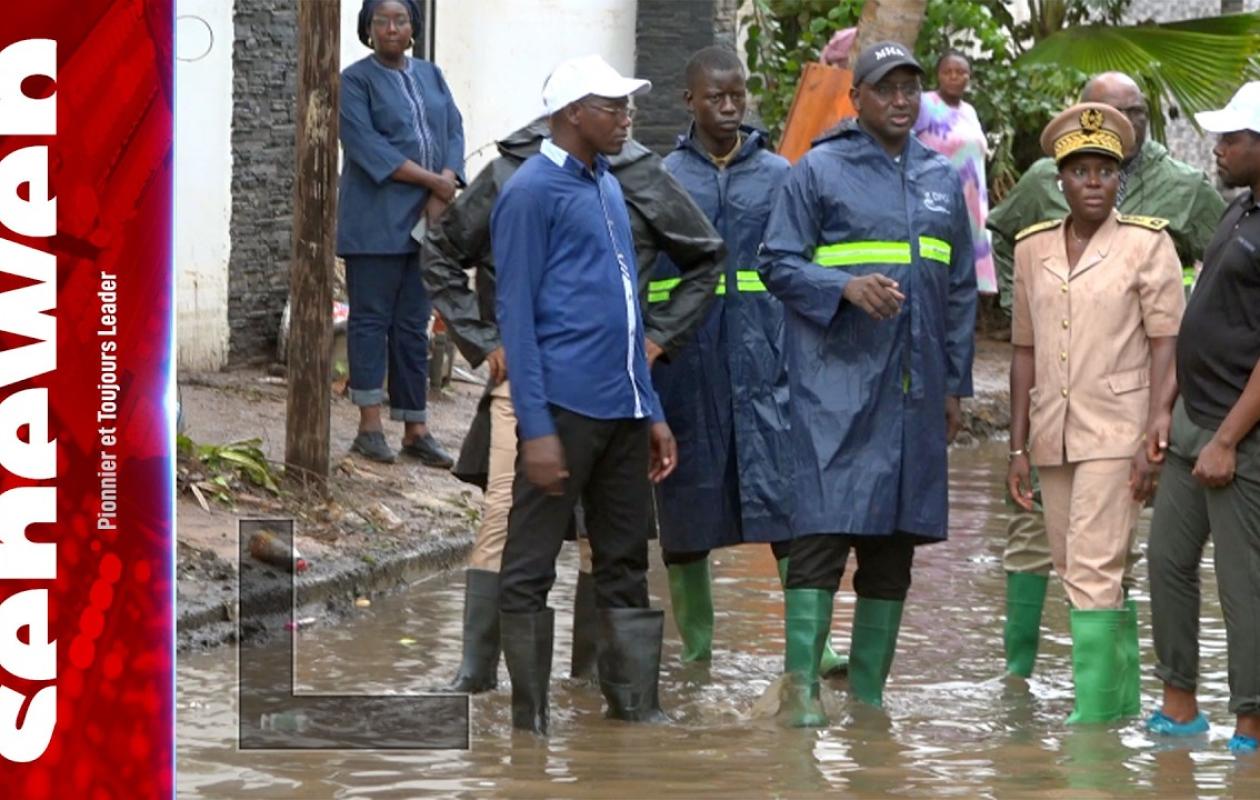
Lutte contre les inondations : Cheikh Tidiane Dièye dévoile la stratégie 2025-2040 de 921 milliards FCFA
The government plans to deploy, at the end of the rainy season, a new national flood management strategy estimated at 921 billion CFA francs. Projected for implementation by 2040, it is to be carried out over approximately fifteen years, announced the Minister of Water and Sanitation, Cheikh Tidiane Dièye, on Wednesday.
“As soon as this rainy season ends, we will begin implementing this new national flood management strategy,” he stated, specifying that this process will be preceded by a comprehensive assessment of the rainy season. “We will evaluate the rainy season, assess the challenges, draw the necessary lessons, and then communicate on the new 2025-2040 strategy,” he added.
This strategy must take into account the demographic and urban development of Dakar. "Dakar has grown between 1980 and now. Dakar has gone from 1 million inhabitants to almost 4 million. The infrastructure has not changed much since then," the minister noted.
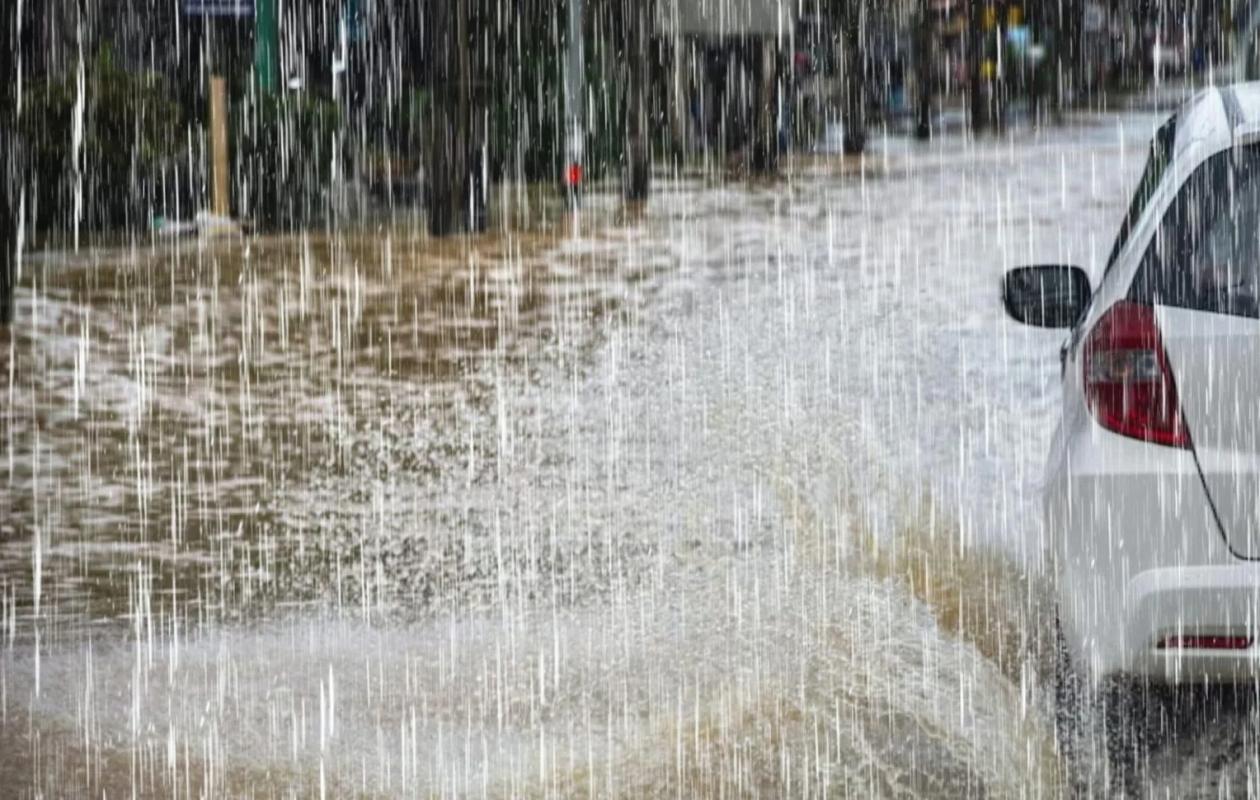
Meanwhile, the pumping system has been reinforced in several areas of the capital affected by the floods. Following a field visit to the Front de Terre canal, the catchment area, the Bellevue des Maristes neighborhood, and Mbao, Cheikh Tidiane Dièye reported an improvement in the situation. "The pumping is producing very significant results. Throughout Dakar, and also in other regions of Senegal, we are seeing a slight improvement: the water levels are starting to recede in some areas, and in some places, they have even been completely drained," he stated.
At the catchment area and the Front de Terre canal, he assured that the structures visited "are functioning correctly," while also mentioning the reinforcement of the system and the removal of solid waste that could obstruct the flow paths. "The ONAS station is also operating at full capacity," he indicated.
In the Bellevue district, the water drainage is, according to the minister, almost complete. "Today, the district is being completely evacuated. Very little water remains," he stated. Hydro-jetting trucks will be deployed to remove the last remaining pockets of water. In this area, authorities are working to lower the lake level by increasing the pumping of water. "We worked at Cambérène to open up the waterways and increase the pumping of water from the Maristes area. And today, we are also seeing a slight improvement there," explained Cheikh Tidiane Dièye.
At the Mbao forest, where water from Keur Massar converges before being discharged into the stream, nearly seven additional pumps are now operational. "We now have nearly seven pumps functioning with all the necessary supporting equipment, including generators," the minister stated.
Permanent monitoring of the site has also been put in place to prevent obstructions of the canals by solid waste, including the presence of a gendarmerie team responsible for securing the system.
“The government will continue to assume its responsibilities,” assured Cheikh Tidiane Dièye.
















Commentaires (16)
Comme les zones concernées se situent en dessous du niveau de la mer ou sont isolées de celle-ci par des zones résidentielles, le principe des vases communicants est soit rendu inopérant par la différence d'altitude, soit bloqué par les habitations. La solution est bien connue : un réseau de stations de pompage. Il s'agit de collecter l'eau et de la rejeter en mer, un peu comme on transfère un liquide entre deux vases communicants. Prenons l'exemple de La Nouvelle-Orléans, qui s'appuie sur un système complexe de 70 à 84 stations de pompage, gérées en grande partie par une entreprise telle que la nôtre (SONES), pour évacuer les eaux pluviales des zones situées sous le niveau de la mer.
Leur fonction première est de compenser la topographie de la ville (située en dessous du niveau de la mer) en pompant les eaux de pluie vers les canaux et les lacs environnants.
Une infrastructure clé : le réseau comprend des dizaines de stations de drainage majeures. Les installations les plus importantes peuvent déplacer des millions de mètres cubes par minute afin de prévenir les inondations lors d'intempéries violentes et d'ouragans.
?
Participer à la Discussion
Règles de la communauté
💡 Astuce : Utilisez des emojis depuis votre téléphone ou le module emoji ci-dessous. Cliquez sur GIF pour ajouter un GIF animé. Collez un lien X/Twitter, TikTok ou Instagram pour l'afficher automatiquement.
Se connecter
Commentez avec votre profil, votre photo, et soyez averti des réponses.