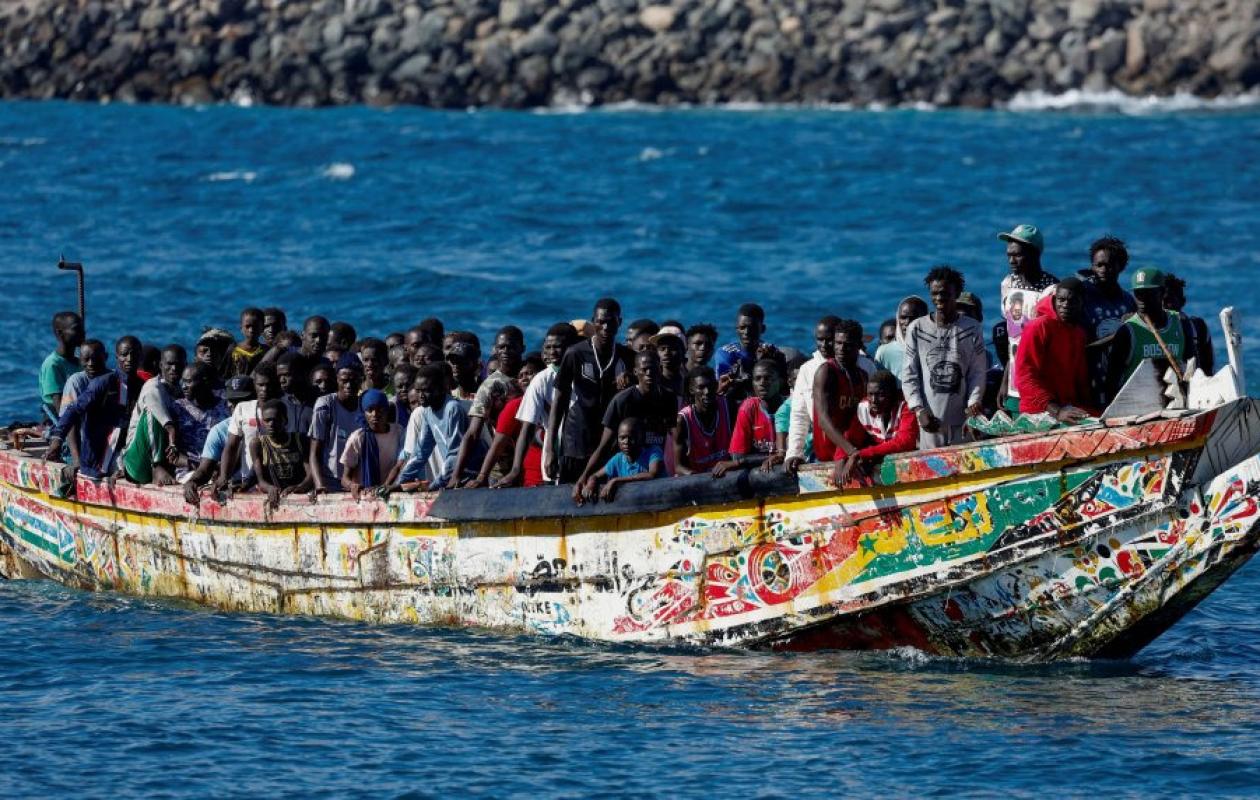
Désinformation et drames en mer : Le plan du CILMI pour rétablir la vérité auprès des jeunes
At a time when social networks, messaging apps and digital platforms are shaping the perceptions of millions of people, misinformation has become one of the main factors fueling irregular migration.
Every day, thousands of pieces of content circulate, promising well-paid jobs, supposedly safe routes, or easy relocation abroad. Behind these carefully crafted narratives, however, lie very different realities: exploitation, violence, human trafficking, financial losses, arbitrary detention, and sometimes even death.
In this environment where falsehood often travels faster than truth, access to reliable information is no longer just a communication issue; it has become a real tool for protecting people and an essential lever for prevention.
It is precisely within this framework that the Interministerial Committee for Combating Irregular Migration (CILMI) operates. This body, under the authority and supervision of the Minister of the Interior and Public Security, is responsible for coordinating all actions undertaken by ministries, relevant services, and partners involved in combating irregular migration, monitoring borders, and promoting safe, orderly, and regular migration. This coordination ensures the coherence of public policies and strengthens the effectiveness of the State's responses to a constantly evolving migration phenomenon.
To achieve this goal, CILMI is not limiting itself to communication campaigns. It has established a toll-free number , 800 00 10 15 , to inform, guide, and address citizens' concerns.
In Senegal, as in many countries in the region, aspirations for mobility are perfectly legitimate. They are fueled by the desire to access better economic opportunities, pursue studies, join relatives, or simply build a better future. Migration, when it takes place within a legal, safe, and orderly framework, remains a right recognized by international instruments and national legislation.
However, for migration policies to effectively address the realities on the ground, they must be based on reliable information as well as a shared strategic vision. It is with this in mind that CILMI developed the National Strategy to Combat The National Strategy for the Management of Irregular Migration (SNLMI) 2026-2035 serves as the framework for interventions by all national stakeholders. This strategy is based on an integrated approach centered on prevention, strengthening migration governance, protecting migrants, dismantling criminal networks, and promoting alternatives and pathways for regular migration.
As Dr. Modou Diagne, Permanent Secretary of CILMI, points out, "without reliable, up-to-date and structured data, it is impossible to design effective public policies, target interventions or evaluate their impact."
This requirement explains the creation, within CILMI, of a Data Collection and Analysis Centre on Migration (CCADM). This system now constitutes a strategic decision-making tool.
Beyond statistics, migration decisions remain heavily influenced by perceptions, success stories and social representations circulating within communities.
"The image that sticks with you is that of our friends who managed to go to Europe and who, after a few years, start building houses here," says Bamba Mbaye, an entrepreneur in the livestock sector in Tambacounda.
These narratives, often partial and idealized, fuel expectations that do not always reflect the reality of migration journeys. It is precisely on these representations that criminal networks specializing in the illegal trafficking of migrants rely to recruit new candidates for departure.
The real danger arises when these legitimate aspirations are exploited by organized criminal networks that have profoundly adapted their methods by investing in social media, private messaging groups, and digital platforms to reach an ever-wider audience. According to the United Nations Office on Drugs and Crime (UNODC), these tools are now being used to promote their services, spread misleading information, and make direct contact with potential migrants.
Videos showcasing spectacular success stories, deliberately incomplete testimonies, fake job offers, and promises of a "guaranteed" passage to Europe all contribute to a distorted image of migration. Risks are minimized, administrative difficulties are concealed, and the tragedies experienced by many migrants remain largely invisible.
According to the International Organization for Migration's (IOM) Fatal Journeys report (2017) , deaths and disappearances on migration routes remain largely underdocumented and the actual number of victims is probably much higher than the available statistics.
Faced with this reality, CILMI favours a comprehensive approach based on prevention, institutional coordination and access to reliable information.
CILMI has thus set itself a clear ambition: to put facts back at the heart of decision-making. The objective is to provide citizens with reliable, verified, and accessible information so that everyone can develop their migration plan with full knowledge of the realities.
This approach is based on a simple yet essential conviction: a well-informed person is a better-protected person. It is not about condemning migration projects, nor about questioning the legitimate aspirations of young Senegalese people for mobility. Rather, it is about enabling them to distinguish facts from manipulation, to understand the procedures for regular migration, to objectively assess the risks associated with irregular journeys, and to identify existing opportunities both in Senegal and abroad.
This mission takes on particular importance in a digital environment where the visibility of content directly influences the decisions of potential migrants. For CILMI, the challenge now lies in making reliable information more visible, more accessible, and more credible than the misleading content disseminated by criminal networks.
A viral video or a widely shared post can sometimes have more impact than a technical report or a traditional information campaign. In this new digital environment, the fight against irregular migration also hinges on the credibility of available information and the ability of public institutions to build trust with citizens.
This is why CILMI is developing a local communication strategy based on the territorialization of its interventions, with the creation of regional and departmental committees to combat irregular migration.
One of the key messages conveyed by CILMI is that migration is not the only way to build a future. While mobility remains a right when it takes place within a legal, safe, and orderly framework, it is equally important to make people aware of the numerous opportunities available in Senegal in terms of employment, vocational training, entrepreneurship, and socio-economic integration.
Senegal currently has several public mechanisms designed to support young people in carrying out their projects. Among them are the National Agency for the Promotion of Youth Employment (ANPEJ), which assists young people in their job search and entrepreneurial initiatives; the Vocational and Technical Training Financing Fund (3FPT), which finances skills-based training adapted to the needs of the labor market; and the Vocational and Technical Training Centers (CFPT), which develop the skills necessary for better economic integration.
Moreover, "ANPEJ organizes information and awareness caravans. These initiatives allow young people who aspire to a better future to become better informed and discover the opportunities that exist here in Senegal," explains Moussa Ndour, head of ANPEJ in Tambacounda.
This message resonates favorably with many young people.
“What you refuse to do here, you may be forced to do elsewhere. Whereas if you do it here, it can contribute to the development of the local economy,” testifies Rouguiyatou Diop, a student at the Tambacounda Vocational and Technical Training Center.
By directing citizens to the appropriate structures and promoting existing public mechanisms, CILMI helps to broaden the range of possibilities and to place migration choices within a more balanced framework, based on objective information and a better understanding of national opportunities.
This approach is fully aligned with the SNLMI's objectives, which prioritize prevention and the development of socio-economic alternatives as key levers for reducing irregular migration. By promoting access to information, training, employment, and entrepreneurship, CILMI, alongside sectoral ministries and specialized organizations, contributes to strengthening the resilience of populations most vulnerable to the rhetoric of smuggling networks.
This approach is also part of an international trend that now recognizes disinformation as a major factor in the vulnerability of migrants. Several international organizations are currently developing innovative approaches to combat the information manipulation that precedes departures.
This evolution reflects a growing awareness: migration policies can no longer be limited to border management or downstream interventions. They must also address the root causes of irregular migration, combat misinformation, and strengthen citizens' capacity to make informed decisions through the development of psychosocial skills.
In this sense, the fight against irregular migration would no longer aim only to deter but also to strengthen the capacity of young or potential migrants to make fair, autonomous and resilient choices.
For CILMI, this reality confirms that information and communication now constitute a genuine instrument of protection. This translates concretely into the organization of awareness and training campaigns in areas heavily affected by irregular migration, and the involvement of returning migrants to share their experiences in order to dismantle preconceived notions.
By making information an accessible public good, data a decision-making tool, and inter-ministerial coordination a governance principle, CILMI is establishing itself as the main national mechanism for coordinating public policies in the fight against irregular migration.
Through the implementation of the SNLMI and its operational action plan, the development of the National Centre for the Collection and Analysis of Migration Data, the establishment of a toll-free number, the territorialization of its action through the CRLMI and the CDLMI, as well as the mobilization of all institutional and community actors, the CILMI is working to build a more effective, more inclusive and more grounded migration governance.




















Commentaires (3)
Mais il aura peu d’impact: ceux qui devraient le lire ne sont pas intéressés par la lecture et l'information vraie.
Participer à la Discussion
Règles de la communauté
💡 Astuce : Utilisez des emojis depuis votre téléphone ou le module emoji ci-dessous. Cliquez sur GIF pour ajouter un GIF animé. Collez un lien X/Twitter, TikTok ou Instagram pour l'afficher automatiquement.
Se connecter
Commentez avec votre profil, votre photo, et soyez averti des réponses.