Diass : Le plan du Sénégal pour baisser le coût des routes de plus de 66 %
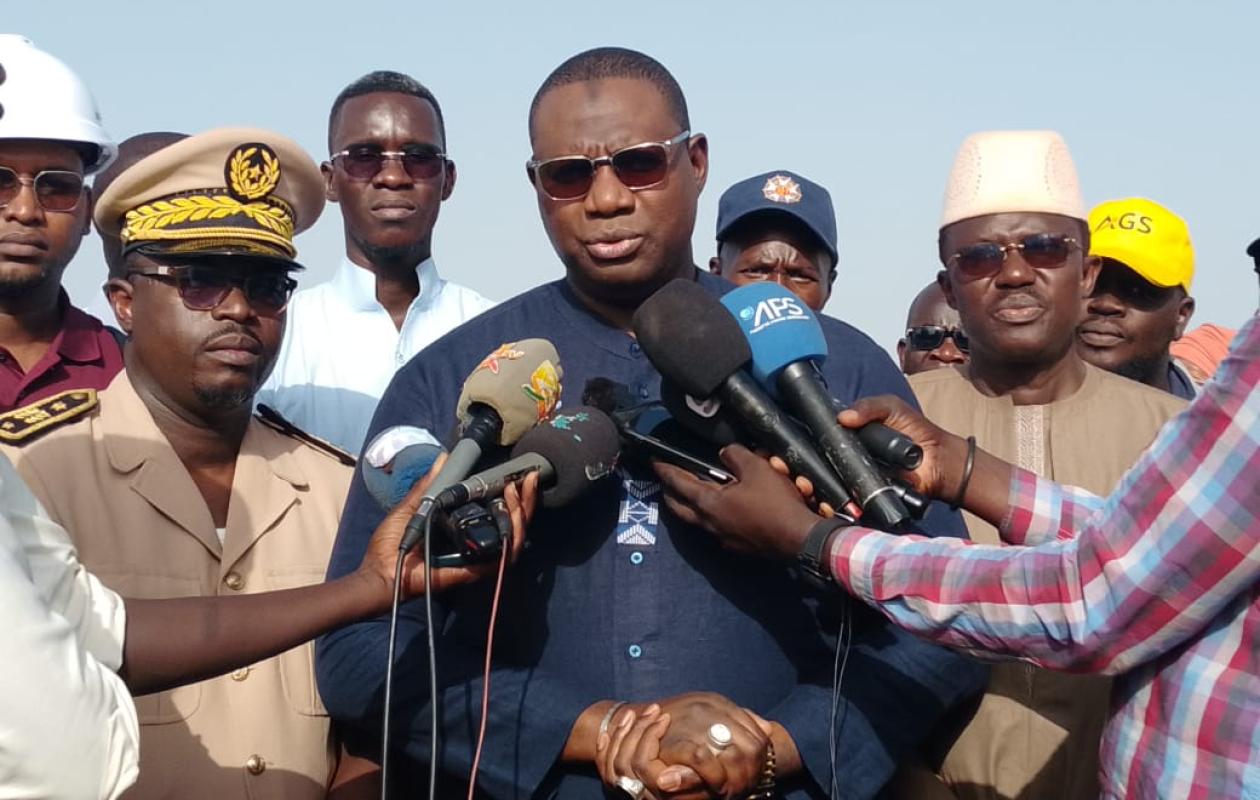
The Minister of Urban Planning, Local Authorities and Territorial Development, Moussa Balla Fofana, conducted a field visit to the Diass experimental site as part of the National Urban Renewal and Sovereign Housing Program (PNRUHS). The mission aimed to validate three innovative road surfacing formulations made from local materials.
The trials focus on road paving solutions using mixed mortar, including laterite, flint, phosphogypsum, limestone, and cement, as an alternative to imported bitumen. This approach is fully aligned with the authorities' desire to promote economic sovereignty based on the development of national resources.
According to the initial results presented during this visit, the cost of constructing one kilometer of road could be reduced to between 18.15 and 18.30 million FCFA, representing an estimated saving of more than 66% compared to conventional techniques using imported bitumen.
For Minister Moussa Balla Fofana, this innovation comes in a context marked by a significant housing deficit in Senegal, estimated at more than 400,000 units, with an additional need for several thousand housing units each year.
“We are preparing major projects. The President of the Republic has launched a vast program of urban renewal and access to housing in order to meet this growing demand and reduce the cost of housing for the population,” explained Moussa Balla Fofana.
He specifically mentioned the new city project in Thiès, which will be developed over more than 1,000 hectares according to rigorous urban planning integrating development standards, public facilities, road infrastructure and architecture.
One of the main challenges of the program remains the financing of roads and various networks (VRD), the cost of which could reach several hundred billion FCFA at the national level.
Faced with this financial equation, the ministry has undertaken a study aimed at identifying less expensive construction methods that are better suited to local realities.
“We have asked to explore sovereign solutions using our own materials and limiting imports. The objective is to significantly reduce the infrastructure bill while guaranteeing its quality,” explains the minister.
This approach has led to the testing of new techniques already used in some countries, notably Mauritania and North America. Simulations carried out at this stage reveal potential savings of up to 75% in certain configurations.
For Minister Moussa Balla Fofana, this initiative illustrates Senegal's ability to develop technical solutions adapted to its context.
"The best way to demonstrate sovereignty is to demonstrate ingenuity. We must rely on the resources our subsoil offers and on the know-how of our engineers to build sustainable and accessible infrastructure," he said.
The minister also stressed the need to finalize technical assessments quickly in order to stabilize the chosen formulations and launch the first work in the coming months.
Beyond urban projects, the new solutions being tested could also transform infrastructure development in rural areas.
According to the minister, the savings generated would allow for a significant improvement in the quality of tracks and roads serving rural areas, which are often built with limited resources.
.
"Rural life should not be synonymous with poverty. People living in rural areas deserve the same standards of quality of life as everywhere else," he argued.





















Commentaires (3)
Participer à la Discussion
Règles de la communauté :
💡 Astuce : Utilisez des emojis depuis votre téléphone ou le module emoji ci-dessous. Cliquez sur GIF pour ajouter un GIF animé. Collez un lien X/Twitter, TikTok ou Instagram pour l'afficher automatiquement.