Reprise des hostilités entre Américains et Iraniens, fermeture du détroit d'Ormuz
Iran announced on Sunday the closure of the Strait of Hormuz after a renewed resumption of hostilities with the United States, triggered by an attack on a ship in this strategic waterway, once again undermining the ceasefire that was theoretically in place.
In this context, Ishaq Dar, Pakistan's foreign minister and mediator in the conflict triggered in late February by US-Israeli attacks, called for "de-escalation," urging both enemies to "show restraint."
On Sunday morning, the Gulf neighbors were targeted in turn.
In Kuwait and the United Arab Emirates, authorities said they were facing airstrikes. Warning sirens sounded in Bahrain, and in Qatar, AFP journalists heard explosions and witnessed interceptions in the skies south of the capital, Doha.
Authorities in the emirate confirmed they had intercepted missiles. The Revolutionary Guards stated in a communiqué quoted by state media that they had targeted a US airbase in Qatar "in response to continued attacks" by the United States.
The Islamic Republic's ideological army also claimed responsibility for a rare attack on neighboring Oman, stating that it had destroyed logistical support bases for US aircraft carriers at the port of Duqm, according to the Irib news agency.
Jordan, for its part, indicated that it had been the target of three Iranian missiles.
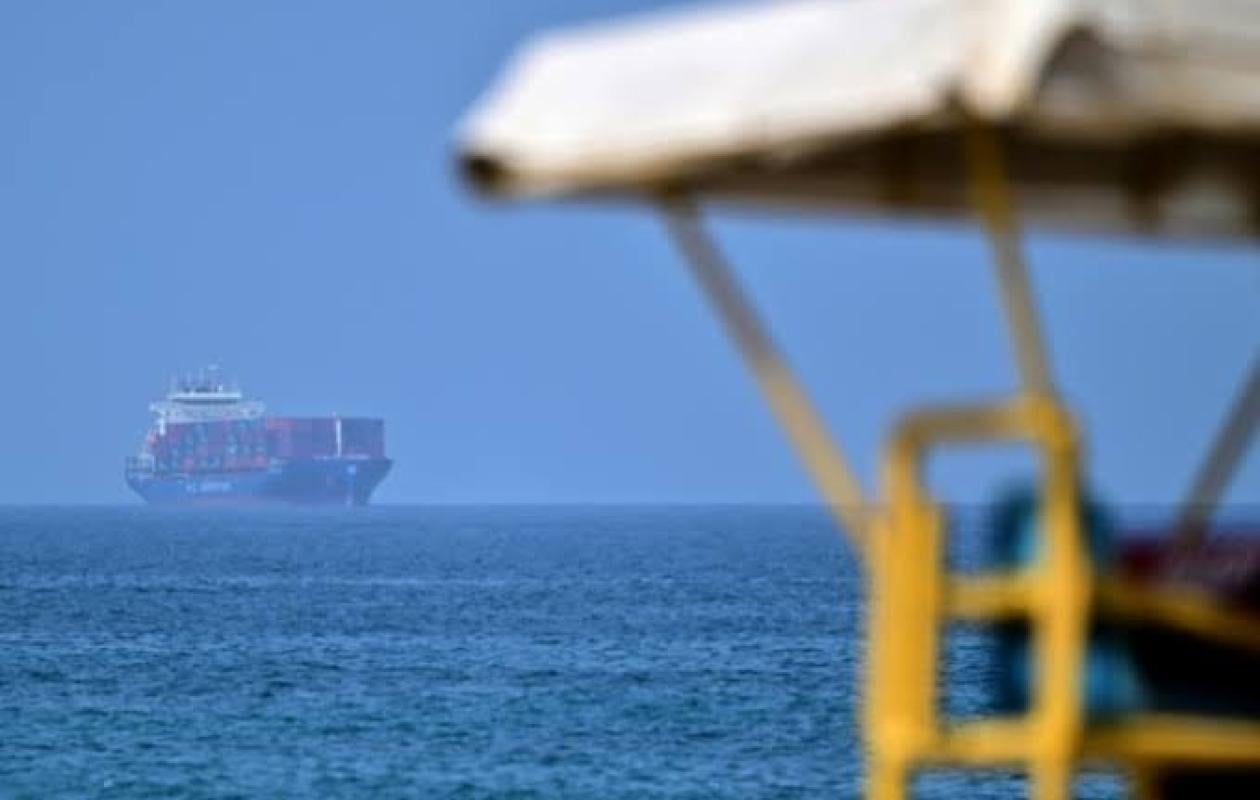
Earlier, Iran announced the closure "until further notice" of the Strait of Hormuz, through which normally one-fifth of the world's hydrocarbon trade passed, after firing on a ship there.
"Several vessels attempted to use an unauthorized route and ignored our warnings and reminders," the Guardians wrote in a statement. "One vessel that had endangered maritime safety by disabling its systems was hit by warning shots and stopped," they continued.
According to the British maritime safety agency UKMTO, the attack took place 9 nautical miles (about 17 km) east of the Musandam Peninsula, belonging to the Sultanate of Oman, and caused a fire on board, leading to the evacuation of the crew in a lifeboat.
In response, the U.S. Central Command (Centom) announced that it had conducted approximately 140 strikes against military targets in Iran, the third series since Tuesday, targeting "Iranian missile and drone sites, naval assets, ammunition depots, communication networks, and coastal surveillance posts."
Iranian media reported explosions in the south of the country, in Bandar Abbas, Sirik, Jask, on Qeshm Island, as well as in Khuzestan province, bordering Iraq, without reporting any immediate casualties.
"Iran made a bad choice. Now they are paying," wrote US Defense Secretary Pete Hegseth on X.
According to Centcom, the ship hit by Iran is the GFS Galaxy, a container ship flying the Cypriot flag, and a civilian crew member is missing.
"The Strait of Hormuz will be closed until further notice and until the end of US interventions in this region; no ship will be allowed to pass through it," wrote the Revolutionary Guard, who later announced that they had struck "a second ship that was violating regulations in the Strait of Hormuz," without further details.
Tehran allows only one shipping lane, along its coasts, and rules out any return to the pre-war situation, when passage was free in the Strait of Hormuz, which the United States disputes.
On Saturday, talks were held between Iran and Oman on this subject, with a Qatari delegation also present, Qatar being another mediating country. According to Iranian diplomacy, "future arrangements for managing traffic in the Strait of Hormuz must be developed jointly by the two coastal countries," which "agreed to continue discussions at the political, technical, and legal levels in order to reach a consensus on navigational safety in the strait."
The United States had already bombed Iran on Tuesday night and again the following night, after blaming Tehran for attacks on commercial vessels. In retaliation, Iran struck targets in Kuwait, Bahrain, and Qatar.
Washington and Tehran signed a memorandum of understanding on June 17, accompanied by a ceasefire, giving themselves 60 days to find a definitive solution to this war.
Since then, US President Donald Trump has repeatedly stated that this ceasefire was "over" because of Iranian attacks on ships, while allowing talks to continue.
Iran's supreme leader, Mojtaba Khamenei, also warned on Saturday that "revenge" was "inevitable" after the funeral of his father and predecessor Ali Khamenei, who was killed at the beginning of this war.
On Friday, Donald Trump accused Iran of wanting to assassinate him, and promised once again "to decimate and totally destroy all areas of Iran" if it tried to do so.






















Commentaires (1)
Participer à la Discussion
Règles de la communauté
💡 Astuce : Utilisez des emojis depuis votre téléphone ou le module emoji ci-dessous. Cliquez sur GIF pour ajouter un GIF animé. Collez un lien X/Twitter, TikTok ou Instagram pour l'afficher automatiquement.
Se connecter
Commentez avec votre profil, votre photo, et soyez averti des réponses.