Allemagne: des scrutins à haut risque pour le chancelier
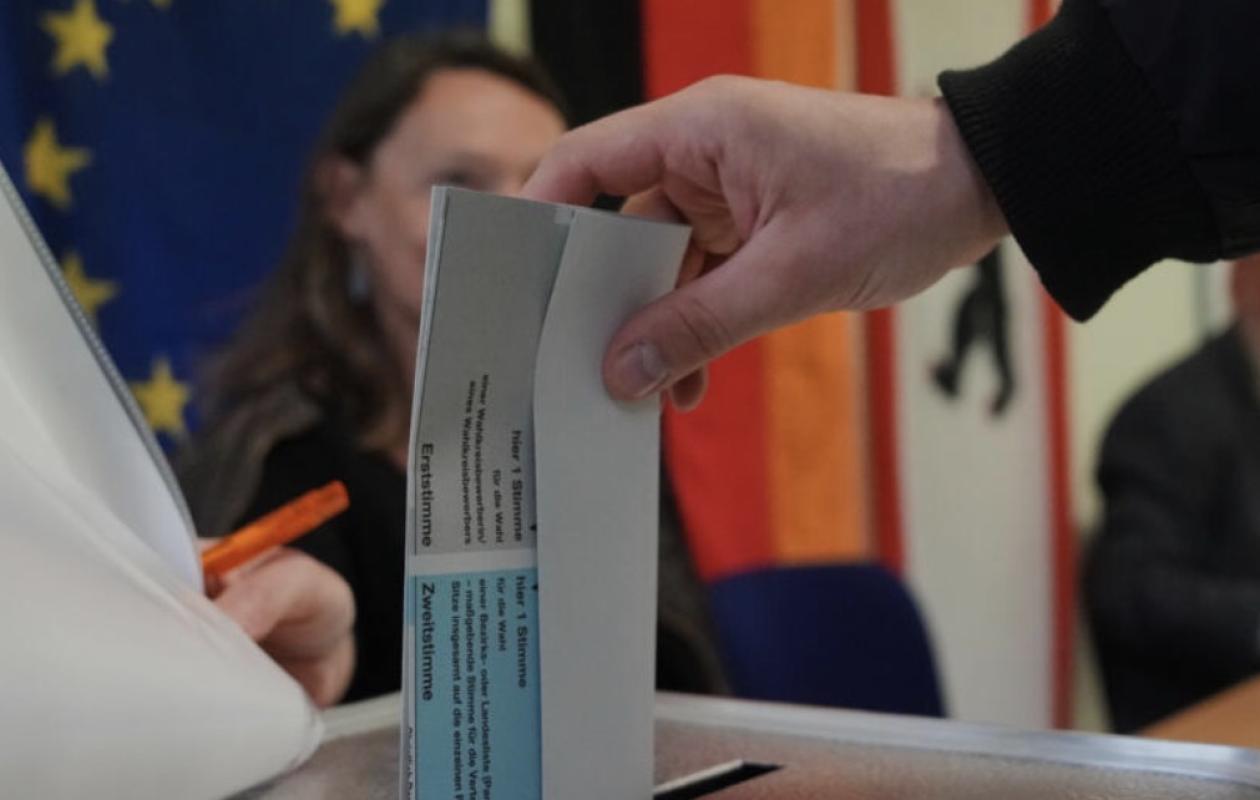
Nearly four million German voters are called to the polls on Sunday for two regional elections where the advances of the far right and the radical left could cause further upheaval in Berlin and affect Chancellor Friedrich Merz, who is already very weakened.
Polling stations in Berlin and Mecklenburg-Western Pomerania (northeast) opened at 8:00 a.m. local time (6:00 a.m. GMT) and voting will take place until 6:00 p.m. (4:00 p.m. GMT), at which time the first estimates are due to be published.
Friedrich Merz, 70, has called a crisis meeting of his conservative party, the CDU, which will be held immediately after the announcement of the first results.
Anticipating possible repercussions from the vote, he cancelled his planned trip to New York for the United Nations General Assembly.
The far-right Alternative for Germany (AfD), pro-Trump and close to Moscow, inflicted a resounding defeat on the CDU two weeks ago in the state of Saxony-Anhalt, also in the eastern part of the country, its stronghold.
An electoral setback at a time when the chancellor's popularity is at its lowest and he is struggling to adopt the economic reforms promised with his social-democratic coalition partners.
According to polls, the AfD is expected to make further gains on Sunday, but less spectacular than in Saxony-Anhalt, where it is only a few seats short of an absolute majority.
In the state of Mecklenburg-Western Pomerania, on the Baltic Sea, the conservative party is only a spectator in the duel between the SPD of the regional president, the popular Manuela Schwesig, and the AfD.
The far right is credited with 37% of voting intentions, the SPD with 35%, while the CDU is completely out of the running, dangerously close to the 5% needed to be represented in the regional parliament.
A collapse of the CDU below this threshold would be a historic first and a further setback for Mr. Merz.
In the city-state of Berlin, the situation is quite different but also tense for the CDU, the party of the current mayor, which is neck and neck with the radical left party Die Linke (around 20% each). Both are closely followed by the AfD (18%).
A defeat for the CDU would be a further blow to the chancellor, especially if it is inflicted by Die Linke, which accuses the "austerity chancellor" of dismantling the welfare state.
Outside a polling station in the south of the capital, Moritz Lembke-Oezer, 43, hopes that "the CDU will be punished" by this election, "and that afterwards Friedrich Merz may no longer be there," he explains to AFP.
But he fears that its weakening "could benefit the AfD".
Born in Berlin, he says he was struck by the soaring rents in a city that was still very affordable some twenty years ago. He will vote for Die Linke, whose Berlin lead candidate, Elif Eralp, has made rent control her main campaign issue.
In power for 16 months, Mr. Merz had promised to revive the stagnant national economy, rearm the country to deter a hostile Russia and contain irregular immigration to win back voters who had switched to the AfD.
But the far-right party is now leading in the national polls. And Mr. Merz's personal approval rating hovers just above 10%, dragged down by several gaffes or remarks that may have offended some.
"In our last survey in September, only 13% said they were still satisfied with his political performance. These are the lowest figures we have ever recorded for a sitting chancellor," he said.
The leader is not helped by the international context: like the rest of Europe, Germany is suffering from the disruptions to the world market caused by the war in the Middle East and the closure of the Strait of Hormuz, aggravated in recent days by the new front in the Red Sea.
Fuel prices have returned to levels equivalent to those of the first surge in spring, with an average price of diesel at 2.42 euros per litre on Saturday at midday.
In response, the government announced on Friday a new tax rebate of about 17 cents per litre for the whole autumn, as well as discussions to introduce a price cap no later than January 1st.
An announcement described as a "bad joke" and an attempt to "influence people at the very last minute" by the far-right candidate in Mecklenburg-Western Pomerania, Leif-Erik Holm, during his final rally on Saturday in Schwerin, the regional capital.
During the meeting, a spectator made what looked like a Nazi salute several times, apparently directed at left-wing counter-protesters, according to AFP footage.










Commentaires (0)
Participer à la Discussion
Règles de la communauté
💡 Astuce : Utilisez des emojis depuis votre téléphone ou le module emoji ci-dessous. Cliquez sur GIF pour ajouter un GIF animé. Collez un lien X/Twitter, TikTok ou Instagram pour l'afficher automatiquement.
Se connecter
Commentez avec votre profil, votre photo, et soyez averti des réponses.