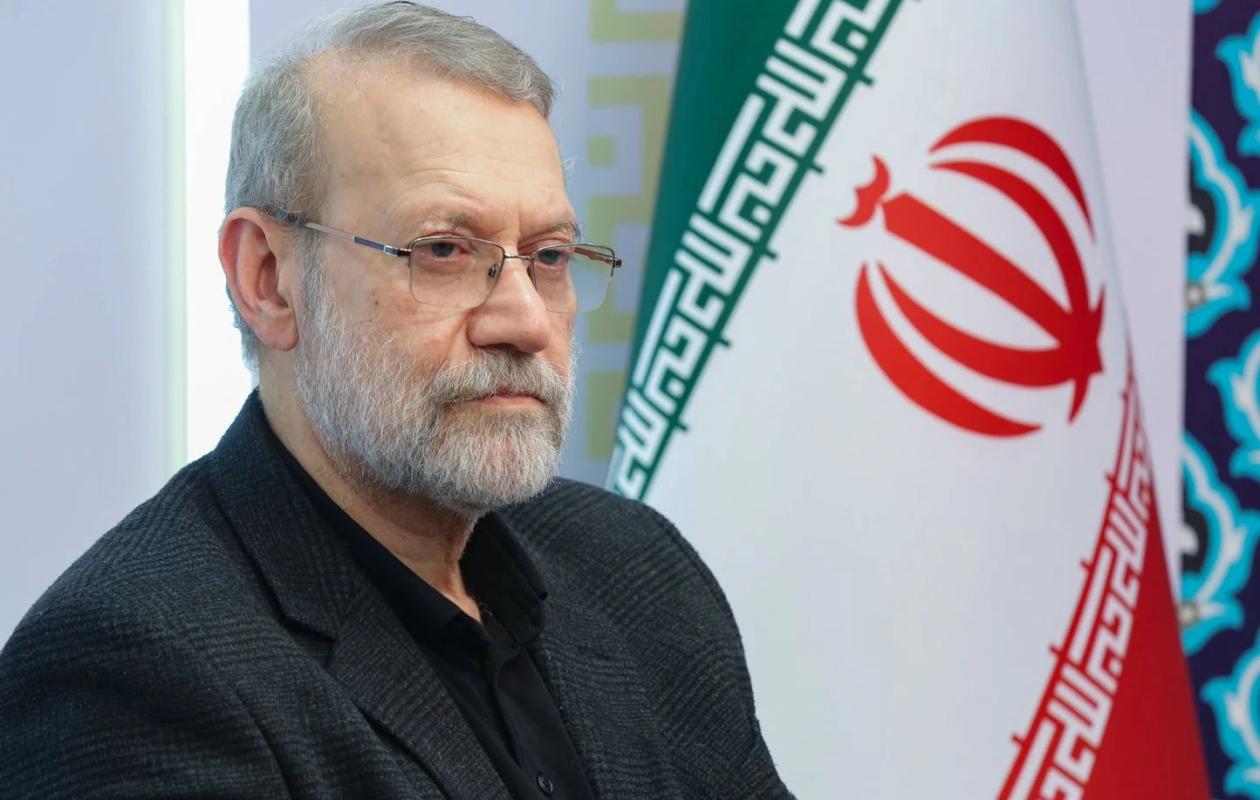
Éliminé par Israël, qui est Ali Larijani, le chef de la sécurité iranienne parvenu au sommet du pouvoir avec la guerre
Ali Larijani, head of Iran’s security apparatus, spent years in the shadow of Iranian power before being propelled to the forefront as one of the country’s leading figures during the war against Israel and the United States.
Israel claimed on Tuesday to have eliminated the man who defied Israeli-American bombings on Friday by participating in a street demonstration in Tehran.
Since the elimination of Supreme Leader Ali Khamenei, he was "the de facto leader of the Iranian regime, especially for the last two weeks, but even before that, he was considered the one who made the decisions and pulled the strings," an Israeli military official commented on Tuesday, speaking on condition of anonymity.
It was Larijani who "directed the attacks towards the region" and ordered strikes against Israel and the Gulf countries, the same official stated.
At the head of the Supreme National Security Council, Ali Larijani, 68, had regained a place at the heart of Iran's nuclear policy and diplomacy, after a few years on the sidelines.
Accustomed to reconciling ideological loyalty and pragmatism, he was reputed to enjoy the confidence of Supreme Leader Ali Khamenei, rewarding a long career in the army, the media and Parliament.
After the latter's death in an Israeli strike on February 28, which marked the beginning of the war in the Middle East, he had multiplied his bellicose statements towards the United States and Israel.
For example, he had warned that his country would fight "whatever the cost" to defend itself and accused Donald Trump of having dragged "the American people into an unjust war".
He played "a more important role than most of his predecessors," said Ali Vaez of the International Crisis Group (ICG) in February, describing him as "a true insider, a skilled tactician, familiar with the workings of the system and the inclinations of the supreme leader."
Born in 1957 in Najaf, Iraq, Ali Larijani is the son of a prominent Shiite dignitary close to Ayatollah Ruhollah Khomeini, founder of the Islamic Republic.
A former fighter in the Islamic Revolutionary Guard Corps – the ideological army of the Islamic Republic – during the war with Iraq (1980-1988), this holder of a doctorate in Western philosophy from the University of Tehran headed the state broadcasting service (Irib) from 1994 for a decade.
He distinguished himself there by his commitment against reformers, with the broadcasting of numerous programs attacking intellectuals and those close to President Mohammad Khatami.
In 1996, he was appointed Ali Khamenei's representative to the Supreme National Security Council, and later secretary.
Between 2005 and 2007, he was the main negotiator on nuclear issues facing London, Paris, Berlin and Moscow, perceived in this role as a pragmatist by his Western interlocutors.
A presidential candidate in 2005, he was ousted by his populist rival Mahmoud Ahmadinejad. He then served as Speaker of Parliament from 2008 to 2020 before his candidacy for the 2021 and 2024 presidential elections was rejected by the Guardian Council.
In 2015, Larijani supported the historic nuclear agreement concluded with the major powers, which vanished three years later with the withdrawal of the United States under Donald Trump.
In March 2025, before Iranian-American talks were abruptly halted by the war triggered by an Israeli attack, he warned of the risk of pushing Tehran towards military nuclear weapons.
A few weeks after the Iran-Israel war of June 2025, he is appointed to head the main security body, which he had already chaired 20 years earlier, coordinating defense strategies and overseeing nuclear policy.
His return was interpreted as a pragmatic turning point in the country's security management. Since then, the man with the greying beard, under US sanctions, has been increasingly present on the diplomatic scene.
He was chosen in late January to meet with Russian President Vladimir Putin in Moscow, before holding talks this month with Gulf officials eager to reduce tensions with Washington.
He has repeatedly insisted that negotiations with the West should be limited to nuclear issues, defending uranium enrichment as a sovereign right of Iran.







Commentaires (14)
Participer à la Discussion
Règles de la communauté
💡 Astuce : Utilisez des emojis depuis votre téléphone ou le module emoji ci-dessous. Cliquez sur GIF pour ajouter un GIF animé. Collez un lien X/Twitter, TikTok ou Instagram pour l'afficher automatiquement.
Se connecter
Commentez avec votre profil, votre photo, et soyez averti des réponses.