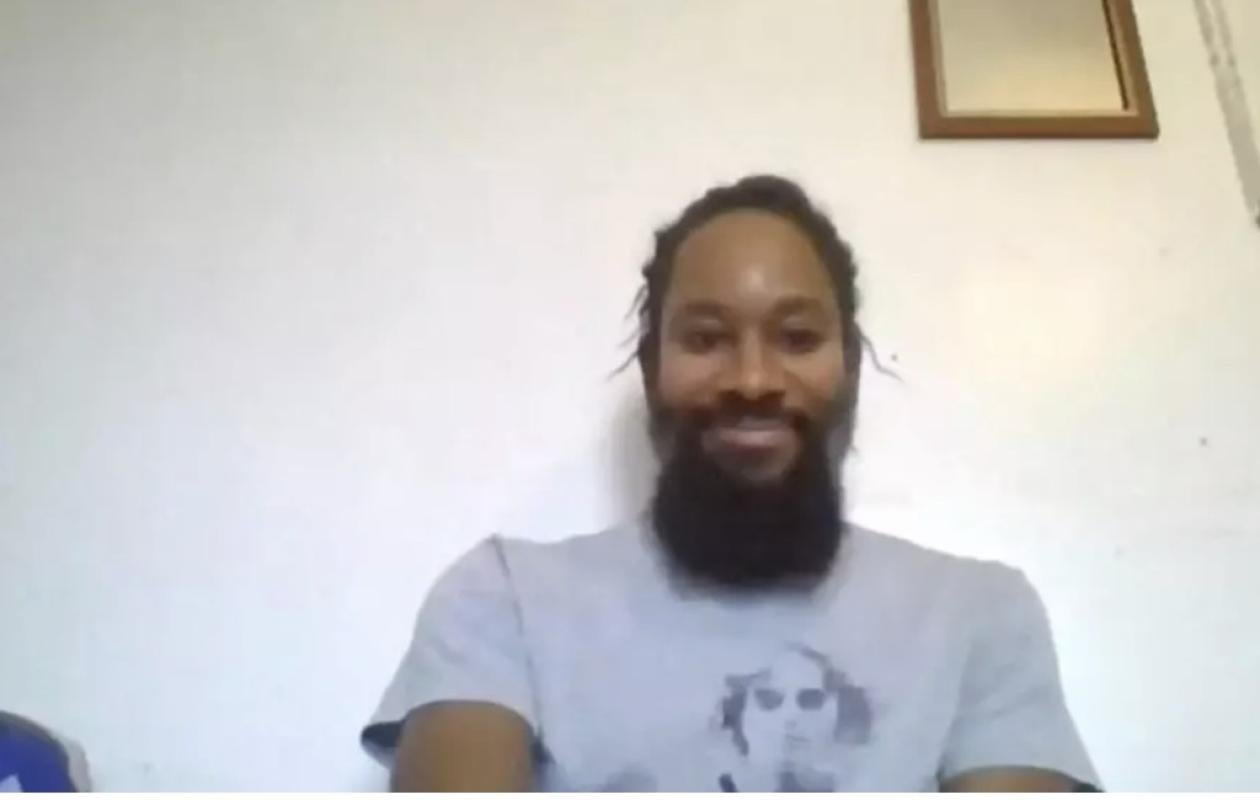
Émotion après la mort de Jason Arday, professeur noir de Cambridge harcelé pendant trois ans
Tributes poured in on Saturday for Jason Arday, a former Black professor at Cambridge University who was found dead on Friday after being at the center of a plagiarism scandal. Friends and colleagues denounced "harassment" since his appointment three years ago.
Andy Burnham called it a "tragedy." The British Prime Minister appealed for calm on Saturday, August 15, the day after the death of Jason Arday, a black professor at Cambridge accused of plagiarism.
"This is not the time to make hasty judgments. It is rather a time for reflection to understand how we got here," said the Labour leader.
Jason Arday was found dead Friday afternoon in the Battersea area of south London. Police said his death was not being treated as suspicious.
"Beyond a simple academic disagreement"
The 41-year-old resigned from his position as a professor of sociology of education on August 5th amid plagiarism allegations. In 2023, he became the youngest Black professor at the prestigious university.
"What I experienced went far beyond a simple academic disagreement. The incessant accusations, speculation, and public comments had a profound impact on me," he wrote in his statement at the time.
Doubts had accumulated about his work, but also about his claims regarding his career path, which until then had been considered exemplary. He was accused of plagiarizing parts of his doctoral thesis, which he denied.
For his defenders, racism motivated part of the meticulous examination of his career.
This case has fueled suspicions about the recruitment criteria for researchers from diverse backgrounds, against a backdrop of intense cultural warfare in universities.
"Jason was the target of a relentless harassment campaign for over three years after accepting his teaching position," his family said in a statement released by his publisher, Simon & Schuster. "This disinformation campaign was unbearable for Jason, who was a gentle man and always wanted to see the best in everyone."
For Sadiq Khan, the Mayor of London, Jason Arday "was the victim of a pernicious public humiliation that others in his situation simply would not have faced." His death should serve as a "wake-up call," he added.
Labour MP Bell Ribeiro-Addy claimed he had been the victim of a "witch hunt".
Professor Kehinde Andrews, a specialist in Black political history and thought and a friend of Jason Arday, explained that Arday was "deeply devastated" by his resignation. "This should alert us to the extremely difficult reality faced by Black academics in academia," he added in an interview with the BBC.
The African and Caribbean Association at the University of Cambridge said on Instagram that it was "deeply saddened" by the death of Jason Arday. "He had a remarkable academic career," the association wrote, mentioning the students who "admired" him.
"Despicable campaign"
"For three years, he had been subjected to what he described as a campaign waged against him," Professor Simon Baron-Cohen, director of the Autism Research Centre at the University of Cambridge, told the BBC. "The personal attacks he was subjected to were immense."
Before the death of Jason Arday, who had been diagnosed with autism as a child, Simon Baron-Cohen had warned on X about his vulnerability. "I cannot stand idly by and watch an autistic man on the ground while the blows continue to rain down," he wrote.
The scandal erupted when some academics and press articles accused Jason Arday of plagiarizing passages from his doctoral thesis.
These accusations were initially made by an American researcher, Nathan Cofnas, who was himself dismissed from Cambridge in 2024 after being accused of racism.
After defending its professor and denouncing a "vile campaign" targeting him, Cambridge finally opened an investigation in early August.
Several newspapers have published investigations into Jason Arday. In addition to his work, some of his claims about his journey have been disputed, notably that he ran 30 marathons in 35 days.
In an interview with The Times in August, he acknowledged having made academic "mistakes" but maintained that he was being wrongly portrayed as "a liar, a fantasist, and an academic fraud." He believed that the "campaign" to oust him was "motivated by racial considerations."




















Commentaires (4)
Participer à la Discussion
Règles de la communauté
💡 Astuce : Utilisez des emojis depuis votre téléphone ou le module emoji ci-dessous. Cliquez sur GIF pour ajouter un GIF animé. Collez un lien X/Twitter, TikTok ou Instagram pour l'afficher automatiquement.
Se connecter
Commentez avec votre profil, votre photo, et soyez averti des réponses.