France : L'interdiction des réseaux sociaux aux moins de 15 ans censurée par le Conseil constitutionnel
It was a flagship measure of the end of Emmanuel Macron's term: the Constitutional Council on Friday censored the ban on social networks for those under 15, considering that this measure constitutes "a disproportionate infringement" on their freedom of expression.
The institution was approached at the end of July by Socialist and La France Insoumise MPs regarding Article 1 of the law aimed at protecting minors from social networks.
The judges believe that this provision, which prohibits social networks for those under 15, "constitutes an infringement that is not appropriate, necessary and proportionate" to their freedom of expression and communication.
While acknowledging "the constitutional requirement to protect the best interests of the child", they point out that this very broad prohibition "is likely to apply to online communication services where the risks to the health and safety of minors (...) have not been established".
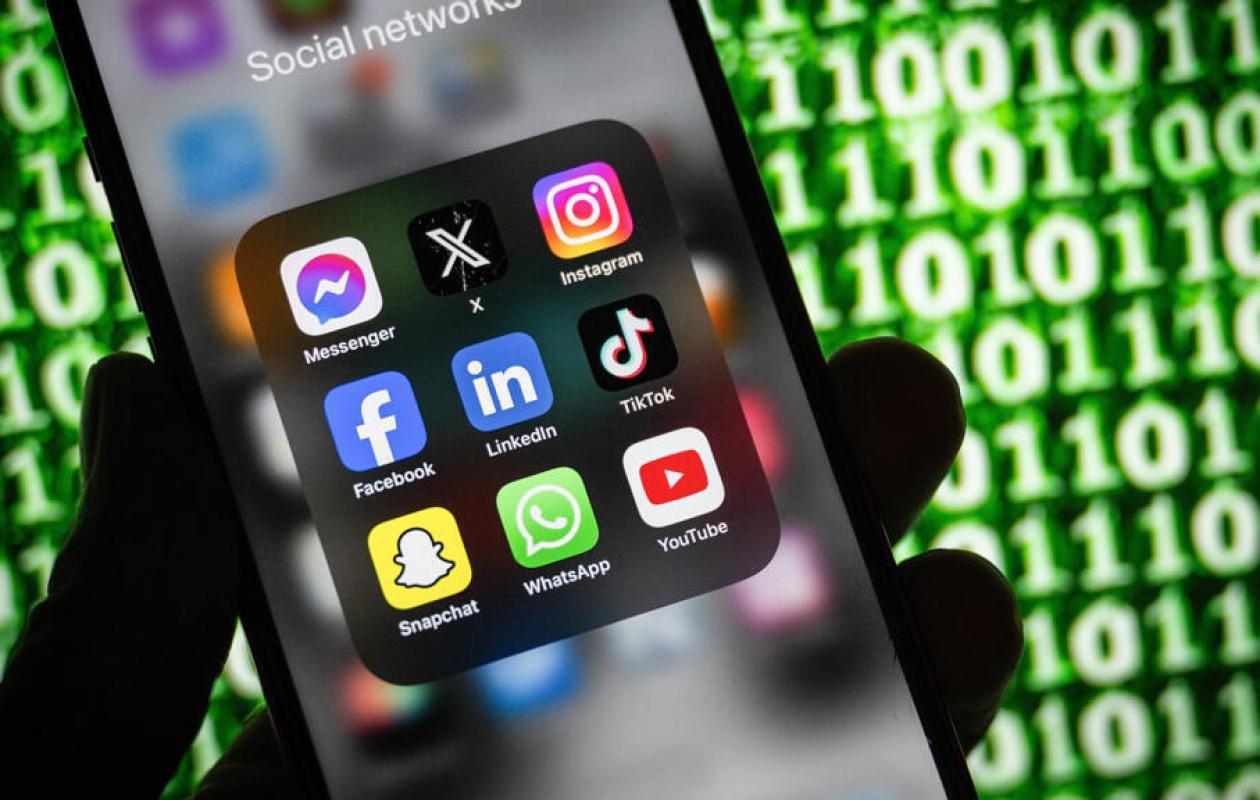
Intended to come into effect on September 1st, the text planned to exclude younger people from social networks (TikTok, Snapchat, X, Instagram...) but also from social features (sharing channels, comments...) of very popular sites like YouTube, messaging services (Whatsapp, Messenger...) and some online video games.
Although the law provided for exceptions, particularly for online encyclopedias and educational or scientific directories, these remain too "limited", notes the Constitutional Council.
Anxiety, depression, sleep disorders, online harassment: with this law, the government sought to better protect younger people from the harmful effects linked to the use of these platforms, as demanded by many child protection associations.
According to a study published in July by Arcom, the audiovisual and digital regulator, more than two-thirds of 10-14 year olds would support this ban.
The rejected text had been the subject of numerous exchanges between the Assembly and the Senate, the latter having rewritten a large part of the law to include in particular a "blacklist" of social networks targeted by the ban, in order to reduce its scope.
But the final version voted on July 21 in Parliament ultimately abandoned this idea, in the face of fears of non-compliance with European law.
In its decision, the Constitutional Council also expressed concern about the possible consequences for privacy of introducing an age verification system for all users.
The law stipulated that platforms should implement one or more mechanisms for this purpose at the time of registration, without detailing the technical implementation.
"By failing to define the conditions and limits" of this age justification, "the legislator has not provided the legal guarantees" necessary for the right to respect for private life, the judges believe.
The French law, whose adoption by Parliament was a first in Europe, is part of a global movement.
At the end of 2025, Australia became the first country to ban social media for those under 16. Since then, many countries have either adopted or announced they are considering similar bans, such as Brazil, Indonesia, the United Kingdom, and New Zealand.
In Australia, the results are mixed: a study published in the British Medical Journal observed only slight changes in usage among 12- to 13-year-olds. A slight decrease was noted among 14- to 15-year-olds, while an increase was observed among those aged 16 and over.
Underage users manage to circumvent restrictions by using accounts registered in the names of older people or by connecting via a VPN, a tool that allows them to appear to be located in another country.
For its part, the European Commission announced in July its intention to introduce "gradual and phased" access for minors to social media. A committee of experts recommended a ban for those under 13, with each country able to choose its minimum age.
Having only been asked to rule on Article 1, the Constitutional Council did not rule on the ban on mobile phones in high schools from September 1st, which is included in the same law.
bur-kf/vg/sp
© Agence France-Presse





















Commentaires (2)
En France,tout ce qui est lié au Sionisme n est plus criticable.
Participer à la Discussion
Règles de la communauté
💡 Astuce : Utilisez des emojis depuis votre téléphone ou le module emoji ci-dessous. Cliquez sur GIF pour ajouter un GIF animé. Collez un lien X/Twitter, TikTok ou Instagram pour l'afficher automatiquement.
Se connecter
Commentez avec votre profil, votre photo, et soyez averti des réponses.