Guerre au Moyen-Orient: de l'Asie et jusqu'en Afrique, des agricultures très exposées
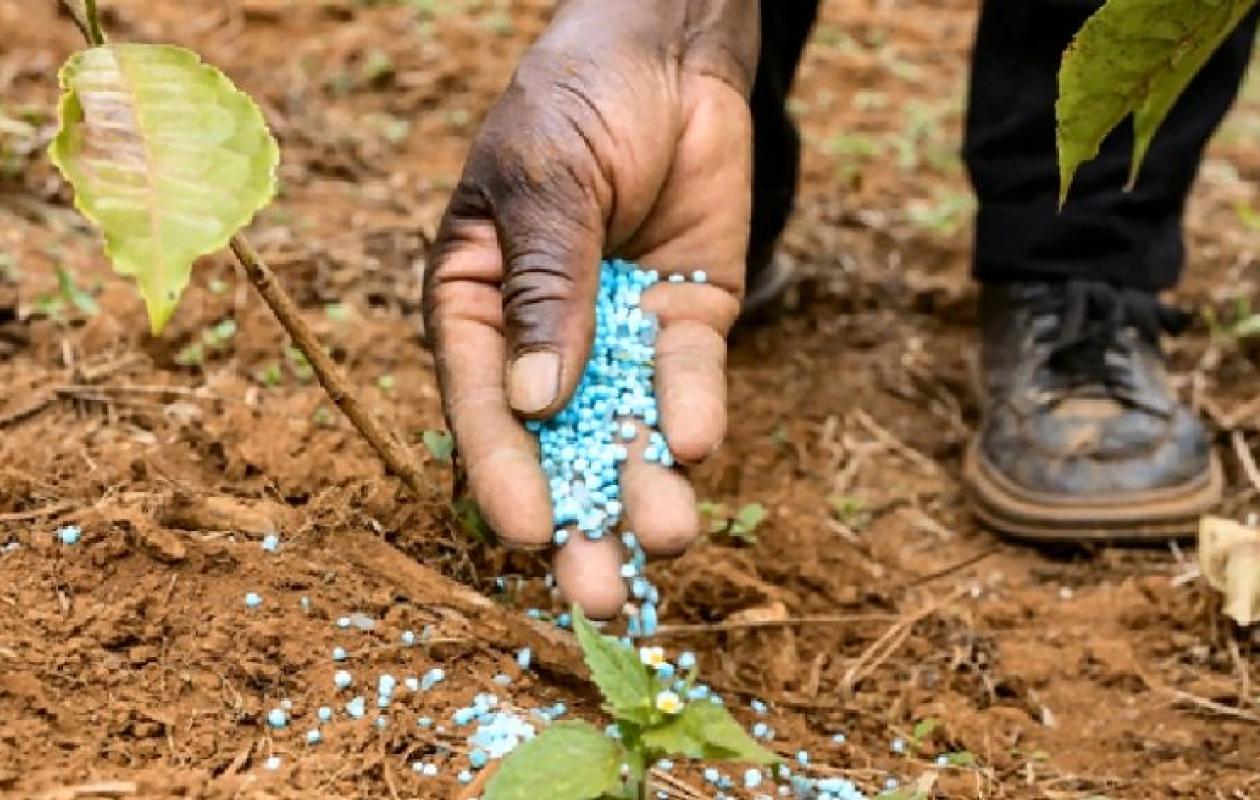
The impact of the blockade of the Strait of Hormuz on fertilizers, key to global agricultural yields, is twofold, explains Maximo Torero, chief economist of the Food and Agriculture Organization of the United Nations (FAO), to AFP: "maritime disruptions tend to create an immediate supply shock, while rising gas prices generate broader and more lasting market pressures."
Global fertilizer prices, largely dependent on those of the gas needed to manufacture them, could rise by 15-20% this semester if the crisis continues, according to the FAO.
The Gulf region, which supplies some 30% of the world's fertilizers, serves large Asian countries with very high fertilizer consumption.
"South Asia is among the most exposed regions," says Mr. Torero, with its intensive cultivation of rice, wheat, corn...
"Because fertilizer use is closely linked to yield in these production systems, even a short-term disruption in supply can affect productivity and planting decisions," he explains.
The FAO notes in an analysis that "the risk is particularly serious for densely populated areas, where these crops provide the bulk of the food supply."
Bangladesh presents an "extreme risk profile," with 53% of its nitrogen fertilizers imported from the Gulf and 170 kg applied per hectare (the global average is close to 70 kg). India and Thailand are "in a high-risk zone." China, a producer, is less dependent (at 9% for its nitrogen).
This vulnerability has an impact on exports: Brazil is only 20% dependent on the Gulf, but its volumes are such that a reduction in spreading can affect yields and therefore potentially exports.
As for sub-Saharan Africa, where "small farmers already use relatively little fertilizer", "even a modest increase in prices can lead to further reductions, with immediate implications for yields", warns Mr. Torero.
Among the "highly vulnerable" countries are Sudan, already ravaged by war (50% of nitrogen comes from the Gulf), Somalia (80%), Tanzania, Kenya...
At the start of the war in Ukraine, the surge in fertilizer prices "had very rapid repercussions in Africa (...): a little less is used, and this has consequences for yields, especially since the soils there are fragile," notes Matthieu Brun, of the Farm Foundation.
These degraded soils can also be found in regions of India or Southeast Asia that have experienced a 'Green Revolution', with 'improved' varieties and 'where the soils have not benefited from enough fertilizer to repair them', notes Matthieu Brun.
North of Harare, "you have sandy soils where maize, with sufficient nutrients, could produce 10 times more" than it does today, explains Gatien Falconnier, an agronomist at CIRAD, based in Zimbabwe. The same is true in Mali and Senegal, where millet and sorghum, lacking sufficient nutrients, are only reaching 20% of their potential.
African countries already consume very little fertilizer (15 kg of nitrogen/ha, 4 kg in West Africa), which is made more expensive by the cost of transporting it to the land and the lack of manufacturers on the continent.
Agroecology is gaining momentum in an attempt to replace chemicals: extended fallow periods, manure, planting of legumes (peanuts, soybeans, cowpeas...) capable of capturing nitrogen from the air to enrich the soil...
This "is part of the solution," emphasizes Mr. Falconnier. "Farmers have started to exploit it, but there is competition for space, which is limited in Ethiopia, Tanzania, even in West Africa," he adds.
Therefore, "a discourse that would aim to ban fertilizers is not relevant in the context of Africa," he insists, justifying their place in development aid, at a time when a new crisis is looming.
Everything will depend on the duration of the conflict, notes the FAO.
"If the disruptions persist, the first impacts on production could appear within one growing cycle - roughly 6 to 12 months," says Mr. Torero. "The pressure on staple food prices would then quickly follow."






















Commentaires (0)
Participer à la Discussion
Règles de la communauté
💡 Astuce : Utilisez des emojis depuis votre téléphone ou le module emoji ci-dessous. Cliquez sur GIF pour ajouter un GIF animé. Collez un lien X/Twitter, TikTok ou Instagram pour l'afficher automatiquement.
Se connecter
Commentez avec votre profil, votre photo, et soyez averti des réponses.