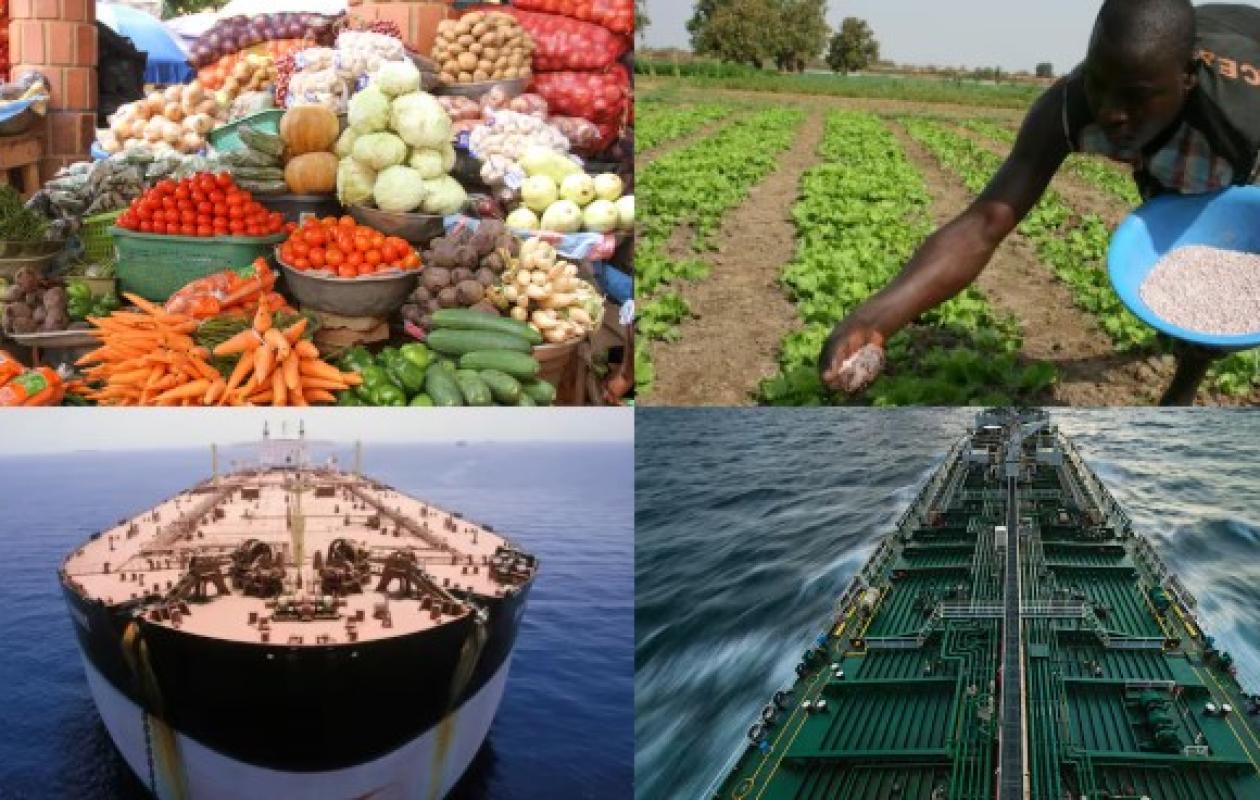
Inflation, pénurie d’engrais, dettes : Le conflit au Moyen-Orient va-t-il faire vaciller l'Afrique ?
What is burning in the Middle East today is no longer a distant tragedy to be observed distractedly. It is a silent shockwave already rippling through African economies. While the major powers assess their balance of power, millions of households are reassessing the price of transportation, bread, and oil every single day.
Behind the din of arms, a colder reality emerges: Africa remains exposed to dynamics that it does not control, but whose consequences it immediately suffers.
The pump price trap
Sometimes all it takes is a rise in tension around the Strait of Hormuz to send shockwaves through energy markets. Even without a single barrel of oil stopping in circulation, the anticipation alone is enough to send prices soaring.
For African states, the equation has become almost impossible to solve. Maintaining fuel subsidies would further strain already limited public budgets. Reducing them would immediately expose populations to a sharp increase in the cost of living, with the risk of social unrest. The recent experience of Nigeria under Bola Tinubu provides a striking illustration of this.
In this context, internal stability still too often depends on external variables, sometimes located thousands of kilometers away.
The blind spot of fertilizers
The most profound shock may not be the one we think. Behind the energy issue lies a more discreet but equally strategic dependence: that of agricultural inputs.
Contrary to popular belief, this dependence is not limited to the Middle East. It is part of a global system involving major players such as Morocco, Russia, and China. They all share a strong sensitivity to energy costs and logistical disruptions.
When these chains become strained, it's not just prices that rise. It's the very capacity to produce that erodes. Yields fall, margins disappear, and the most fragile agricultural systems become vulnerable.
The memory of the Libyan precedent
Recent history reminds us that external crises rarely leave Africa unscathed. The shockwave of the 2011 military intervention in Libya, following the fall of Muammar Gaddafi, profoundly destabilized the Sahel.
The disintegration of the Libyan state led to a massive flow of weapons and fighters southward, fueling the insurgencies in Mali from 2012 onward and facilitating the establishment of groups linked to Al-Qaeda or the Islamic State. In a matter of months, a localized conflict transformed into a protracted regional crisis.
But this shock would not have had such an impact without the pre-existing vulnerabilities: weakened states, marginalized territories, structural poverty. It is this combination that has tipped an entire region over the edge.
This precedent should serve as a warning. When a major crisis is experienced without anticipation, its consequences always end up crossing borders. Today, the Middle East could produce different, but equally destabilizing, effects on African stability.
The urgent need for a strategic shift
Faced with these repeated vulnerabilities, the status quo is no longer tenable. Africa does not lack resources or potential. It still lacks integration and transformation.
The capacity does exist, whether for fertilizer, energy, or agricultural resource production. However, these capacities remain insufficiently connected. Import-driven strategies often continue to take precedence over regional dynamics, to the detriment of a self-sufficiency that is nonetheless attainable.
This is where the role of regional organizations becomes central. Despite its economic ambitions, ECOWAS is still struggling to establish truly fluid intra-regional trade, hampered by persistent non-tariff barriers and national reflexes. At the continental level, the African Union promotes a vision of integration, notably through the African Continental Free Trade Area, but its concrete implementation remains slow in the face of the urgency of current shocks.
The real challenge, therefore, is not only to withstand crises, but to progressively reduce exposure to them. This requires moving from declarations of intent to effective economic coordination.
Building real economic sovereignty
Economic independence cannot be proclaimed; it is built over time. It requires trade-offs, investments, and a shared vision.
In an increasingly unstable international environment, the question is no longer whether Africa will be affected by external crises, but to what extent it will be able to cope with them.
The frameworks are in place. The African Union sets guidelines, and ECOWAS and other regional blocs offer spaces for cooperation. However, these structures often remain secondary to immediate national priorities, which limits their capacity to foster genuine economic sovereignty.
However, this sovereignty cannot emerge without a stronger political will to pool certain responses: securing strategic supplies, coordinated investments in energy and agriculture, and developing regional value chains.
The answer will come neither from international markets nor from distant geopolitical balances. It will depend above all on the continent's capacity to produce more for itself, to process its resources locally, and to strengthen its own trade networks.
Otherwise, every crisis originating elsewhere will continue to resonate here, with disproportionate intensity.
As an African proverb says, "Until the lion has its own storyteller, hunting stories will always glorify the hunter." Perhaps it is time for Africa to finally write its own.















Commentaires (1)
Participer à la Discussion
Règles de la communauté
💡 Astuce : Utilisez des emojis depuis votre téléphone ou le module emoji ci-dessous. Cliquez sur GIF pour ajouter un GIF animé. Collez un lien X/Twitter, TikTok ou Instagram pour l'afficher automatiquement.
Se connecter
Commentez avec votre profil, votre photo, et soyez averti des réponses.