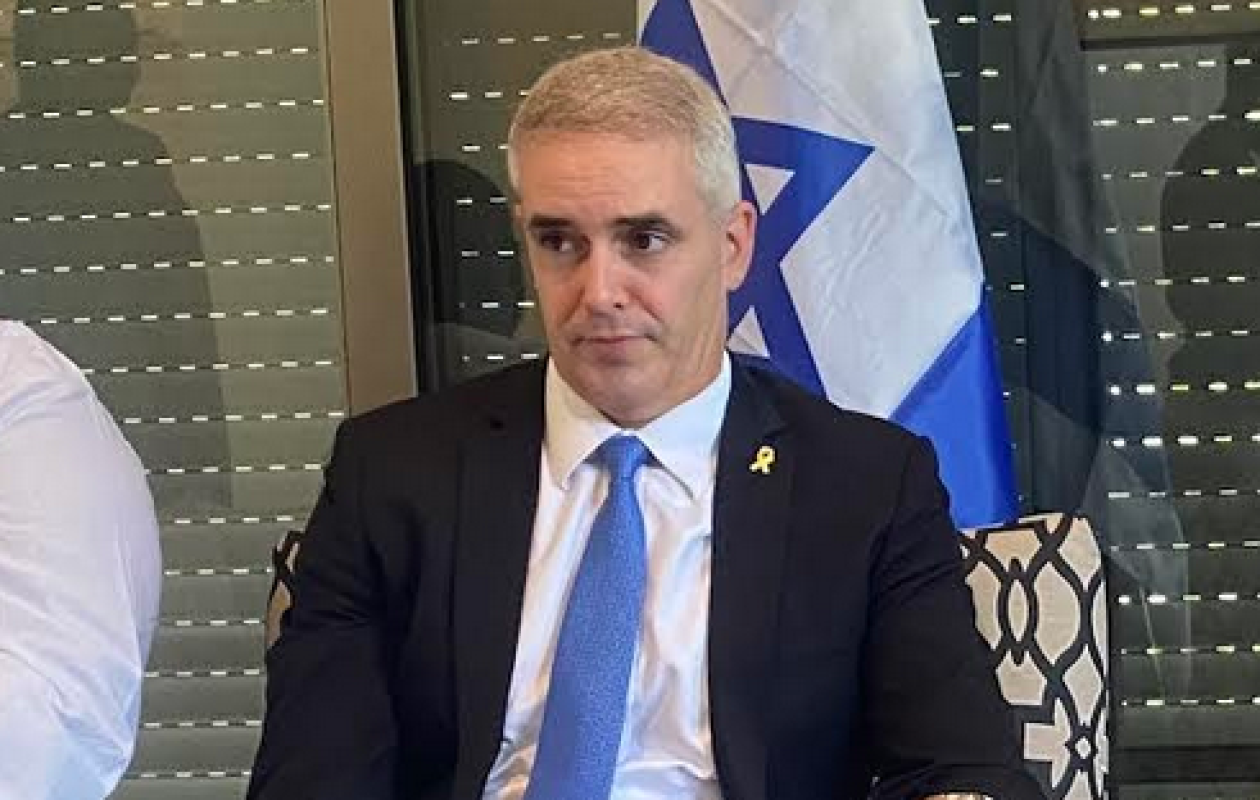
A meeting at the residence of Ambassador Yuval Waks provided an opportunity to discuss the commemoration of terrorism victims in Israel, as well as Israeli positions on regional conflicts. The briefing was held in the presence of Mr. Mohammad Heib, a member of the Bedouin community. The gathering took place as part of Israel's Memorial Day for Fallen Soldiers and Victims of Terrorism, a commemoration officially established in 1963.
This day is marked by national ceremonies, a minute of silence at 11 a.m., and tributes at military cemeteries. It aims to honor civilian and military victims since the establishment of the State of Israel.
In his remarks, Mr. Muhammad Heib emphasized the comprehensive nature of human losses. "The victims who fell defending their homeland are not only soldiers but also civilians," he stated. He also recalled the day's proceedings, including a national siren, official ceremonies, and moments of reflection across the country. He cited a toll of approximately 25,648 victims since 1860, according to the data mentioned.
Mr. Heib highlighted the participation of various communities, including Bedouins and Druze, within Israeli society and security institutions. He underscored their role in border defense, particularly due to their knowledge of the terrain. The stated goal was to shed light on the involvement of Arab Muslim citizens of Israel in the country's security and military institutions.
The briefing also provided an opportunity to address several regional geopolitical issues. Asked about tensions between Israel and Iran, the ambassador raised the issue of Iran's nuclear program and ballistic capabilities, which Israel views as a threat to its security and that of its neighbors. He also stressed cooperation with certain international allies and the maintenance of defense systems.
Regarding Lebanon, he mentioned ongoing discussions and the prospect of lasting calm, while pointing to Hezbollah's role as a source of tension in the region, according to the Israeli position.
The debate also touched on the nature of the conflict in the Middle East, which the diplomat described as complex and multidimensional, rejecting the idea of a purely religious confrontation. He highlighted historical legacies, borders stemming from the post-Ottoman period, and the coexistence of populations with intertwined identities in the region. Finally, the diplomat emphasized the importance, in his view, of expanding existing normalization agreements with certain Arab countries, with a view to regional stability.
Laïka NZANGUILA BA













Commentaires (3)
Participer à la Discussion
Règles de la communauté
💡 Astuce : Utilisez des emojis depuis votre téléphone ou le module emoji ci-dessous. Cliquez sur GIF pour ajouter un GIF animé. Collez un lien X/Twitter, TikTok ou Instagram pour l'afficher automatiquement.
Se connecter
Commentez avec votre profil, votre photo, et soyez averti des réponses.