Le G7 conclut un accord pour apaiser les inquiétudes concernant l'approvisionnement énergétique mondial
The G7 countries agreed on Friday to release 100 million barrels of diesel and crude oil to ease concerns about global energy supplies, while President Donald Trump welcomed the move and said the United States would not impose the diesel export ban that had been brandished as a threat.
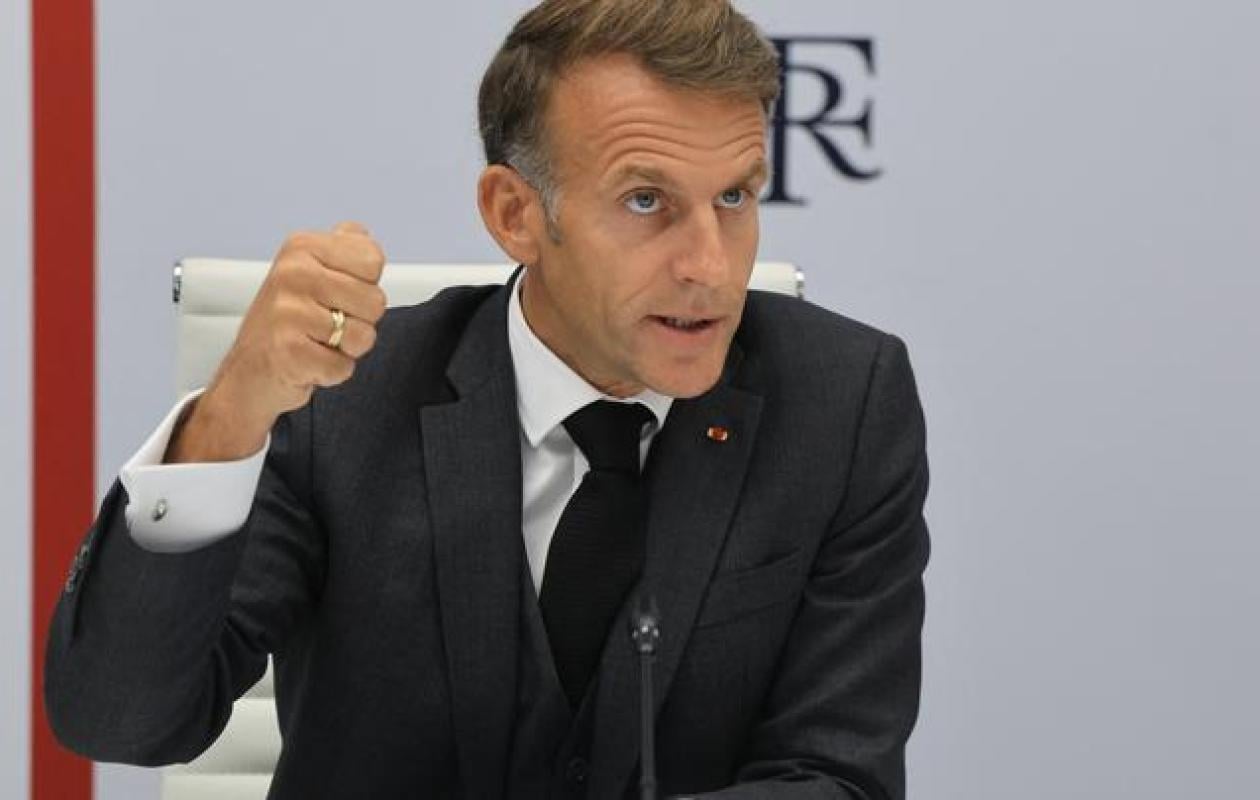
This announcement follows a video conference of G7 leaders chaired by French President Emmanuel Macron, after Washington increased pressure on Europe to release its strategic reserves and threatened to impose a ban on diesel exports.
The discussions, convened by Macron after a meeting with Trump, focused on coordinating a response to soaring fuel prices among the other G7 economies (Great Britain, Canada, Germany, Italy, Japan and the United States).
The Israeli-American war against Iran has caused energy prices to skyrocket, which is backfiring on Trump domestically with high fuel costs becoming a key issue in the run-up to the midterm congressional elections in a month.
Trump had raised the possibility of banning US exports of diesel, used in trucks and other transport vehicles, an alarming prospect for the EU, which is heavily dependent on fossil fuel imports.
The seven countries agreed on a coordinated release, through the International Energy Agency (IEA), of 100 million barrels "to begin immediately over a period of four months, including a significant release of diesel within the first 20 days," the leaders said in a statement released by Macron's office.
They also stated that there would be no ban on diesel exports between them.
"We reaffirm our commitment to refrain from any restrictions on the export of energy and energy products between G7 countries and call on all producers to refrain from imposing bans that could exacerbate market tensions," the leaders said.
"Our citizens' concerns about energy prices remain an absolute priority."
Trump stated that European countries had agreed to release a "massive amount" of diesel from their reserves.
"The process will begin immediately," he posted on his social network, Truth.
"Europe has large quantities of diesel and it will make a major contribution to the global economy – and so will we," Trump said later, adding: "Europe has done a great thing."
"And we are not going to impose an export ban," he said.
- American pressure -
The EU had previously reacted strongly to US threats to impose a ban on diesel exports, a measure against which Macron had also warned during his meeting with Trump.
This intense diplomatic activity came in the wake of increased pressure exerted by US Treasury Secretary Scott Bessent on European nations.
"American farmers, truckers, and businesses should not have to bear the burden of a global diesel shortage," he said.
US Energy Secretary Chris Wright also spoke with his British counterpart, Miatta Fahnbulleh, about the crisis, including the UK's strategic reserves.
Keith Blackshaw, a British dairy farmer based in the hamlet of Newhaven, Derbyshire, complained of a "vicious circle" where high fuel prices were passed on to consumers.
“I really wish Mr. Trump would support us a little more,” the 69-year-old said. “He takes care of his own. Maybe we should do the same and take care of ours.”
The 32 members of the IEA agreed last March to release 400 million barrels of oil from their reserves, the largest release ever.
- "Sanctions against Russia" -
Earlier this week, IEA Director Fatih Birol said that European countries had not yet released some of these stocks, but that could happen soon.
About a third of these stocks had not yet reached the market, Birol said, adding that further releases were possible since 80% of the IEA's total stocks were "still in our possession".
Diesel prices in the United States and Europe have reached record levels in recent weeks, with the export ban imposed by Russia, the main producer, in response to Ukrainian attacks on fuel storage facilities also contributing to the pressures on the global market.
G7 leaders declared on Friday: "We will maintain sanctions against Russia while working with the IEA and our global partners to prevent further repercussions on fuel, gas and other commodity markets."
Energy prices rose sharply in the euro zone in September, pushing inflation up to 3.8%, its highest level in three years.













Commentaires (2)
Participer à la Discussion
Règles de la communauté
💡 Astuce : Utilisez des emojis depuis votre téléphone ou le module emoji ci-dessous. Cliquez sur GIF pour ajouter un GIF animé. Collez un lien X/Twitter, TikTok ou Instagram pour l'afficher automatiquement.
Se connecter
Commentez avec votre profil, votre photo, et soyez averti des réponses.