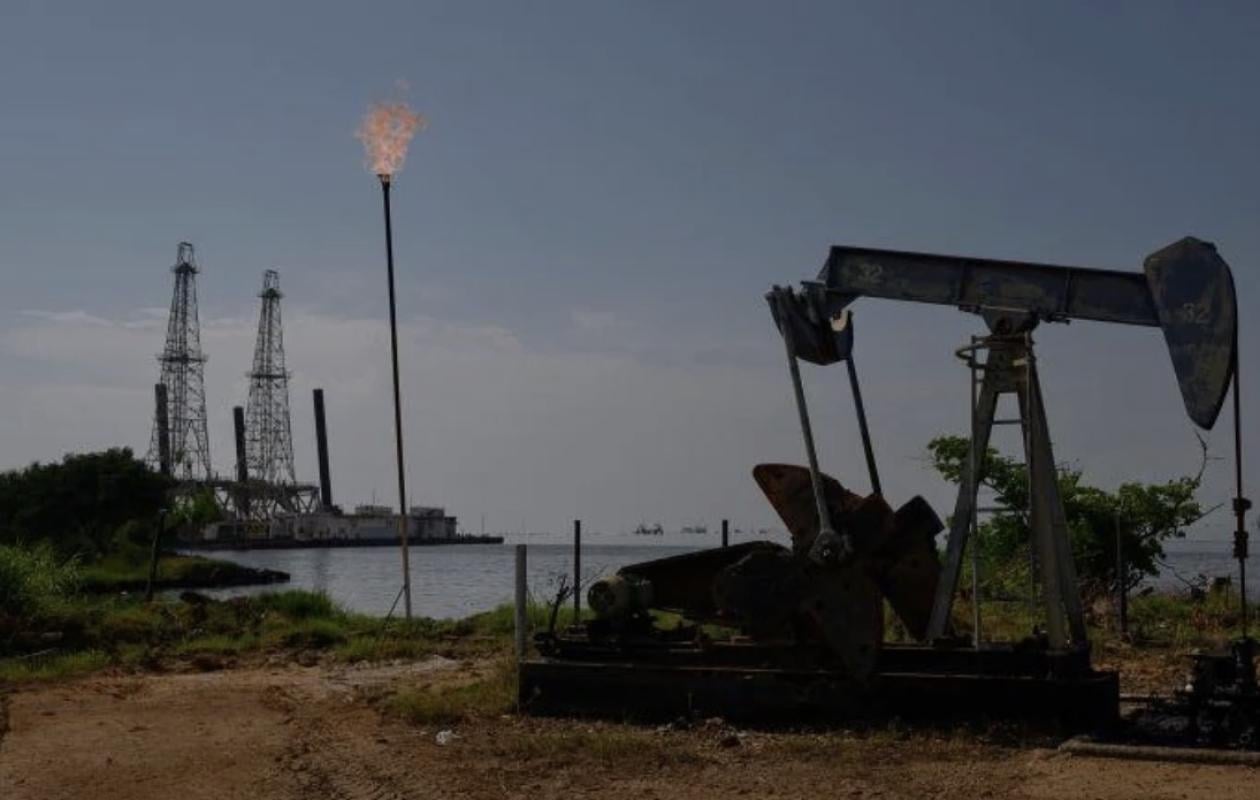
Les Etats-Unis ne veulent pas "voler" le pétrole du Venezuela, assure le ministre de l'Energie
US Energy Secretary Chris Wright on Wednesday, following a visit to Caracas, refuted claims that Washington wants to "steal Venezuelan oil," amid criticism of the sweeping energy deal that sees the United States exploit 20% of the Caribbean nation's reserves.
On August 28, Donald Trump announced that he had reached an agreement with Venezuela that would see the United States take majority control of more than 65 billion barrels of the country's oil reserves. Venezuela expects to reap $209 billion in gains over 25 years.
"I saw those headlines. 'We are stealing Venezuelan oil.' Of course, that's absolutely not true! The resources, the oil of Venezuela, do indeed belong to the Venezuelan people," Chris Wright told AFP, who was part of a small group of journalists on the tarmac at Caracas airport after his visit.
"Private companies provide the capital to produce the oil, but the profits, royalties and taxes go entirely to the Venezuelan government and the Venezuelan people," he assured.
"All we are doing is taking an unused underground asset, which does not bring any benefit to the Venezuelan people, and bringing in the money and technology needed to develop it, so that it benefits Venezuela and the whole world," he added, stressing that it was a "revenue sharing".
The visit of Donald Trump's minister was marked by the signing of several contracts with multinationals, for the exploitation of hydrocarbons as well as the rehabilitation of the electrical network.
Mr. Wright stressed the importance of revitalizing the electricity sector, given the recurring power cuts in Venezuela and the oil sector's need for it to function.
"The good news is that there is already a huge amount of electricity production capacity in Venezuela that is not being used. Quite quickly, I think gigawatts of capacity will be added to the Venezuelan grid simply by bringing some existing infrastructure back into service," the minister added, mentioning a five-year plan with initial effects expected within the next 6 to 12 months.
On the political front, echoing President Trump's statements on Wednesday that Venezuela was "not yet ready" for elections, Mr. Wright clarified: "It's a process (...). Voter lists need to be established, certain civil institutions need to be strengthened."
"We need to stabilize the country and revive the economy," the minister added. "Some of the long-term challenges—debt restructuring, investments, attracting businesses—are partly independent of the political structure. We don't want to wait and sit idly by while the electoral process takes," he stated.




















Commentaires (0)
Participer à la Discussion
Règles de la communauté
💡 Astuce : Utilisez des emojis depuis votre téléphone ou le module emoji ci-dessous. Cliquez sur GIF pour ajouter un GIF animé. Collez un lien X/Twitter, TikTok ou Instagram pour l'afficher automatiquement.
Se connecter
Commentez avec votre profil, votre photo, et soyez averti des réponses.