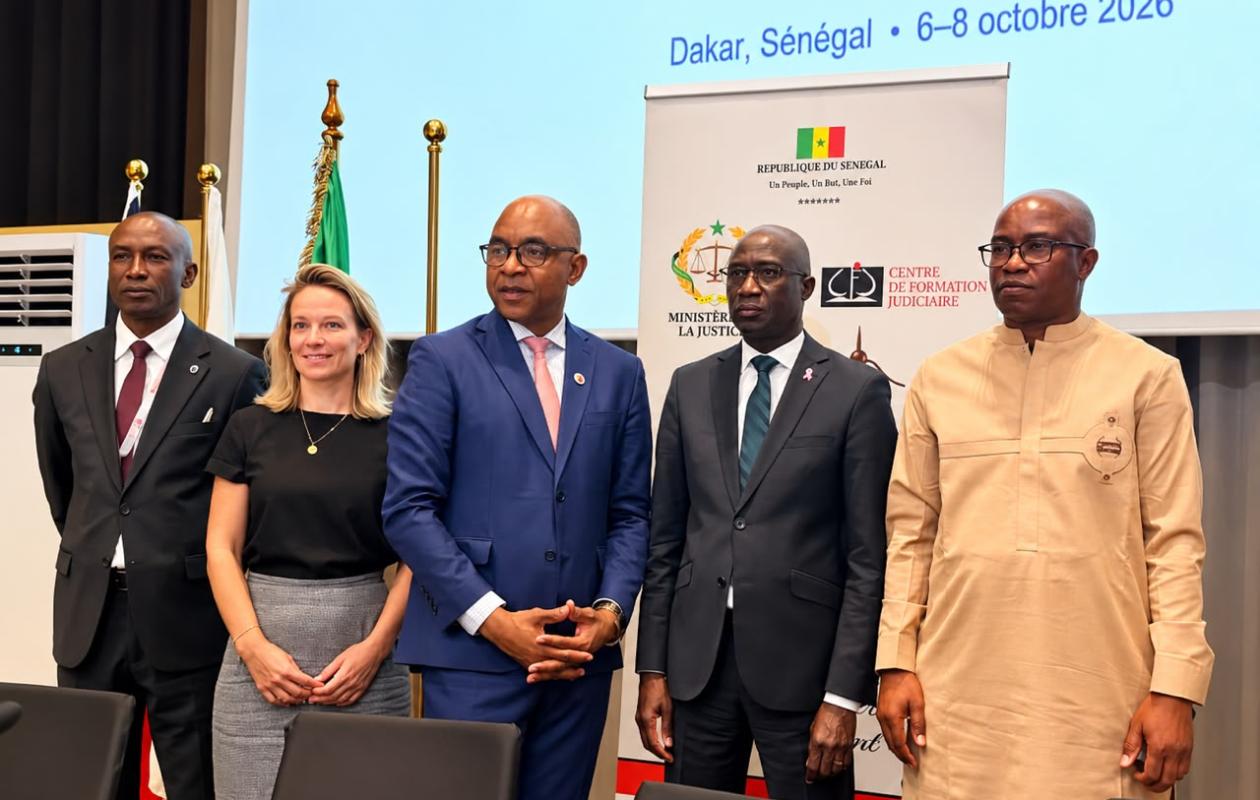
Terrorisme : la justice sénégalaise veut briser le maillon faible entre le champ de bataille et le tribunal
From the battlefield to the courtroom, evidence is only valuable if it can withstand all stages of the legal process. This is the central focus of the regional workshop on evidence collected on battlefields in West Africa, which opened this Tuesday in Dakar under the auspices of the Judicial Training Center. For three days, magistrates, investigators, experts, and officers from fourteen West African countries and neighboring regions are examining a question that has become crucial in the fight against terrorism: how to transform evidence gathered during military operations into admissible evidence in court?
Speaking at the opening, the Minister of Justice, Keeper of the Seals, Moussa Sarr, highlighted the weaknesses that can undermine this chain of events. In theaters of operation, the defense and security forces are often the first, or even the only, to intervene. They apprehend suspects and seize phones, computers, documents, weapons, and biometric data: all elements that can become crucial evidence in legal proceedings. But between seizure in the field and review by a judge, the process remains fraught with obstacles. Non-harmonized collection procedures, insufficient coordination between the military, investigators, and magistrates, and the lack of sufficiently precise rules on the integration of certain information gathered by the military into criminal cases: the Minister identified several points of vulnerability.
" A case is only as good as its evidence."
For lawyer Moussa Sarr, the challenge is twofold: preventing impunity while guaranteeing a fair trial. A suspect detained without trial can create a sense of arbitrariness, while an accused person acquitted for lack of usable evidence can reinforce the perception of impunity. In both cases, public trust is severely tested. Senegal did, however, adapt its legal framework to the terrorist threat as early as 2016, notably by entrusting the prosecution, investigation, and trial of terrorist offenses to specialized magistrates. But, the minister reminds us, these magistrates still need access to usable evidence. "A case is only as good as its evidence," stressed lawyer Moussa Sarr, emphasizing the need to establish a link between the forces on the ground and the judicial authorities well before the trial.
Traceability thus emerges as a crucial link. It is essential to be able to establish the origin of the evidence, identify who collected it, and determine who stored it and under what conditions. From the seizure report and sealing to the handover to investigators, the extraction of digital data, and authentication, every step counts. However, in a theater of operations, this requirement clashes with the urgency and danger. "If just one link breaks, the entire procedure is jeopardized," warned the Minister of Justice.
No fight against terrorism at the expense of human rights
Another red line drawn by the minister: the imperatives of the fight against terrorism must not lead to the sacrifice of fundamental rights. Senegalese law recognizes the freedom of criminal evidence, but this evidence must be gathered fairly and be subject to adversarial debate in court. Classified information poses a particular challenge in this regard: protecting sources and methods while guaranteeing the rights of the defense. "Evidence obtained in contempt of human dignity has no place in a courtroom," stated Moussa Sarr. The minister also reiterated that international humanitarian law continues to apply in theaters of operation. For him, respecting the rules is not an obstacle to effectiveness: evidence obtained by illegal means can, on the contrary, undermine the entire procedure.
In this legal battle, the Minister also called for preserving the independence of the judiciary. Cooperation with the defense and security forces is necessary, but it cannot lead to transferring the power to judge to them. "The magistrate freely assesses the evidence submitted to him," he reiterated. Beyond national borders, Moussa Sarr also advocated for more effective judicial cooperation. Terrorist groups move from one country to another, and evidence can end up in several states. Senegal intends to strengthen mutual assistance mechanisms with its neighbors and partners. The Minister of Justice primarily wants to see concrete solutions emerge, adapted to the realities of the region's judicial systems and applicable on the ground. His department will closely monitor the conclusions of the proceedings, with the aim of permanently strengthening the link between those who gather evidence in the field and those who will, in the future, have to assess it before a judge.












Commentaires (0)
Participer à la Discussion
Règles de la communauté
💡 Astuce : Utilisez des emojis depuis votre téléphone ou le module emoji ci-dessous. Cliquez sur GIF pour ajouter un GIF animé. Collez un lien X/Twitter, TikTok ou Instagram pour l'afficher automatiquement.
Se connecter
Commentez avec votre profil, votre photo, et soyez averti des réponses.