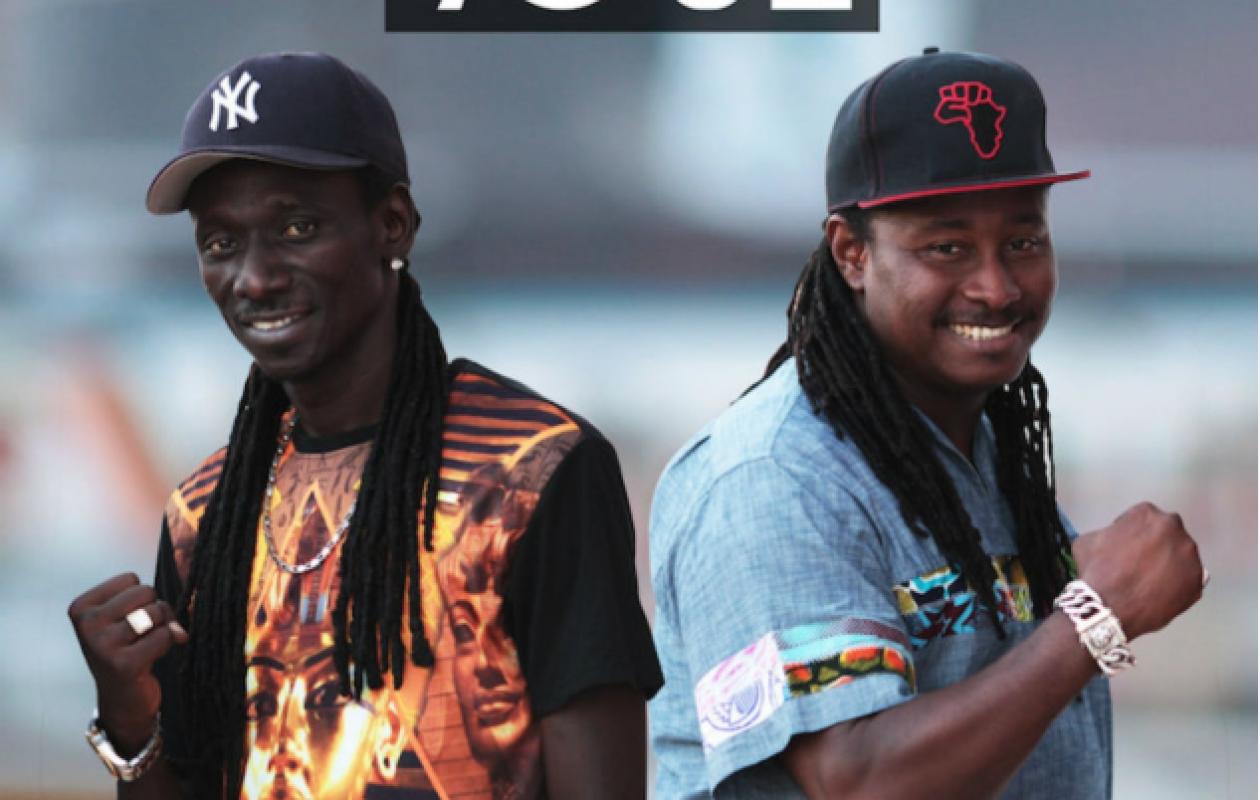
Clash BM Jaay – Positive Black Soul : L'analyse d'un duel générationnel dans le rap sénégalais
Perhaps the rain was needed to calm things down a bit. After a turbulent week of public statements, responses, reactions, and stances, Dakar finally received a shower. As if the heavens, too, had decided to pour some water on this affair, which had far exceeded the scope of a simple concert scheduling issue.
Initially, the story was quite simple. BM Jaay and Positive Black Soul had both chosen August 8th to perform at the Grand Théâtre Doudou Ndiaye Rose in Dakar. Upon investigation, it emerged that BM Jaay did not have a contract for that date.
For the young artist, however, this isn't the real issue. According to him, what he criticizes PBS for is going to the sponsor, Yas, to tell him his concert had been canceled. That's when things escalated. And what could have remained a private matter between organizers, artists, and venue managers turned into a public spat, with all the things rap does best: words, barbs, responses, and a lot of commentary surrounding it.
Ultimately, the question quickly became: who won? And if we have to answer frankly, on this specific sequence, it's the veterans.
The young rapper played his part!
Artistically, BM Jaay hasn't done anything incomprehensible. A rapper is supposed to speak out, respond, sometimes provoke, and not be afraid of the elders. Senegalese rap has also developed in this way. His impertinence isn't, therefore, a problem in itself. In fact, it's almost amusing to see that this same impertinence was, for years, part of the vocabulary of those who are now responding to him.
Awadi, in particular, knows this music very well. With PBS, he helped establish a rap style that didn't necessarily aim to please. A style that could challenge, provoke, criticize, sometimes even disturb. Impertinence was part of his persona, his discourse, and the spirit of the times.
So, seeing Awadi and PBS today confronted with the impertinence of a younger artist is rather ironic. What we've long claimed as youthful freedom inevitably takes on a different meaning when, in your opinion, youth is the one addressing it.
But we shouldn't get ahead of ourselves. BM Jaay may have won a few rounds in the battle of the diss track. He may have said what a young rapper should say in this kind of situation. But a case like this isn't won solely on the mic or on social media. And that's where the difference lies.
When the old-timers pulled out their address books
PBS has a history. And this week, that history was brought back to everyone's attention. Personalities like Youssou N'Dour and Baaba Maal, as well as several prominent figures in Senegalese music and public life, have lent their support to PBS.
This detail matters. Not because being a veteran automatically makes someone right, but because it shows something: the members of PBS are not alone in this story. Behind them are years of music, encounters, cultural battles, concerts, collaborations, and relationships built over time.
Perhaps that's what BM Jaay underestimated. In a clash between a young artist and figures like PBS, it's never just the two of you. There's a whole history that comes into play. And this week, that history resurfaced.
Old-guard solidarity
What perhaps interested me most in this affair wasn't ultimately the content of the various releases. It was the way in which a form of long-standing solidarity was expressed. A solidarity that is becoming rare in a music scene where everyone often moves forward with their own entourage, their own interests, and their own networks.
There, something much older was reawakened. The elders rallied together. Not necessarily to say that PBS was right about everything. Not necessarily to condemn BM Jaay as an artist. But to remind everyone that the older generation still has a voice and a place when it feels one of its own is being attacked. And this time, it was heard. Youssou N'Dour, Baaba Maal, other big names in music and the country: that's no small thing.
The weight of a career
This is also what social media sometimes makes us forget. A career isn't measured solely by the number of views a video gets or how quickly a phrase goes viral. PBS benefits from an established reputation that isn't built in a few months. The group belongs to a generation that had to explain what hip-hop was, defend its place, build its scenes, find its spaces, and make people understand that this music could be more than just a passing fad.
BM Jaay arrives in a different environment. He has tools that his predecessors didn't have. He can speak directly to his audience, create his own narrative, respond immediately, and disseminate a phrase in minutes. That's a strength. But the predecessors have something else: time. And time, in a case like this, is crucial.
Who won the battle?
If we're only talking about rap, punchlines, attitude, and the ability to respond, we could have a long discussion. But if we consider the entire sequence as a whole, the conclusion seems quite simple: PBS won.
They succeeded in bringing the debate back to their own ground. They received the support of a significant portion of the old guard in music and culture. And above all, they reminded everyone that they weren't simply two artists to whom a young person could address themselves like anyone else.
This doesn't mean that BM Jaay should disappear behind the older generation. On the contrary. Young people must be able to provoke, challenge, and tell previous generations that they exist. But impertinence alone isn't always enough to win a battle.
It can get you into the conversation, make you visible, buy you a moment. But when faced with a generation that has thirty years of history, connections built with the biggest names in Senegalese music, and a collective memory behind it, it takes more than just impertinence. You also have to know how to gauge the ground you've just stepped onto.
And what about Awadi in all of this?
This is probably one of the most interesting aspects of this story. Because Awadi was young. He was cheeky, and he still is. He provoked people, he said things some would have preferred not to hear. And that's precisely why the situation is almost amusing.
Awadi knows what it's like to be the young upstart. But now he's on the other side. It's the natural cycle of generations. Yesterday, we pushed the elders; today, we've become the elders being pushed around by the young. And perhaps that, deep down, is the real lesson of this story: not a moral lesson, just a simple truth: time passes.
The rain has fallen!
And then the rain arrived. It didn't settle the matter, it didn't decide who was right on the merits, it didn't resolve the contract issue or the sponsorship question. But it did calm down a very heated week. And for a few hours, it wasn't BM Jaay versus PBS anymore: it was Dakar in the rain. Perhaps that's also what we should remember.
The generations will continue to challenge each other. Young people will continue to find the older generation too settled; the older generation will continue to find the younger generation too impatient. That's normal; hip-hop isn't a place where everyone has to think the same way.
But in this particular battle, the old guard won. Not just because they responded, nor simply because they had the arguments, but because when the battle spilled beyond social media, the full weight of their history entered the room. And faced with that, BM Jaay may have had the words, the energy, and the irreverence, but PBS had time. This time, time won.




















Commentaires (2)
Participer à la Discussion
Règles de la communauté
💡 Astuce : Utilisez des emojis depuis votre téléphone ou le module emoji ci-dessous. Cliquez sur GIF pour ajouter un GIF animé. Collez un lien X/Twitter, TikTok ou Instagram pour l'afficher automatiquement.
Se connecter
Commentez avec votre profil, votre photo, et soyez averti des réponses.