Une coopération scientifique au service de la prévision du climat
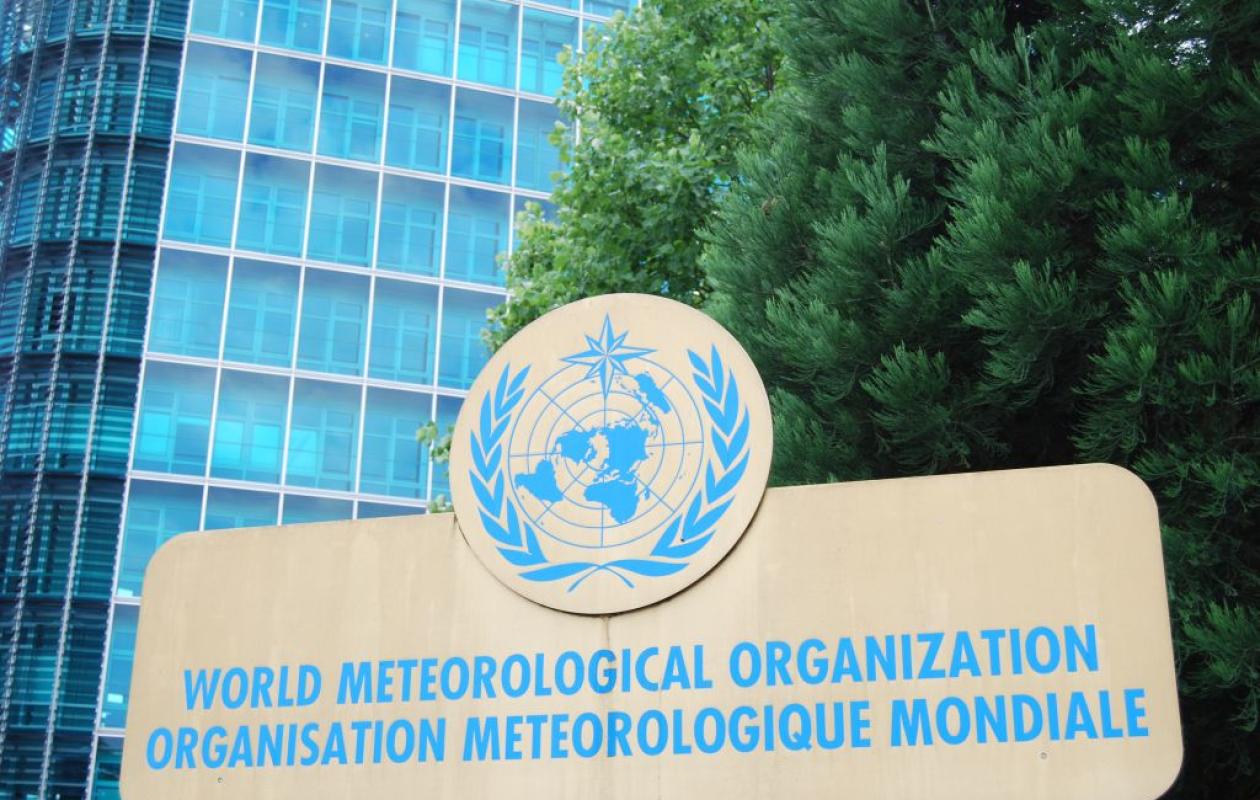
Every day, governments, airlines, farmers, shipping companies, and civil protection services make decisions based on weather forecasts. This information comes from national meteorological services, but it relies on ongoing international cooperation. Air masses, cyclones, and clouds know no borders. To predict their evolution, countries continuously exchange millions of data points through a system coordinated by the World Meteorological Organization (WMO), one of the specialized agencies of the United Nations.
The WMO was established in 1950, succeeding the International Meteorological Organization founded in 1873. Its headquarters are in Geneva, Switzerland, and it currently comprises 193 member states and territories. Its mission is to harmonize observation methods, facilitate the exchange of meteorological and climate data, and strengthen scientific cooperation among national meteorological services.
Without this coordinated effort, forecasts would be far less reliable. Every day, national meteorological services transmit real-time observations from more than 10,000 land-based weather stations, approximately 1,000 high-altitude stations, several thousand ships, ocean buoys, radars, and dozens of satellites. This information feeds into the numerical models used to predict weather and climate changes.
The WMO does not directly produce the weather bulletins disseminated to the public. It establishes technical standards that ensure that temperatures, precipitation, wind speed, and atmospheric pressure are measured using comparable methods in all countries. This harmonization allows climate models to function globally.
Developing early warning systems has become one of its main areas of focus. In November 2022, at COP27 in Sharm el-Sheikh, Egypt, the UN Secretary-General launched the "Early Warnings for All" initiative, coordinated by the WMO. Its goal is to ensure that the entire global population has access to an early warning system for hazardous weather events by 2027. According to the organization, nearly half of the world's countries still lack fully operational warning systems.
The economic consequences of this inadequacy are considerable. According to the WMO, disasters linked to meteorological, climatological, and hydrological phenomena caused more than 2 million deaths and generated $4.3 trillion in economic losses between 1970 and 2023. More than 11,000 disasters were recorded during this period. While the number of victims has decreased significantly thanks to improvements in forecasting and early warning systems, financial losses continue to rise due to urbanization, the increasing value of infrastructure, and the growing frequency of extreme weather events.
Africa remains one of the most vulnerable regions. In its State of the Climate in Africa 2024 report, published in May 2025, the WMO highlights that the continent is warming faster than the global average in several regions. Prolonged droughts, floods, heat waves, and cyclones are increasingly impacting infrastructure, agriculture, water resources, and health systems. The organization also estimates that only about 40% of the continent's population is currently covered by effective early warning systems.
The WAEMU countries fully participate in this international network. The National Civil Aviation and Meteorology Agency (ANACIM) in Senegal, SODEXAM in Côte d'Ivoire, and the National Meteorological Agency of Benin, among others, transmit their observations daily to the networks coordinated by the WMO. These exchanges not only improve national forecasts but also contribute to the models used by other countries.
The organization's work goes far beyond meteorology in the strict sense. Its analyses are used to predict agricultural harvests, manage hydroelectric dams, organize air transport, monitor water resources, and prepare climate change adaptation plans.
Insurance companies and financial markets also follow its publications, particularly when climate risks may affect agricultural commodity prices or supply chains.
The WMO's annual reports are now among the international benchmarks on climate change. In its State of the Global Climate 2024 report, published in March 2025, the organization confirmed that 2024 was the warmest year on record, with the global average temperature approximately 1.55°C above pre-industrial levels. Atmospheric concentrations of carbon dioxide, methane, and nitrous oxide also reached new record highs.
The World Meteorological Organization does not decide climate policies or negotiate international agreements. However, it provides the scientific data that enables governments, businesses, and international institutions to make informed decisions.
In a context marked by the increasing frequency of extreme weather events, this ability to produce reliable and comparable observations on a global scale makes the WMO one of the most influential scientific institutions in the United Nations system.





















Commentaires (0)
Participer à la Discussion
Règles de la communauté
💡 Astuce : Utilisez des emojis depuis votre téléphone ou le module emoji ci-dessous. Cliquez sur GIF pour ajouter un GIF animé. Collez un lien X/Twitter, TikTok ou Instagram pour l'afficher automatiquement.
Se connecter
Commentez avec votre profil, votre photo, et soyez averti des réponses.