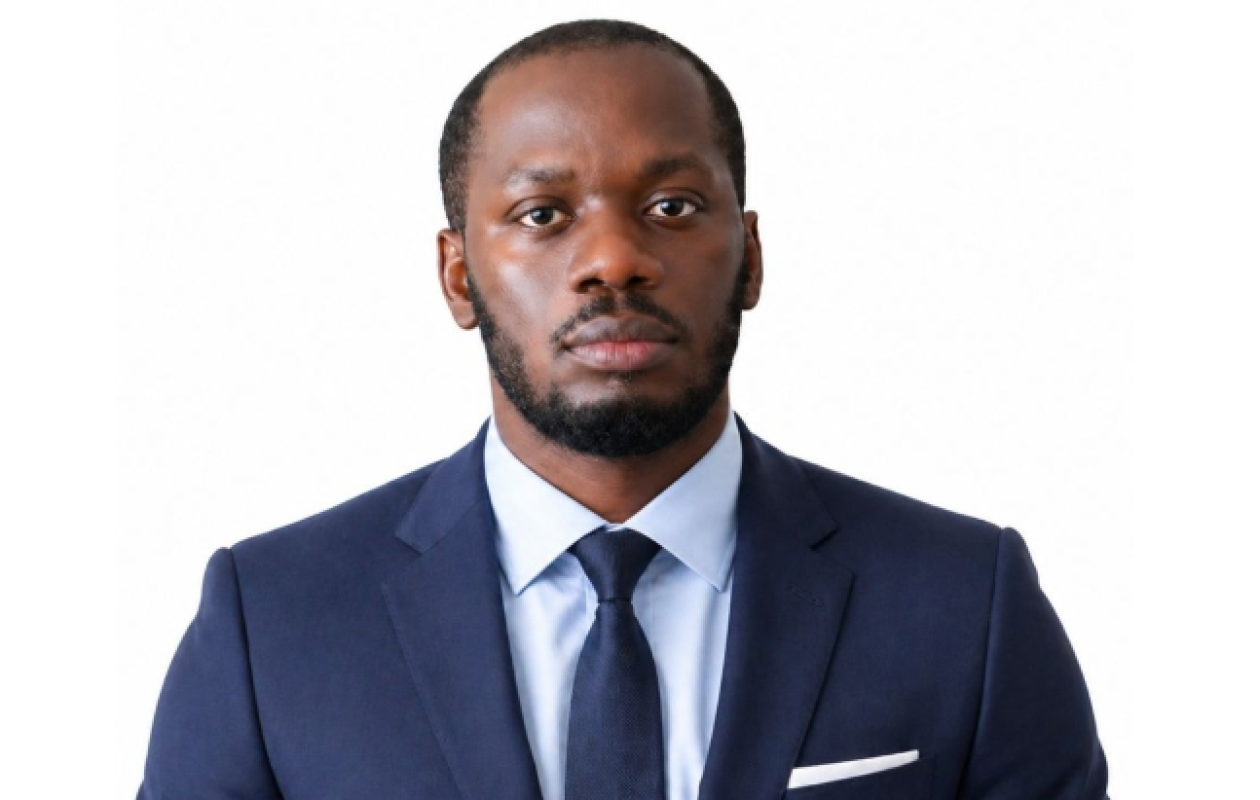
Affaire AEE Power en Afrique : Les révélations du Dr Samba Faye sur un scandale d'État et les défaillances du contrôle public
In a meticulously researched analysis of public procurement and financial transparency, Dr. Samba Faye delivers an uncompromising indictment of the ASER-AEE Power case in Senegal, while also highlighting the Spanish group's activities across the African continent. At the heart of his argument lies the need for accountability in the use of public funds and the crucial role of oversight institutions.
Dr. Samba Faye makes no secret of his dismay at the recent statements from the supervisory authority. He openly expresses his astonishment that a lawyer by training, Minister Abdourahmane Diouf, could declare on RFM radio that he would not accept the judiciary delaying the ASER-AEE Power project. For the analyst, such a stance raises questions: the judiciary, to date, is not blocking the execution of the contract; it is seeking to identify the perpetrators and accomplices of any potential misappropriation of resources. He reiterates that a minister's role is limited to identifying breaches, applying the sanctions stipulated in the contract, or demanding the continuation of the work.
The role of the highest state authorities is also being questioned. Dr. Samba Faye emphasizes that the fact that President Bassirou Diomaye Faye, whether aware of the implications of his choices or not, allowed this case to fester without ever demanding clear accountability directly raises questions about the strength of the rule of law in Senegal.
While the affair is now in the public eye, Dr. Faye attributes these revelations, according to him, to MP Thierno Alassane Sall. He asserts that if we now know that 37 billion CFA francs have vanished, it is thanks to the tenacity of this one man, specifying that the parliamentarian allegedly paid for this persistence with threats from his own colleagues, even being threatened with electrocution if he did not drop the case. This tenacity, according to the author, contrasts sharply with the attitude of former Prime Minister Ousmane Sonko, the Director General of ASER, and a horde of aligned commentators, accused of having worked to promote a narrative of successful contract execution, a narrative refuted by on-the-ground findings.
Returning to the details of the situation in Senegal, Dr. Samba Faye recalls that contract no. T0296/24-DK, signed on February 23, 2024, between ASER and AEE Power EPC (headed by José Ángel González Tausz), concerns a rural electrification program worth 91.8 billion CFA francs targeting 1,600 localities (1,740 according to ASER) in the regions of Kaffrine, Kédougou, Louga, Saint-Louis, and Tambacounda. This project is backed by structured financing from Santander Bank with coverage from CESCE, comprising two loans of €149.76 million and €4.71 million signed on January 23, 2024, half of which was transferred to ICO on March 7, 2024.
The analysis highlights a series of legal and financial irregularities. Regarding the guarantees, on March 18, 2024, SONAC issued three guarantees totaling approximately €56 million without prior payment of the premiums, in violation of Article 13 of the CIMA Code. According to ARCOP, this omission could render the guarantees and the contract null and void. Concerning the flow of funds, the €56 million advance (approximately 37 billion CFA francs) was paid on June 11, 2024, while the insurance premiums were reportedly only settled on June 14 and 20, deducted from the advance itself. Despite three follow-up requests from ARCOP, SONAC failed to provide supporting documentation for its responses, prompting Santander to raise concerns in September about the lack of supporting documentation regarding the use of the funds.
A veritable legal imbroglio ensued. Following the suspension of the contract by the ARCOP Dispute Settlement Committee (CRD) on October 2, 2024 (decision no. 107/2024/ARCOP/CRD/DEF), the Supreme Court initially upheld the suspension on November 21, 2024, before reversing it on February 21, 2025, and then ruling on January 22, 2026, that ARCOP had exceeded its powers. Despite these twists and turns, Santander and CESCE have maintained the suspension of disbursements to this day. In terms of accountability, Dr. Samba Faye points to inconsistencies in communication, citing a letter from the Director General of ASER dated December 19, 2025, which reported only 25 electrified localities and mentioned a pilot phase of 40 villages, figures far removed from the initial promises.
In the legal arena, the case has taken on an international dimension. In Senegal, Thierno Alassane Sall filed a complaint against persons unknown on October 16, 2025, with the financial prosecutor in Dakar for forgery, use of forged documents, and embezzlement of public funds. In Spain, an investigation was opened at the Madrid District Court No. 52 ( Diligencias Previas 140/2026 ) following a complaint filed on January 23, 2026, for misappropriation . Bank records reveal transactions dating back to June 12, 2024: €20 million transferred to other accounts within the AEE Power group, €9 million in foreign exchange transactions, and €11 million transferred to third parties, including €7.75 million to SONAC. Faced with AEE Power EPC's silence in response to a request dated February 24, 2026, the judge decided to issue a formal notice on June 9, 2026.
To demonstrate that the Senegalese case is part of a larger pattern, Dr. Samba Faye documents the presence of the Spanish group in three other African countries.
In Togo, within the framework of the PEREL project, AEE Power was selected for the first phase of the Lomé electricity grid expansion but proved unreliable, forcing the Togolese Electricity Company (CEET) to resort to local subcontractors. During a new tender for 5.5 billion CFA francs (PEREL PLUS) launched on February 23, 2026, and challenged by two anonymous complaints, the Togolese ARCOP's Regional Development Committee (deliberation no. 024-2026/ARCOP/CRD of June 19, 2026) rejected the complaints while explicitly acknowledging AEE Power's past failures in the first phase.
In Kenya, a High Court judgment dated June 17, 2020 ( Chidhya Limited v. AEE Power SA ) details the 2010 transfer of contracts from Montreal Montajes y Realizaciones, then under receivership, to AEE Power SA for €3.6 million. While the Court exonerated AEE Power by rejecting the agent's commission claims, the case documented the role of José Ángel González Tausz, a director of Montreal who later served as an advisor to AEE Power before becoming a shareholder in 2016.
In the Democratic Republic of Congo, according to a report by the NGO Observatori del Deute en la Globalització (ODG) and authored by Nicola Scherer, AEE Power Holdings holds a 25% stake in a consortium, alongside six Chinese companies holding 75%, for the Inga III mega-hydroelectric project, estimated at $13.9 billion. The NGO describes AEE Power as a "relatively small, private, and highly opaque" company, pointing to the lack of publication of contracts and financial statements.
In conclusion to his analysis, Dr. Samba Faye goes beyond the AEE Power case to offer a broader reflection on the governance of public institutions in Africa. He highlights the structural fragility of the safeguards: ignored regulators, a Supreme Court with shifting decisions, unanswered parliamentary questions, and companies that evade judicial orders. "These links, taken together, in a single case and over time, paint a more worrying picture: democratic control of public funds, whether parliamentary, judicial, or simply administrative, almost always lags behind the expenditure itself," summarizes Dr. Samba Faye.
Faced with the pending proceedings in Dakar and Madrid and the exposure of the Senegalese state budget, the author concludes by directly challenging the top of the executive branch: the President of the Republic, the Prime Minister and the supervising minister must now answer a simple question: where are the 37 billion?


















Commentaires (16)
Participer à la Discussion
Règles de la communauté
💡 Astuce : Utilisez des emojis depuis votre téléphone ou le module emoji ci-dessous. Cliquez sur GIF pour ajouter un GIF animé. Collez un lien X/Twitter, TikTok ou Instagram pour l'afficher automatiquement.
Se connecter
Commentez avec votre profil, votre photo, et soyez averti des réponses.