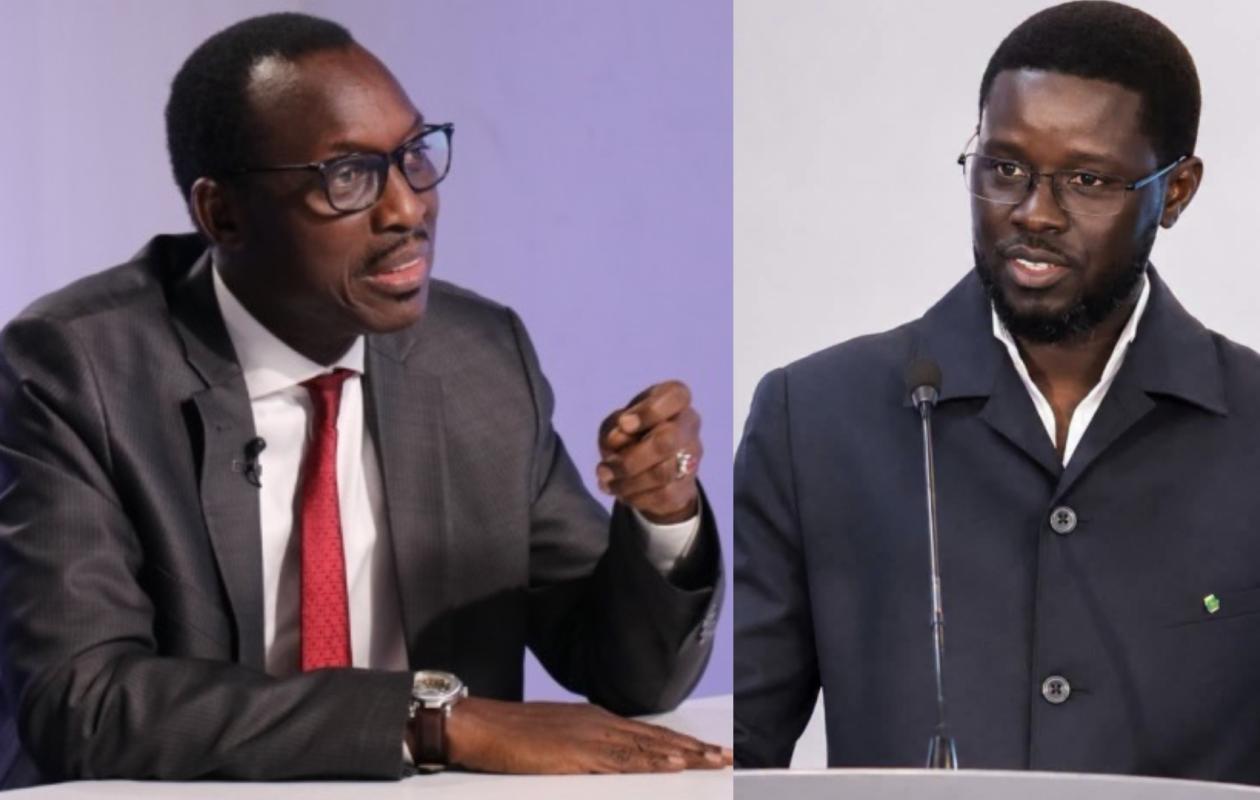
Babacar Diagne, ancien Directeur de la RTS : « Si ‘’sa fitna dotou fi naané niékh’’ signifie que… »
Former head of Senegalese Radio and Television (RTS), Babacar Diagne calls for going beyond the political reading of the presidential formula "Sa fitna dotou fi naané niéekh".
He sees it as an invitation to permanently banish arbitrariness, violence and restrictions on freedoms from Senegalese public life.
According to him, this phrase, spoken by President Bassirou Diomaye Faye at the launch of his party, was immediately perceived as an arrow aimed at a political opponent.
Babacar Diagne thus launched an appeal to transform "his fitna" from a political weapon into an institutional promise. In doing so, he challenged both the government and the opposition on the imperative of the rule of law in Senegal.
"His fitna and us. ''Sa fitna dotou fi naané niéekh''. This phrase, spoken by President Bassirou Diomaye Faye during the launch of his party, is undoubtedly the one that most captured the attention of his speech.
Many spontaneously saw it as an allusion to a person, a political opponent of the time. Perhaps they were right. Perhaps not. Only the author of these words knows their true meaning.
But, ultimately, is that the most important thing?
For my part, I prefer to leave this question to those who like to personalize debates. Because, ultimately, it doesn't matter who was targeted. What matters is that this phrase ceases to belong to the realm of political combat and becomes part of the republican heritage.
I would like to believe that "his fitna" does not primarily refer to a man, but to a set of practices that our democracy can no longer accept and that our rule of law should never again allow to flourish.
"Fitna" would be arbitrariness when it takes precedence over the law. It would be the abuse of power when it supplants institutions. It would be anything that weakens civil liberties and instills in citizens the feeling that their rights depend less on the law than on the balance of power.
If this is the meaning we give to this formula, then it transcends the circumstances in which it arose. It becomes a republican imperative.
It means that citizens will no longer be prevented from traveling without a clearly established legal basis. That journalists will no longer be detained in their newsrooms or harassed for carrying out their work. That columnists will no longer be imprisoned for their opinions. That elected officials will no longer be harassed. That law firms, homes, or private property will no longer be subjected to violence. That peaceful demonstrations will no longer be prevented or dispersed without clear and proportionate legal justification.
Unfortunately, our recent history is full of examples. Moreover, they are not limited to a single period. They remind us that arbitrary rule has no political affiliation or partisan preference. It may change its face, but it always inflicts the same wounds: injustice, fear, and a loss of trust in institutions.
Deep down, I am among those who hope that this presidential formula will become a genuine republican promise. Yes, this "fitna" must end.
We must no longer see citizens prevented from traveling without a clearly established legal basis. We must no longer see journalists, columnists, or media professionals deprived of their freedom for the normal exercise of their profession. We must no longer see elected representatives harassed. We must allow lawyers to practice their profession without intimidation. We must allow public demonstrations to be held in accordance with the law, without arbitrary bans or disproportionate use of force.
The true victory of a democracy does not consist in replacing the arbitrary power of some with that of others. It consists in ensuring that arbitrary power disappears from public life.
The true triumph of a democratic power is not to defeat its adversaries. It is to renounce, once in power, the methods it denounced when it was in opposition.
If "sa fitna dotou fi naané néekh" means that from now on our institutions will function impartially, respecting the Constitution, the laws of the Republic and public freedoms, then this phrase transcends political divisions. It becomes a national hope.
Senegal has suffered enough from political tensions to understand that no change of power is worthwhile if it is not accompanied by a change in practices. People come and go. Institutions, however, remain. They must serve neither a party nor a leader, but exclusively the Republic.
So, yes, today it doesn't matter who the person is that some may have thought they recognized behind these words. What matters is that "sa fitna" now becomes, for all Senegalese, the name for everything we refuse to see flourish in our country: arbitrariness, injustice, attacks on freedoms, political violence, and contempt for the rule of law.
The day when no citizen fears being deprived of their rights because of their opinions, when institutions only side with the law, when the force of law has definitively replaced the right of force, only then will we be able to say, together, that ''sa fitna dotou fi naané niéekh''”.

















Commentaires (93)
lui si discret politiquement depuis Abdou Diouf,
Wade et Macky. Toujours pas velours avec ces
Régimes. Aujourd'hui tout le Monde devient
courageux avec ces jeunots du nouveau régime.
Babacar Diagne est juste pathétique et presque immonde. il donne la nausee.
YALLA REUBEU NA YEEKATOU FiTNA
TA KOKOU MOOYE OUSMANE SOKHOR
Participer à la Discussion
Règles de la communauté
💡 Astuce : Utilisez des emojis depuis votre téléphone ou le module emoji ci-dessous. Cliquez sur GIF pour ajouter un GIF animé. Collez un lien X/Twitter, TikTok ou Instagram pour l'afficher automatiquement.
Se connecter
Commentez avec votre profil, votre photo, et soyez averti des réponses.