Bras de fer Exécutif-Législatif : Les coulisses juridiques du crash de la révision constitutionnelle
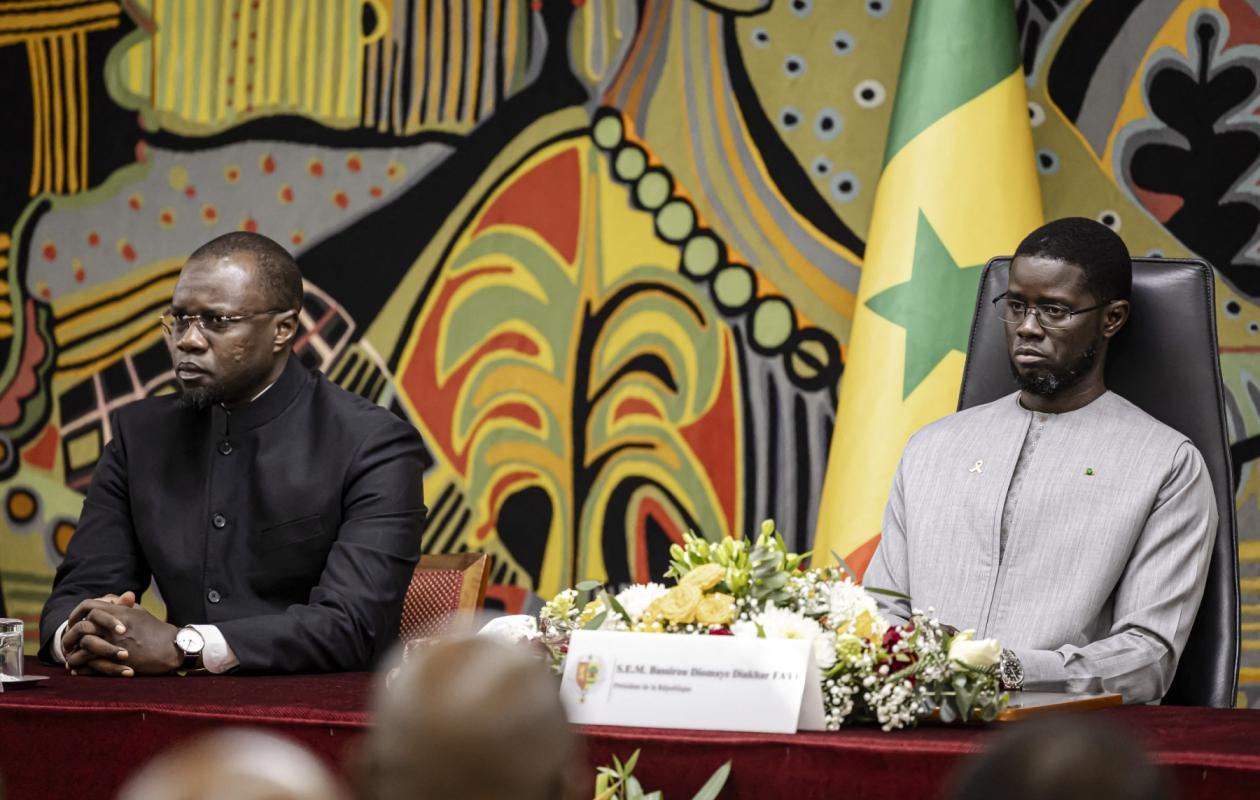
The atmosphere of a major crisis hung heavy in the air this Monday in the National Assembly chamber at Soweto Square. By adopting Bill No. 17/2026, which amends the Constitution, with 129 votes in favor—representing all the votes cast by the majority Pastef group out of the 165 seats in the National Assembly—Parliament formalized a dramatic political and legal split. This historic vote took place in an atmosphere of extreme tension, marked by the forceful removal of opposition MP Abdou Mbow by security forces, leading to a massive boycott and the eventual departure from the chamber of independent parliamentarians and all members of the Takku Wallu Sénégal group.
Beyond the parliamentary turmoil, this day reveals a fundamental fracture: the Pastef legislative majority stood together to impose its initial and sovereign version of the fundamental law, inflicting a double disavowal on the government and the President of the Republic, Bassirou Diomaye Faye, whose amendments were purely and simply rejected.
Bassirou Diomaye Faye's reservations in the face of Pastef's rigor
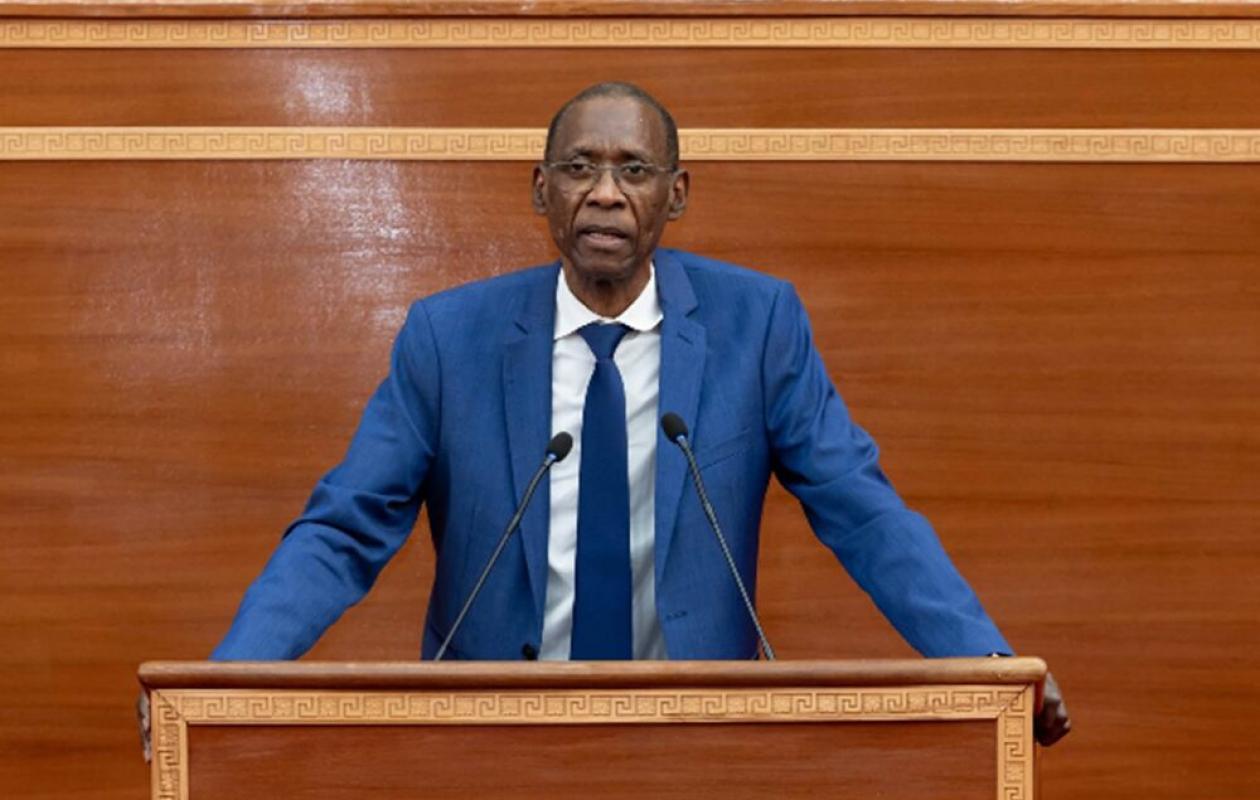
Speaking on behalf of the Executive branch, the Minister of Justice, Keeper of the Seals, Moussa Sarr, attempted to reconcile republican courtesy with legal rigor. After thanking the Head of State for his confidence and congratulating the President of the National Assembly, Ousmane Sonko, on his election to the speakership, the Keeper of the Seals reiterated that this reform was part of a broader effort to modernize the country's institutions, drawing on the landmark conclusions of the National Consultations, the National Justice Conference, and the National Dialogue.
However, on the substance, the minister detailed the deep technical and political reservations of the President of the Republic regarding the initial text of his own majority.
Regarding the issue of holding multiple offices related to Article 38, Mr. Moussa Sarr explained that the president believes the head of state should not be prohibited from leading a political party or coalition. According to the Executive branch, such a prohibition would be "ineffective in practice, since a president would, in any case, remain a member of their political party and could continue to exert influence without officially being its leader." The head of state thus argued for maintaining the status quo.
The government also raised major financial objections, arguing that several adopted amendments create new public burdens without providing the compensatory revenues required by the Constitution, particularly with regard to the expansion of the powers of the future Constitutional Court.
Furthermore, the minister warned of the risks of *
“institutional imbalance” induced by the rationalization of the motion of censure, the limitation of the right to dissolve the National Assembly, as well as by the new powers attributed to the Constitutional Court.
Finally, regarding transparency, while President Faye expressed his full support for strengthening the public nature of asset declarations, he wanted this obligation extended to all senior officials already covered by current legislation, and not just the head of state. Furthermore, he argued that certain provisions concerning the judicial system risked directly conflicting with Senegal's international commitments, particularly those stemming from the OHADA treaties.
Despite this plea, the Pastef deputies remained inflexible, confirming the rejection already pronounced in the Law Commission and sweeping aside the revisions deemed essential by the minister to guarantee the coherence of the fundamental law.
The procedural war: The weapon of the "blocked vote" and the accusation of abuse of power against Ousmane Sonko
The conflict quickly escalated from a substantive issue to a fierce procedural battle centered on a highly strategic mechanism: the blocked vote. Faced with resistance from the members of parliament, the Minister of Justice formally requested, on behalf of the government, the application of this procedure so that MPs could vote on the text while only considering amendments proposed or accepted by the government. According to him, this method aimed to guarantee "the coherence of the texts and the legitimacy of government action."
This is where the major political breaking point between the two figures of the Executive and the Legislative branches occurs. The President of the National Assembly, Ousmane Sonko, rejected the government's request, arguing that this procedure was exclusively reserved for bills (texts originating from the government) and not for draft laws (texts originating from parliament).
A technical note circulating in legal circles openly accuses Ousmane Sonko of constitutional violation and "procedural abuse of power." The argument points out that Article 82, paragraph 4, of the Constitution establishes the "blocked vote" as an exclusive prerogative of the Government. This mechanism stipulates that:
"If the Government so requests, the National Assembly, having been seized of the matter, shall decide, by a single vote, on all or part of the text under discussion, retaining only the amendments proposed or accepted by the Government."
According to this technical note, the constitutional text makes no distinction between a bill and a proposed law. Based on the principle of strict interpretation of the law and on Article 87, paragraph 2, of the Rules of Procedure of the National Assembly—which uses the same wording without any restriction—the experts assert that Ousmane Sonko “has substituted a condition for the constitutional rule that it does not contain.” For them, this decision “thus stems from a disregard for legal requirements,” deliberately depriving the Executive of a classic instrument for “rationalizing parliamentarism,” the appropriateness of which falls solely within its purview.
The legal impasse: Why the vote of the 129 MPs is not enough to validate the reform
While the Pastef majority savors its arithmetic victory in the National Assembly, a major legal reality emerges: the text is still far from coming into force. A strict analysis of constitutional law dismantles the simplistic notion that a three-fifths vote of the deputies would be sufficient to definitively enact the revision for promulgation.
Indeed, the fundamental charter establishes a principle of procedural separation. Article 103 of the Constitution clearly distinguishes between the adoption of a revision and its approval. The standardized procedure established by the drafters is clear: after its formal adoption by the National Assembly according to the required rules, the revision, in principle, only becomes final after being approved by the people through a referendum.
Those in favor of strictly parliamentary validation often cite the historical case law of the Constitutional Council, in particular Decision No. 3/C/2005 of January 18, 2006, which stipulated that "in the case of revision of the Constitution by the National Assembly alone, a vote by a qualified majority of three-fifths achieves both the adoption and the approval of the law."
But experts point out that isolating this quote is a misinterpretation. Recital 6 of the same decision clarifies that the phrase "In this case," isolated in the last paragraph of Article 103, refers exclusively to the scenario of prior presidential arbitration, when the Head of State decides, on his own initiative, to submit the text solely to the National Assembly. In 2006, this concerned a constitutional bill presented by the President of the Republic, who had expressly chosen, by decree, the parliamentary route. It is only in this top-down context (from the Executive to the Legislature) that the qualified majority could simultaneously constitute adoption and approval.
The current situation is fundamentally different for two main reasons. First, the text under consideration is a proposed revision originating strictly from Parliament. Second, and decisively, the President of the Republic has already officially decided on the text's path. In Opinion No. 594 of June 19, 2026, addressed directly to the President of the National Assembly, the Head of State, Bassirou Diomaye Faye, expressly indicated that he favored a referendum. Mr. Moussa Sarr reaffirmed this before the members of Parliament: "Pursuant to Article 103 of the Constitution, the President of the Republic has decided to submit the adopted text to a referendum."
In conclusion, wanting to transmit the text to the Palace of the Republic for its immediate promulgation would stem from a "clear disregard for the provisions of Article 103" and an erroneous interpretation of the 2006 jurisprudence.
In the absence of an explicit presidential decision substituting parliamentary procedure for the referendum, the National Assembly's vote remains legally incomplete, even if the deputies reach the three-fifths majority. All eyes now turn to the Senegalese people, the ultimate arbiter through the referendum, to resolve this crisis at the highest level of the state.




















Commentaires (66)
Participer à la Discussion
Règles de la communauté
💡 Astuce : Utilisez des emojis depuis votre téléphone ou le module emoji ci-dessous. Cliquez sur GIF pour ajouter un GIF animé. Collez un lien X/Twitter, TikTok ou Instagram pour l'afficher automatiquement.
Se connecter
Commentez avec votre profil, votre photo, et soyez averti des réponses.