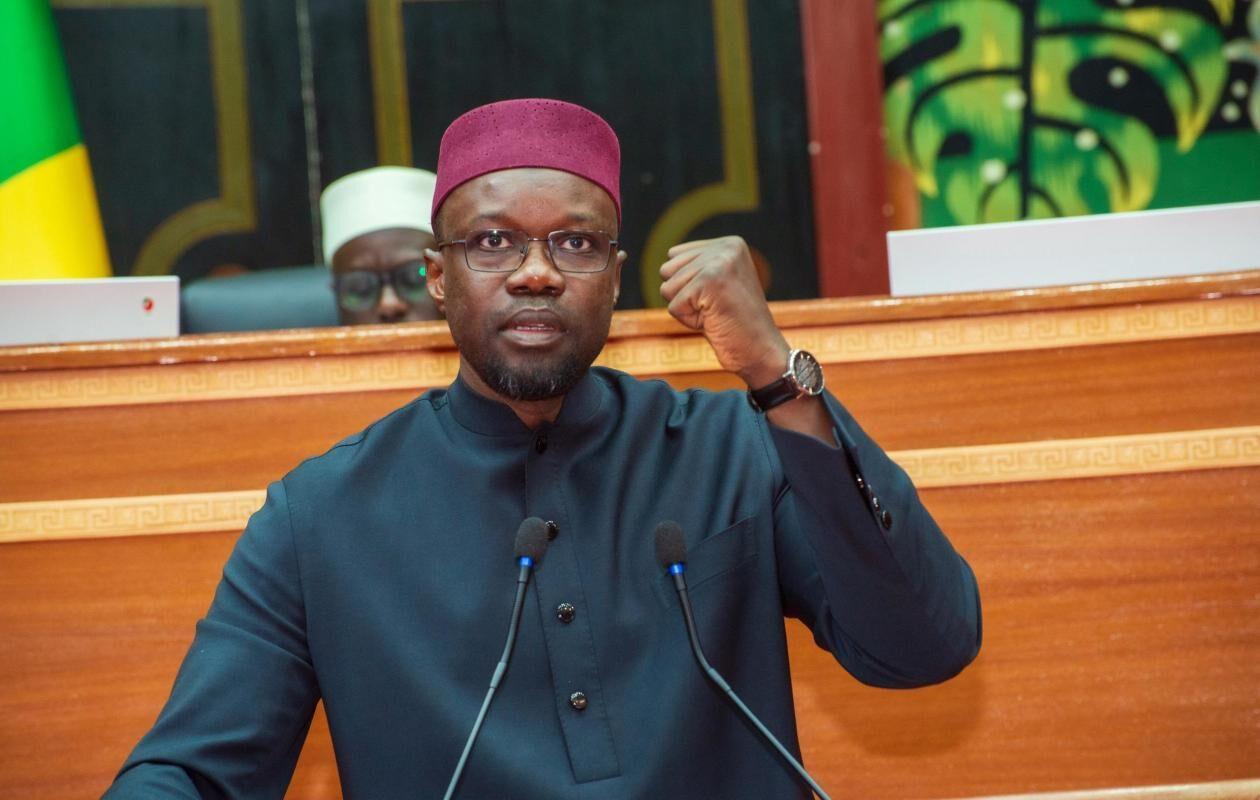
Débat institutionnel : Boubacar Boris Diop, Pierre Sané et 141 intellectuels publient un manifeste pour l'adoption de la nouvelle Constitution
As calls for the postponement or withdrawal of draft law no. 17/2026 on constitutional revision multiply, a group of 143 prominent figures from academia, culture, medicine, and politics has published a forceful manifesto demanding the immediate adoption of the text. Faced with requests for renegotiation or new frameworks for dialogue, the signatories denounce what they consider political paralysis, asserting that constitutional debate is one of the noblest in a democracy, but that they refuse to allow this debate to "become a permanent strategy of postponement."
The group points out that this reform is not an "improvised initiative" but rather represents "the culmination of nearly twenty years of collective reflection" incorporating the 2009 National Conference, the National Commission for Institutional Reform, the 2024 Justice Conference, and the 2025 National Dialogue. Defending the full legitimacy of the members of parliament in the face of the challenges, the text poses a direct question to the opponents of the reform who seem to be discovering that their examination should be postponed again: "We ask a simple question: what are we waiting for?"
Fundamentally, the manifesto's proponents reject the idea of a text aimed at locking down or concentrating the prerogatives of the Executive. According to them, the bill provides major institutional guarantees because "it strengthens the oversight powers of the National Assembly, modernizes constitutional justice through the creation of a Constitutional Court, and provides greater protection for political pluralism by explicitly recognizing the role of the opposition."
The opinion piece emphasizes that the true strength of this revision lies in its social and innovative dimension, asserting that for the first time on such a scale, the Constitution ceases to be merely a text organizing public powers and instead "becomes a societal project." The introduction of unprecedented rights and entitlements is presented as a historic step forward for the country, with the reform notably introducing "the right to literacy, the right to digital inclusion, the right to a healthy environment, and universal access to electronic communications." These new principles are crucial because they "now obligate the public authorities to create the concrete conditions enabling everyone to effectively exercise their freedoms."
A call to reject parliamentary inaction
Aware of the debates surrounding the fundamental charter, the signatories emphasize that no legal document is set in stone, but that it is time to formalize the necessary changes after two decades of assessments and consultations. They urge members of parliament to take responsibility before history by examining this proposal with the rigor required of a fundamental law, amending it when they deem it necessary, but above all, "not to succumb to the temptation of inaction." For this group, after twenty years of recommendations, the time for procrastination is over, and the moment has come to give Senegal more balanced institutions.
Among the 143 citizens who have signed this appeal are leading figures in Senegalese intellectual, cultural, and academic life. The writer Boubacar Boris Diop tops the list, followed by Dr. Seynabou Sougoufara, a researcher at the University of Warwick, and filmmaker Moussa Sene Absa. Pierre Sané, former Secretary General of Amnesty International and former Under-Secretary-General of UNESCO, is also among the early supporters, along with Oumar Dia, a senior lecturer at Cheikh Anta Diop University (UCAD), physician Félix Atchadé, and historian Dr. Mamadou Diallo.
The legal profession is strongly represented at the top of the list by Abdoul Aziz Diouf, a full and associate professor of law at UCAD; El Hadji Samba Ndiaye, an associate professor at the Faculty of Law and Political Science (FJSP) at UCAD; and Sidy Alpha Ndiaye, a full and associate professor of law at UCAD. Finally, the group of fifteen initial signatories is completed by Daouda Ngom, a full professor at UCAD; Professor Youssouph Mbargane Guissé, a philosopher and anthropologist at UCAD; Professor Mouhamed Abdallah Ly, a sociolinguist at IFAN; Ousmane Sané, a legal expert and international consultant; and Abdourahmane Seck, an anthropologist and historian at UGB.













Commentaires (138)
Participer à la Discussion
Règles de la communauté
💡 Astuce : Utilisez des emojis depuis votre téléphone ou le module emoji ci-dessous. Cliquez sur GIF pour ajouter un GIF animé. Collez un lien X/Twitter, TikTok ou Instagram pour l'afficher automatiquement.
Se connecter
Commentez avec votre profil, votre photo, et soyez averti des réponses.