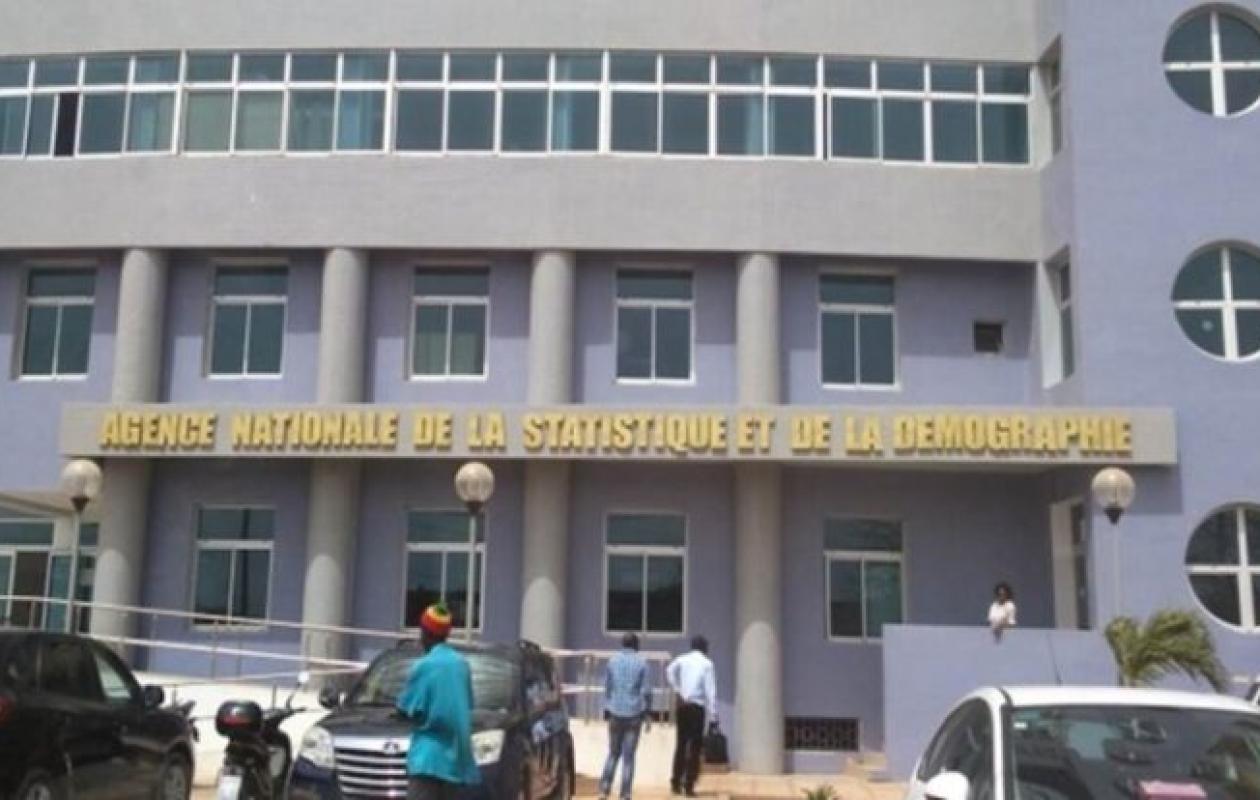
Décision publique : Comment l'ANSD et les instituts de statistique façonnent les choix stratégiques de l'État
Every quarter, governments comment on growth figures, central banks monitor inflation trends, investors analyze public finances, and international organizations publish their economic forecasts. These indicators occupy a central place in public debate, but they do not arise spontaneously. They are the result of methodical work carried out by national statistical institutes, whose mission is to produce reliable, comparable, and independent data on a country's economic, social, and demographic situation. In Senegal, this responsibility falls to the National Agency for Statistics and Demography (ANSD), established by the law of July 21, 2004.
The role of these institutions extends far beyond simply publishing tables of figures. They conduct population censuses, compile national accounts used to calculate gross domestic product (GDP), measure inflation through consumer price indices, and monitor trends in poverty, employment, industrial production, and foreign trade. Without this data, it would be impossible to accurately assess the state of an economy or measure the effects of public policy.
In Senegal, the ANSD (National Agency for Statistics and Demography) coordinates the entire National Statistical System. Its mission extends beyond simply producing statistics. The agency also ensures the harmonization of methods used by different public administrations so that the data produced is consistent and comparable over time. This standardization is essential for monitoring the actual evolution of the economy and preventing indicators from changing simply because calculation methods have been modified.
Economic growth is a good example. When a country's GDP is reported to have grown by 6% or 8%, this result is based on a considerable amount of work collecting and processing data from thousands of businesses, government agencies, and household surveys. Statisticians then aggregate this information according to international standards defined by the System of National Accounts so that economic performance can be compared between countries.
Inflation follows the same logic. Each month, statistical institutes record the prices of hundreds, sometimes thousands, of goods and services representative of household consumption. Within the WAEMU, this methodology is harmonized so that the indices published in the different member states can be rigorously compared. This data is then used by the BCEAO to assess inflationary pressures and guide its monetary policy.
Public statistics also influence budgetary decisions. Finance ministries rely on growth estimates to construct their tax revenue forecasts. Poverty data helps target social programs, while demographic figures guide investments in schools, hospitals, and infrastructure.
Technical and financial partners also pay close attention to this information. The International Monetary Fund, the World Bank, the African Development Bank, and rating agencies use data produced by national institutes to develop their economic analyses, growth projections, and assessments of the sustainability of public finances. When these institutions publish a report on a country, national statistics generally constitute their primary source of reference.
Investors follow the same approach. Before acquiring sovereign bonds or financing a project, they examine indicators such as the growth rate, inflation trends, demographic structure, and production in key sectors. The quality of official statistics thus helps reduce uncertainty and improve the clarity of an economy.
This responsibility explains why the professional independence of statistical institutes is widely recognized as a fundamental principle internationally. In 2014, the United Nations adopted the Basic Principles of Official Statistics, which emphasize that data must be produced using scientific methods, impartially, and without political interference. These principles now serve as a benchmark for national statistical systems worldwide.
The quality of statistics, however, does not depend solely on the competence of the institutes. It also relies on the availability of administrative data, the cooperation of businesses and households during surveys, and the human, financial, and technological resources allocated to statistical services. Population censuses and large-scale national surveys thus mobilize several thousand field agents and often require several months of preparation before the first results are published.
Advances in digital technologies are gradually changing working methods. Tablet questionnaires are progressively replacing paper forms, satellite imagery is supplementing certain agricultural surveys, and the use of administrative data is improving the frequency of some indicators. These developments can accelerate statistical production, but they do not eliminate the requirements for verification, quality control, and methodological transparency that underpin the credibility of official figures.
National statistical institutes are not tasked with commenting on economic policies or assessing their relevance. Their role is to produce objective information that provides policymakers, researchers, businesses, and citizens with a common basis for analyzing economic and social realities. This distinction is essential. Official statistics are not opinions; they constitute a public good, compiled using transparent and internationally recognized methods.
As public policies become more complex and investors demand ever more precise information, the work of national statistical institutes takes on increasing value. Behind every growth figure, every inflation rate, or every poverty indicator are teams whose mission is to transform millions of raw data points into information robust enough to inform economic decisions.






















Commentaires (5)
Participer à la Discussion
Règles de la communauté
💡 Astuce : Utilisez des emojis depuis votre téléphone ou le module emoji ci-dessous. Cliquez sur GIF pour ajouter un GIF animé. Collez un lien X/Twitter, TikTok ou Instagram pour l'afficher automatiquement.
Se connecter
Commentez avec votre profil, votre photo, et soyez averti des réponses.