
Député et maire à la fois : le cumul des mandats, atout contesté des territoires africains
Although abolished in France in 2017, holding both parliamentary and local executive office remains common in several African countries. Criticized as a factor in the concentration of power, it is defended as a catalyst for development in landlocked territories. Between these two perspectives, the experience of the first municipal mandates in West Africa provides concrete elements to the debate.
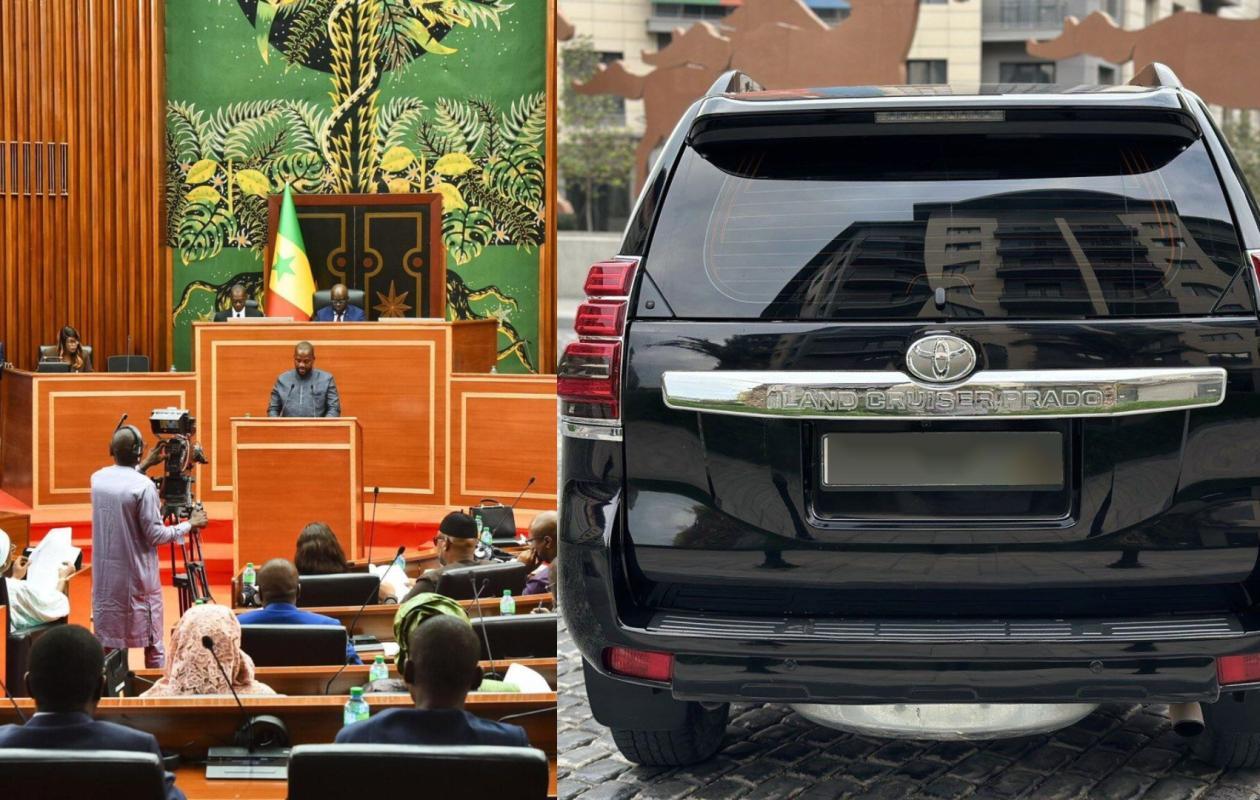
This is a debate that France settled in 2017 by prohibiting its members of parliament from simultaneously holding a local executive position, and which several African democracies continue to address differently. In Togo, Benin, Ivory Coast, and Senegal, under varying arrangements, a member of parliament can lead a municipality. The decentralization laws adopted in these countries have generally preserved this possibility, based on a simple argument: in states where public resources are scarce and decision-making processes are centralized, holding multiple offices would bring local communities closer to the central government.
The criticisms of this system are well-known and compelling. Holding multiple offices concentrates power in a few hands, limits the renewal of political personnel, and casts doubt on the elected official's actual availability: can one sit in the National Assembly in the capital and simultaneously manage a municipality hours away on a daily basis? It also creates inequality between municipalities, as those led by a member of parliament who is also a mayor benefit from access to the highest levels of government that others do not. These are all arguments that led France to ban the practice and that regularly fuel debate in African parliaments.
Those who advocate for holding multiple offices respond by pointing to the realities of early decentralization. A first-generation African municipality lacks the history, personnel, and institutional weight that would allow an ordinary mayor to single-handedly bring complex projects to fruition: a hospital, a paved road, a national electrification program. The mayor-MP, on the other hand, is familiar with government ministries, votes on budgets, and interacts with key decision-makers. He relays the needs of his territory and disseminates state programs. In this view, holding multiple offices is not an anomaly but a temporary corrective, a necessary step while municipalities develop their own capacity to influence.
Côte d'Ivoire takes this logic to its extreme, providing the most discussed example in the debate: Amadou Koné, Minister of Transport since 2017, Member of Parliament for Bouaké since 2021, elected mayor of the country's second-largest city in September 2023 with nearly 80% of the vote. A former administrator at the African Development Bank, educated in Canada, he spearheaded the Bouaké Nouveau reconstruction program and has chaired the umbrella association of Ivorian mayors since 2024, before being elected in 2026 to a vice-presidency of the World Organization of Local Governments. His supporters see Bouaké's revitalization as a striking demonstration of the power of holding multiple offices; his critics see it as precisely the problem: what ordinary municipality could compete with a city whose mayor sits in the government?
Togo, whose 117 municipalities were created following the 2019 local elections, provides an almost experimental case study of this debate, since its decentralization law explicitly authorizes the holding of multiple offices. The example of the municipality of Amou-Oblo, in the Plateaux region, is frequently cited to illustrate the argument in favor of this system. Its mayor, Meyebine Esso Gnassingbé, a member of parliament for the Amou prefecture since 2018, was elected to head the municipality in September 2019 and re-elected in July 2025. His first term there yielded undeniable tangible results: a regional mother-and-child hospital, 50 kilometers of roads and tracks built or rehabilitated, an extension of the electricity grid and nearly 500 solar streetlights, a developed agricultural zone of 230 hectares, and an access road to the hospital co-financed with a government program and delivered on schedule.
A careful reading of this report sheds more light on the mechanism of holding multiple offices than any lengthy explanation. Many of these achievements rely on the coordination between the municipal level and national programs: the CIZO electrification program, ministerial subsidies that enabled more than 700 drivers to obtain their licenses free of charge, and the program to support vulnerable populations with road maintenance. The member of parliament who is also the mayor appears here as a liaison between their municipality and the state, a function that the theory of holding multiple offices describes precisely.
The crucial question remains: would these programs have reached the municipality without a mayor sitting in the Assembly? Comparative experience suggests that municipalities without parliamentary representation access the same programs, but often more slowly and to a lesser extent.
This is precisely what makes the debate unsolvable in its current state: the practice of holding multiple offices works for the territories that benefit from it, and it is its very effectiveness that poses a problem at the systemic level. Local development that depends on the elected official's national position is not institutionalized development; it rewards well-connected territories and leaves the others to their fate. Those who advocate for an eventual ban do not dispute the results achieved by members of parliament who are also mayors; they dispute that a country can sustainably base territorial equity on the geography of holding multiple offices.
The middle ground emerging in several countries involves allowing the practice of holding multiple offices to continue for the duration of local government consolidation, while simultaneously building what will one day render it unnecessary: transparent and predictable state funding, municipal investment funds with objective criteria, and associations of local authorities capable of collectively representing the interests of their communities. The day a rural African municipality secures its hospital solely through the strength of its application, the debate on holding multiple offices will naturally fade away.
In the meantime, the first terms of these deputy-mayors, with their results and ambiguities, will at least have served as a demonstration: African territories develop all the faster when they are connected to centers of power. The crucial question is whether this connection should remain a matter of individuals or become a matter of institutions.



















Commentaires (3)
Participer à la Discussion
Règles de la communauté
💡 Astuce : Utilisez des emojis depuis votre téléphone ou le module emoji ci-dessous. Cliquez sur GIF pour ajouter un GIF animé. Collez un lien X/Twitter, TikTok ou Instagram pour l'afficher automatiquement.
Se connecter
Commentez avec votre profil, votre photo, et soyez averti des réponses.