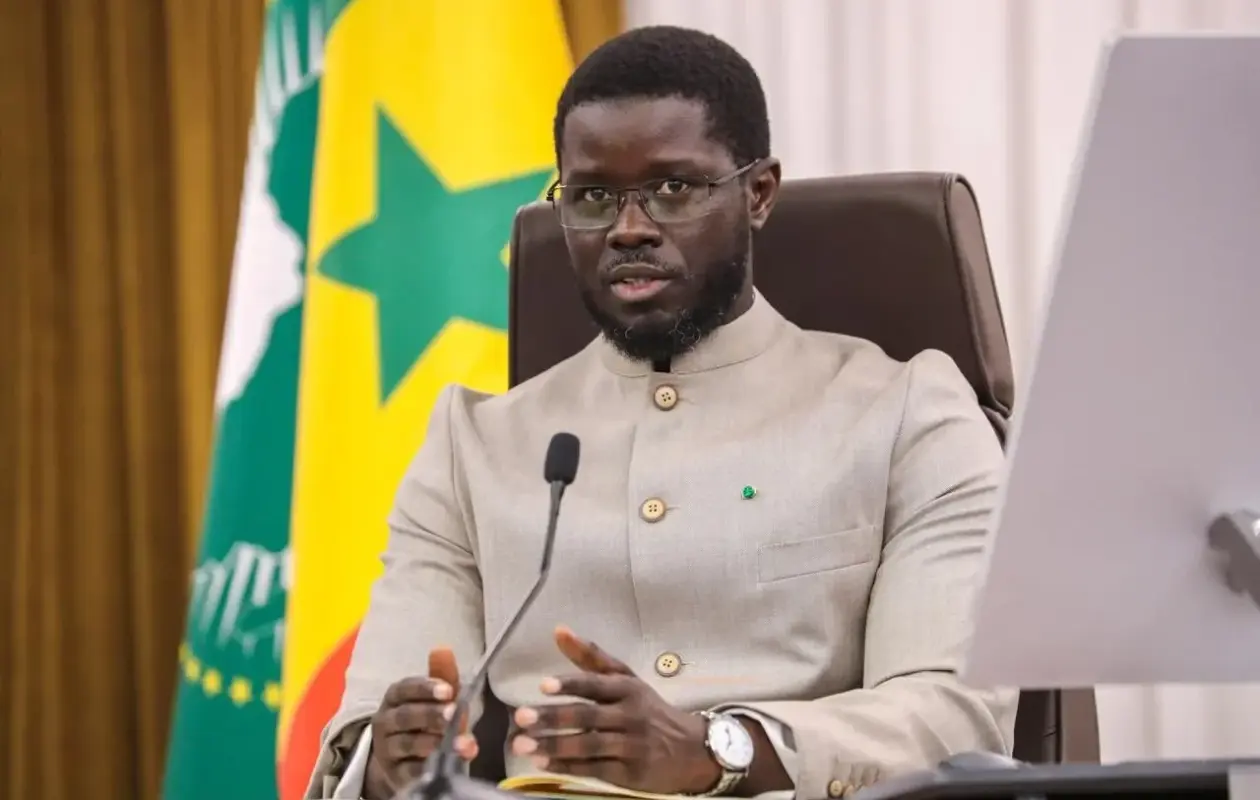
Fonds politiques : Le Président Diomaye Faye assume l’opacité “utile” au nom de l’État
Speaking to the press, President Bassirou Diomaye Faye was questioned on a sensitive issue: political funds. Balancing the need for transparency with the imperatives of state action, the head of state defended a balanced approach, acknowledging what he himself called "necessary opacity." Regarding political funds, often perceived as a gray area of public finance, Bassirou Diomaye Faye rejected any simplistic interpretation.
“If we told everything, the Senegalese people would have a different impression,” he stated, warning against the biased interpretations that total transparency could generate. According to the president, these funds address real and sometimes urgent needs of the state. Intelligence gathering, solidarity with neighboring countries, managing sensitive situations, and providing one-off assistance to citizens: these are all areas where, in his view, public action requires discretion and responsiveness.
“There are actions that a state must take,” he insisted, mentioning in particular social requests that would be difficult to refuse. Behind this justification lies a central idea: political funds are not only instruments of power, but also levers for redistribution and social intervention.
The president acknowledged the need for oversight, while cautioning against excessive regulation that could hinder the effectiveness of public action. "Oversight should not be a constraint," he clarified, advocating for a flexible framework.
He acknowledges that the issue of political funds continues to be a subject of debate. Caught between the democratic demand for transparency and the imperative of strategic discretion, the president's position is to ask how far opacity can go in the name of state efficiency?
In an economic context marked by estimated growth of 1.6% and persistent budgetary constraints, the president sought to downplay the criticism. "We cannot say that everything is working in this country. There is no country where everything is fine," he declared, framing his remarks in a spirit of clear-sightedness rather than denial.
But beyond the current economic situation, it is the management of public resources that has drawn attention. This defense comes in a context where the government is highlighting its efforts in budgetary austerity. The deficit is said to have fallen from 12% to 6% in one year, while high-impact social measures have been maintained, notably the extension of certain allowances.
Following the same logic of streamlining, the president reiterated the elimination of the High Council of Territorial Authorities and the Economic, Social and Environmental Council, two institutions often criticized for their cost and their perceived role in political redistribution. This decision was presented as a "break with the past," prioritizing economic and social issues.
The resources thus freed up would have been directed towards essential sectors, particularly education, with the support of teachers and the elimination of temporary shelters. On the social front, Bassirou Diomaye Faye emphasized salary stability: "We have no salary arrears, much less any broken agreements," he stated, highlighting what he considers rigorous and credible management.
Finally, the head of state defended a policy focused on having a concrete impact on the daily lives of Senegalese people. "Just compare the prices when we arrived and those of today," he declared, advocating for measures aimed at boosting purchasing power.













Commentaires (31)
Participer à la Discussion
Règles de la communauté
💡 Astuce : Utilisez des emojis depuis votre téléphone ou le module emoji ci-dessous. Cliquez sur GIF pour ajouter un GIF animé. Collez un lien X/Twitter, TikTok ou Instagram pour l'afficher automatiquement.
Se connecter
Commentez avec votre profil, votre photo, et soyez averti des réponses.