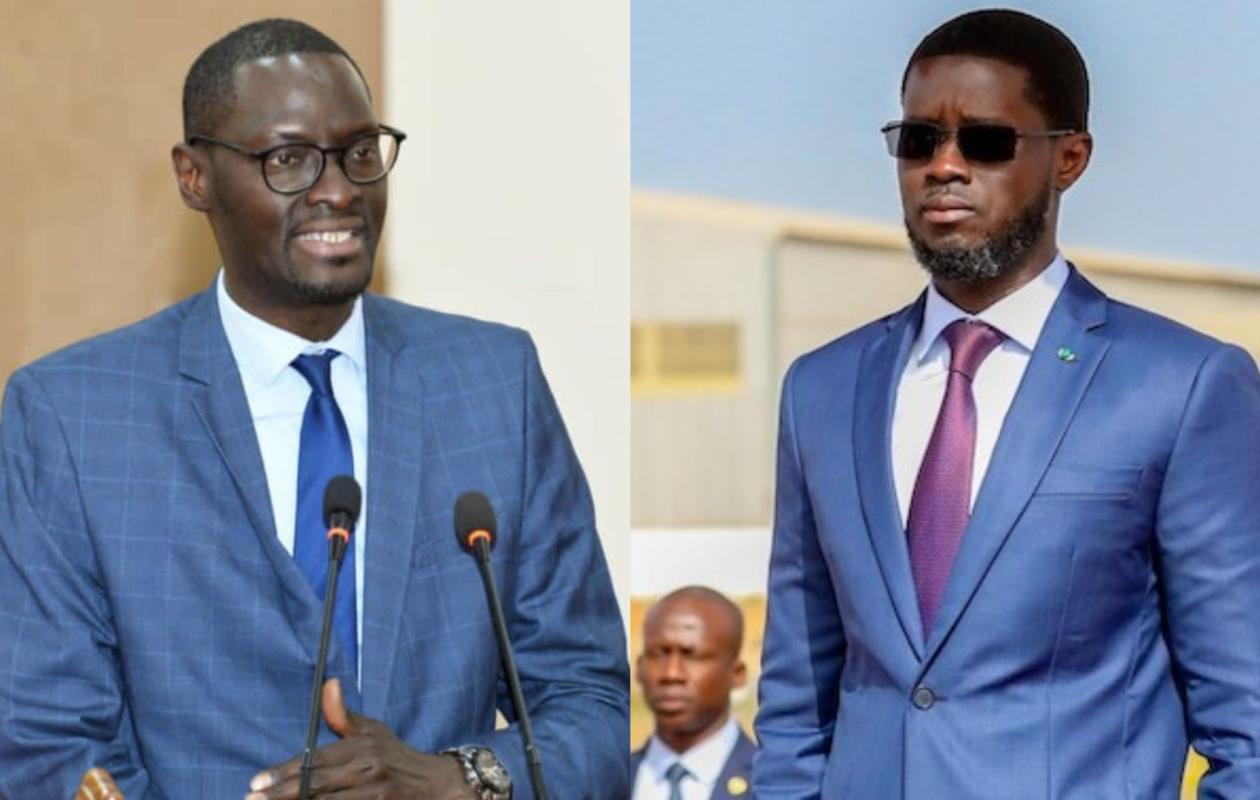
"La justice réparatrice n'est pas une confrontation" : Le porte-parole de la Présidence appuie le discours de Diomaye Faye au Ghana
President Bassirou Diomaye Faye is in Ghana to participate in the High-Level Consultative Conference in Accra. In his address, the president called for "restorative justice," demanding concrete action following the adoption by the United Nations General Assembly of a landmark resolution classifying the transatlantic slave trade and the racialized enslavement of Africans as "the most serious crime against humanity." Abdoulaye Tine, spokesperson for the Presidency of the Republic, published a statement in support of the president. Here is the full text of his statement.
"Restorative justice is not a confrontation, it is a demand for humanity."
President Bassirou Diomaye Faye said it in Accra, with the clarity and vision that characterize his commitment: "Restorative justice should not be seen as an approach directed against anyone. On the contrary, it contributes to building a more just, more balanced, more humane international order."
This sentence sums up the essence of Senegal's position. We are not coming to Ghana to accuse, to divide, or to reopen old wounds. We are coming to repair what can be repaired, to rebuild the bridges permanently weakened by history. Because, as the President reminded us, "it is not a question of reopening the wounds of the past but of preventing them from continuing to silently exert their effects in the present."
Senegal, architect of the historic UN resolution
On March 25, 2026, the United Nations General Assembly adopted a landmark resolution classifying the transatlantic slave trade and the racialized enslavement of Africans as "the most serious crime against humanity." This resolution, sponsored by Ghana, was actively co-sponsored by Senegal, which played a pivotal role in its adoption. 123 countries voted in favor, 3 against (the United States, Israel, and Argentina), and 52 abstained.
President Bassirou Diomaye Faye hailed this as a "major step forward for universal conscience." But he immediately laid out the real challenge: "This resolution must not remain a symbol; it must open a new chapter based on truth, memory, justice, and shared responsibility."
In Accra, Senegal is calling for concrete action.
The High-Level Consultative Conference in Accra, held from June 17 to 19, 2026, marks a crucial step: the transition from symbolic recognition to concrete action. President Bassirou Diomaye Faye is the advocate for this restorative justice. He is representing Senegal and Africa, demanding that the March 2026 resolution not remain a mere promise, but pave the way for operational mechanisms.
Because our responsibility today, the Head of State emphasized, is to "keep this memory alive through concrete actions, actions that reconnect people, actions that speak to young people, artists, intellectuals, and civil society." The time for declarations is over. Now is the time for action.
For Senegal, the issue of reparations cannot be reduced to an economic dimension. It encompasses historical, human, cultural, and memorial dimensions. As the President emphasized, it implies "the recognition of historical truths, the restoration of dignity, the restitution of African cultural property, and the faithful transmission of this memory to younger generations."
The Senegalese approach is therefore clear: a demand for historical truth, a clear understanding of the complexities of the past, and a determination to translate recognition into concrete actions. We do not fabricate collective innocence, nor do we succumb to victimhood or empty symbolism. We champion a vision: that of a rebalanced, fairer, and more humane international order.
The President concluded his remarks on a note of hope: the Accra conference must mark "a milestone in our collective journey towards justice, dignity, and a shared future." Senegal will be present at this historic juncture. Faithful to its tradition of openness and commitment, firm in its principles, clear-sighted about the challenges, and determined to act.
Abdoulaye TINE
Minister-Counselor
Spokesperson for the Presidency of the Republic















Commentaires (28)
Participer à la Discussion
Règles de la communauté
💡 Astuce : Utilisez des emojis depuis votre téléphone ou le module emoji ci-dessous. Cliquez sur GIF pour ajouter un GIF animé. Collez un lien X/Twitter, TikTok ou Instagram pour l'afficher automatiquement.
Se connecter
Commentez avec votre profil, votre photo, et soyez averti des réponses.