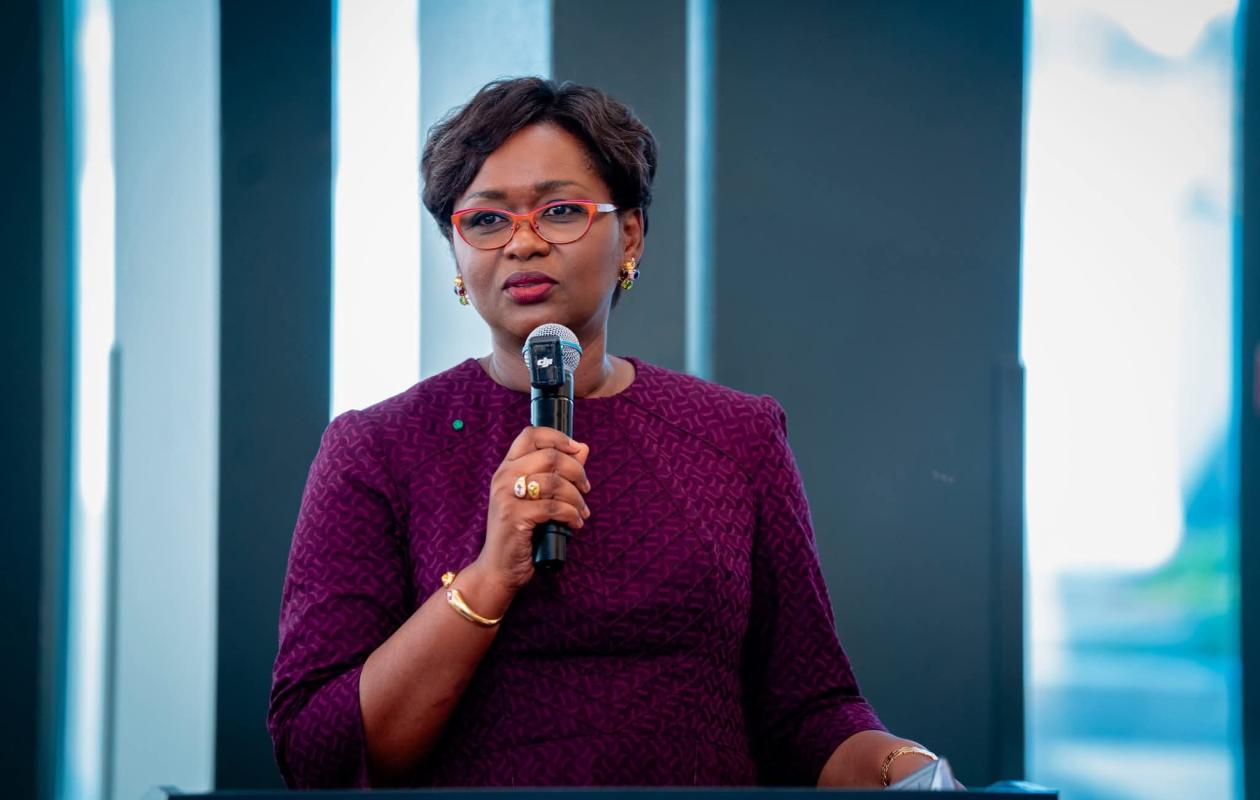
Les confidences de l'ancienne ministre Oulimata Sarr : « J'ai repris le fil de mes aspirations profondes »
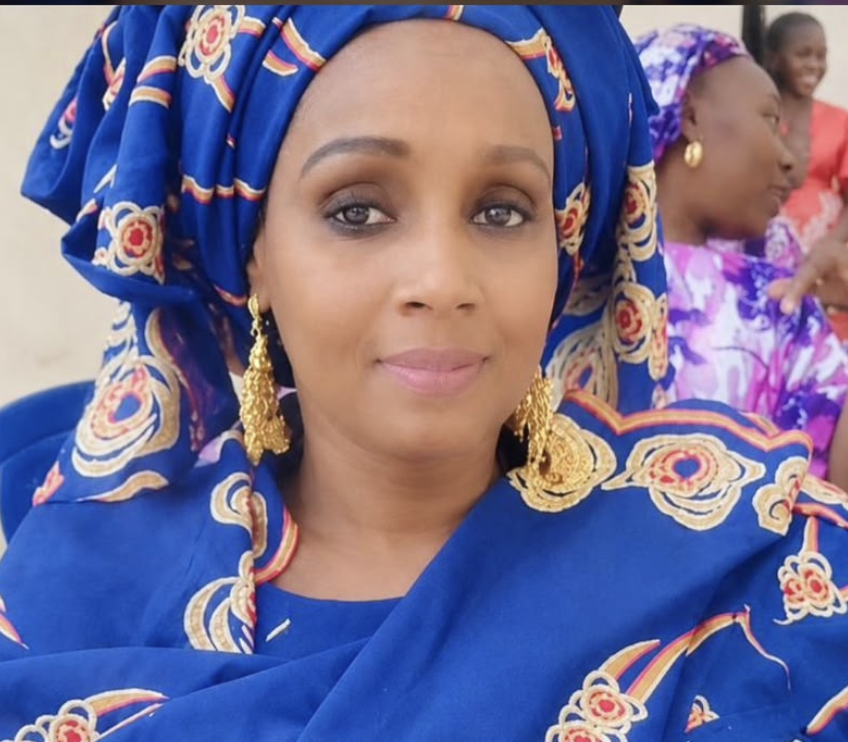
At the first African edition of the Goalkeepers Forum in Dakar, former Minister of Economy, Planning, and Cooperation, Oulimata Sarr, broke her silence on her departure from the government in October 2023. Describing it as a "liberating" moment, the leader recounted how she freed herself from partisan politics to return to her original calling: the economic empowerment of rural women. From her grandmother's legacy to solar-powered agricultural greenhouses financed with the Gates Foundation, and including a direct plea for accessible artificial intelligence in Wolof, this is the story of a career change driven by a disruptive vision of development.
Some departures feel like breakups, but they become true new beginnings. For Oulimata Sarr, October 2023 will forever be a month of liberation. When she was told she was no longer part of the government, the former minister didn't see it as the end of the road. Quite the opposite. She saw it as a unique opportunity to reconnect with her deepest aspirations.
“It was my most liberating moment because I no longer had a boss. I was free,” she confided to the Goalkeepers audience at this inaugural Dakar edition. After more than three decades of a fulfilling professional career, which began at the age of 22, she discovered a new sensation: that of no longer answering to a hierarchy. “For the first time in my life, I was free,” she emphasized. A freedom she chose to dedicate entirely to a passion that had been with her since her youth: the cause of women. For behind the former minister's career lies a woman who, she admits, would have liked to be an activist.
Born in Dakar, where she attended the Sainte-Jeanne-d'Arc school before pursuing her higher education in Canada, Oulimata Sarr presents her commitment as the true guiding thread of her life. From the student movement to the various international organizations in which she has served, she maintains a strong consistency: taking an active part in collective struggles.
The grandmother who paved the way
In her account, the former minister traces the origins of this commitment. She speaks with restrained emotion of her grandmother, Khadidio, an illiterate woman who had never attended school, yet who held a prominent place in the economic and social life of her community. In Kaolack, she managed a large rotating savings and credit association (tontine) and presided over a women traders' association at the market. A guiding figure who profoundly influenced her granddaughter long before the latter rose to the highest levels of public office.
“I stand on the shoulders of a grandmother,” she emphasized. With this statement, Oulimata Sarr pays tribute to those pioneering women who, without formal qualifications or institutional recognition, exercised natural leadership and championed the values of equality. This family legacy now takes on its full meaning with the creation of her foundation, the Awe Legacy Foundation , whose name explicitly evokes the notion of transmission. After retiring from public life, she decided to make the economic empowerment of rural women the beating heart of her new commitment.
Women demanding work, not assistance
This direction also stems from her immersion in the African continent. During a trip to Maiduguri, in northeastern Nigeria, she met survivors of the Chibok schoolgirls' abduction by Boko Haram, which became the global symbol of the "Bring Back Our Girls" campaign . What these young women asked for left a deep impression on her. They weren't simply asking for humanitarian aid; they wanted to work, start businesses, and reclaim their economic dignity.
“We want income-generating activities. We want to work. We want economic revitalization,” they told him. A similar appeal was made by other women he met in Niger and Burkina Faso, particularly in Dosso. Some even told him that, in their communities, the nature of wedding gifts has drastically changed: instead of furniture or traditional objects, they now receive containers for fetching water. “They are being given souls,” she reported, referring to the grueling daily task that deprives them of any free time.
For Oulimata Sarr, these testimonies reveal an urgent need: it is impossible to discuss empowerment without directly addressing the economic and social constraints that hinder women's entrepreneurial capacity. Her foundation has therefore adopted a disruptive approach, dubbed "business unusual ." The principle involves providing rural women with 500-square-meter agricultural greenhouses equipped with mini-boreholes and solar pumps. The goal is to enable them to produce, market, and generate their own income independently.
A first pilot greenhouse was installed in Sangalkam, before the program expanded to other locations, particularly in the Louga region. Despite initial reservations from some donors, the first results ultimately won them over. According to the former minister, some beneficiaries are now able to generate between $1,000 and $3,000 per cycle. After self-financing the first five greenhouses in Senegal, the organization received support from the Gates Foundation in 2025 to install ten additional greenhouses. Today, the network has fifteen operational agricultural greenhouses across the country.
" Let's not talk about artificial intelligence without the fundamentals."
But why deliver this message at an international meeting focused on innovation and artificial intelligence? For Oulimata Sarr, the answer lies in the fundamental needs expressed by these rural women, too often forgotten at major technology forums.
“I came to bring you the message of those women who are not in this room today,” she told the audience. These women are well aware that the world is changing and that technology is accelerating these transformations. But they emphasize that the digital revolution cannot be inclusive without certain basic prerequisites: internet access, electrification, and artificial intelligence solutions adapted to national languages. She specifically mentions the WhatsApp voice notes that these female farmers exchange daily in Wolof. For her, artificial intelligence must absolutely integrate their linguistic realities rather than remaining an elitist technology.
Her advocacy thus extends beyond the realm of innovation itself to raise the issue of digital inclusion and the central role of rural women in the continent's technological transformation. Addressing the many young people who attended Goalkeepers , the former minister delivered a powerful call to action. Recalling the adoption in 2015 of the 17 Sustainable Development Goals (SDGs) by the 193 member states of the United Nations, she asserted that the new generation must urgently take the reins.
While her own career was long aligned with SDG 5 (Gender Equality and Women's Empowerment), she strongly encouraged young people to embrace SDG 9, dedicated to industry, innovation, and infrastructure, by investing heavily in research, science, and technology. From politics to grassroots activism, from her grandmother's legacy to the solar greenhouses of rural communities, Oulimata Sarr is guided by a single compass: unconditional commitment. Her departure from the government will not mark the retirement of a stateswoman, but rather the triumphant return of a lifelong activist, driven by an absolute conviction: Africa's development cannot happen without its women or its youth.















Commentaires (14)
Avec mes encouragements👍
Participer à la Discussion
Règles de la communauté
💡 Astuce : Utilisez des emojis depuis votre téléphone ou le module emoji ci-dessous. Cliquez sur GIF pour ajouter un GIF animé. Collez un lien X/Twitter, TikTok ou Instagram pour l'afficher automatiquement.
Se connecter
Commentez avec votre profil, votre photo, et soyez averti des réponses.