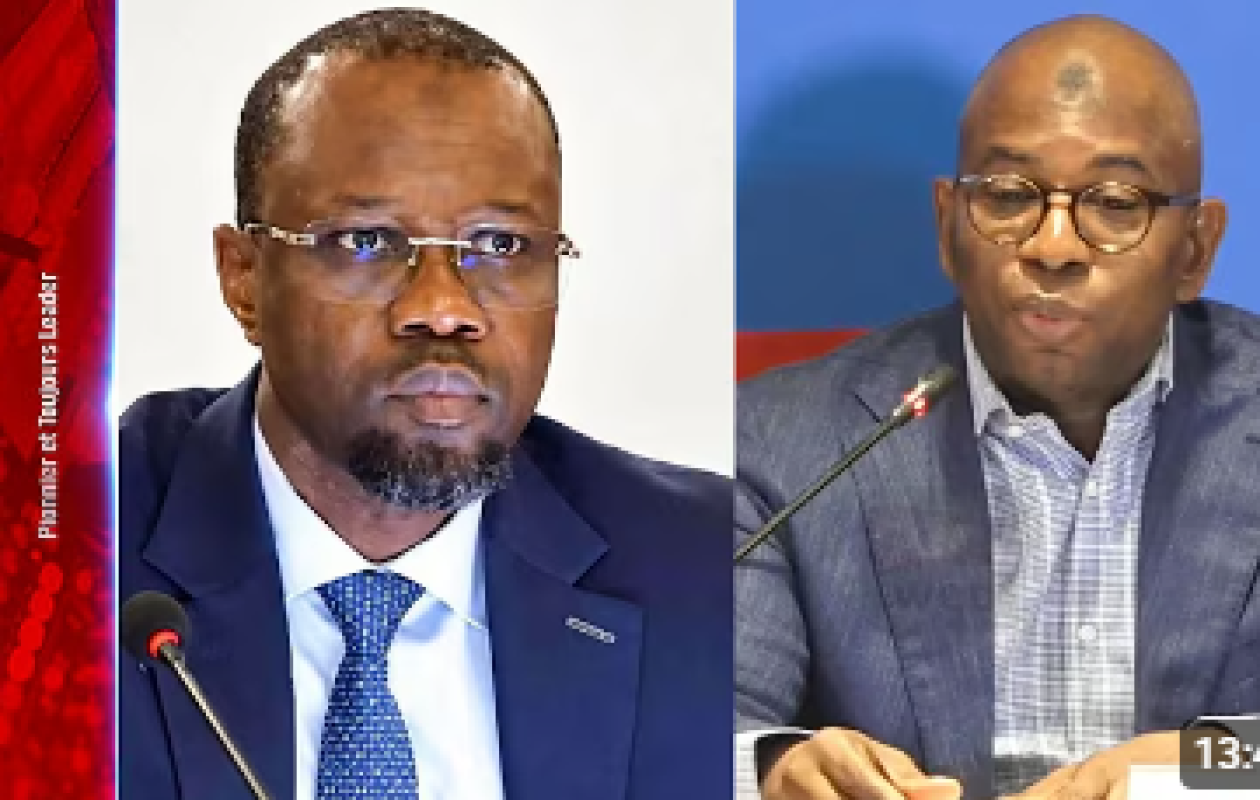
« Nous sommes comptables des cinq ans » : Moustapha Guirassy lance un appel solennel aux députés de Pastef
The Minister of National Education, Moustapha Guirassy, made a strong appeal to Pastef party members of parliament regarding the 2026 supplementary budget law. While defending the government's budgetary decisions, he urged the majority parliamentarians to show solidarity and place Senegal's interests above partisan considerations. He also advocated for the adoption of the bill to allow the state to fulfill its commitments. He was responding to a question during Prime Minister Al Aminou Lo's press conference.
“We stand together for five years.”
Moustapha Guirassy made no secret of his expectations for the Pastef parliamentary group in the debate surrounding the 2026 Finance Law. According to the minister, government officials and members of parliament from the majority party must demonstrate a strong sense of responsibility, particularly given the economic impact of the international crisis. "What we must emphasize is working and collaborating," he stated, adding that while differences of opinion are normal in a democracy, they must not overshadow the common good.
The minister particularly emphasized the collective responsibility of political actors stemming from the 2024 initiative. According to him, the commitments made to the Senegalese people cannot be separated from the government's performance, even when ministerial responsibilities change. "For five years, we are united," he stressed, explaining that as Minister of National Education, he considers himself accountable for the commitments made since 2024. He believes it would be inconsistent to divide the government's record into separate periods to avoid taking responsibility for decisions made collectively. In this context, Moustapha Guirassy also addressed the Takku Wallu parliamentary group, which abstained, while highlighting the political and institutional implications of the budget vote.
National Education: 31.3 billion FCFA in budgetary efforts
Addressing the situation in his department, the minister specified that the 2026 Finance Law anticipates a reduction of 171.7 billion CFA francs in the commitment authorizations for the national education sector. According to him, the reduction in available funds for the current year amounts to approximately 31.33 billion CFA francs. These adjustments primarily concern investments, particularly construction projects postponed in primary and, especially, secondary education. Operating expenses for primary schools are also being reduced.
Moustapha Guirassy, however, sought to downplay the significance of these cuts, asserting that they do not reflect a disengagement of the State from Senegalese schools. He highlighted teacher recruitment, training efforts, and classroom construction programs. He specifically mentioned a program to build 2,500 classrooms, as well as investments in training facilities. The minister nevertheless acknowledged the existence of structural difficulties in education funding. According to him, the sector absorbs a significant portion of public resources, while the proportion allocated to investments remains insufficient. To address this situation, he revealed that a proposal to create an independent fund dedicated to education financing is currently under consideration by the President of the Republic. This mechanism, he explained, would diversify funding sources and reduce the sector's dependence solely on the State budget.
"We must put the nation and the greater good first."
Beyond budgetary issues, Moustapha Guirassy called for a collective effort to address the economic difficulties and challenges facing Senegal. He specifically mentioned the repercussions of the international situation on public finances, economic partners, and creditor confidence. In this context, he believes that decisions must be based not only on technical considerations, but also on wisdom, discernment, and political responsibility.
The minister thus warned against a purely technocratic approach to budgetary decisions, arguing for consideration of the consequences of these decisions on the population and the future of the country. In conclusion, he called on members of parliament to support the 2026 supplementary budget law and to overcome political differences so that the state can continue to fulfill its responsibilities.













Commentaires (10)
Quand on quitte les critiques hors cadres pour entrer dans les détails du différent. La LFR suit la LFI. La LFR est une finalisation de la LFI. Or la LFI était de Sonko. Et Sonko a déroulé une LFI sans restructuration de la dette, sans FMI, en trouvant des moyens internes pour payer les dettes du FMI. Le déni ne peut pas aller jusqu'à refuser de reconnaître que Sonko a fait 2 ans sans rater aucune échéance de dette, et il l'a fait sans FMI et sans restructuration. Comment vouloir lui emmener une lettre de finance qui termine ce qu'il avait commencer, et qui programme le contraire de ses solutions et vouloir qu'il la vote ? La cohérence veut qu'il la rejette. Et il aurait expliqué pourquoi si le PM avait osé un débat.
Même quand le PM choisit le soutien des médias pour nier ce qu'on reproche à sa LFR, par exemple qu'il a supprimé des investissements prévus, il confirme en pensant nier. Ou alors, c'est son ministre des finances qui fait une sortie pour nier toute suppression d'investissement, et lui il vient préciser que les 500 milliards de financement n'ont été que différés. Or, différer depuis une deuxième et dernière lettre de finance d'un exercice budgétaire c'est tout simplement supprimer.
Voilà les gymnastiques du gouvernement Diomaye.
Participer à la Discussion
Règles de la communauté
💡 Astuce : Utilisez des emojis depuis votre téléphone ou le module emoji ci-dessous. Cliquez sur GIF pour ajouter un GIF animé. Collez un lien X/Twitter, TikTok ou Instagram pour l'afficher automatiquement.
Se connecter
Commentez avec votre profil, votre photo, et soyez averti des réponses.