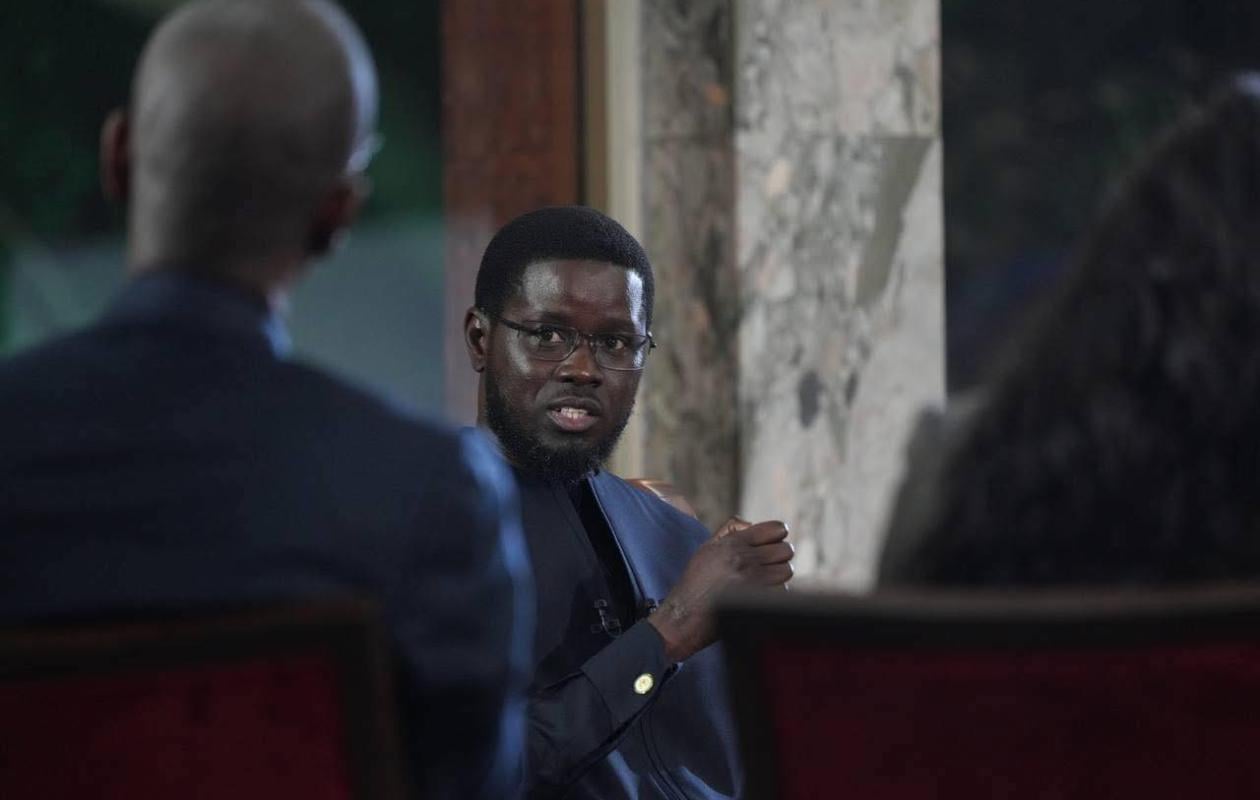
«Pourquoi j’ai tenu à les partager…» : Les vérités de Diomaye Faye sur la publication des avant-projets de réformes
On April 27th, the President of the Republic unveiled four preliminary drafts of constitutional and electoral code reforms, ahead of their submission to the National Assembly. These draft texts are designed to incorporate into our laws the conclusions reached during the National Justice Conference and the National Dialogue on the Political System. This Thursday, the Head of State explained why he insisted on sharing these preliminary drafts with the public.
"When they were drafting the consensus code of 1992, I was in primary school. And I could not have known then that it was under this code that I would be elected President in 2024. So in designing the electoral code of 2026, let us say that for the next thirty years, it is this code that must guarantee a peaceful electoral process," explained the Head of State this Thursday, while receiving the ambassadors of peace.
"The constitution does not belong to us..."
He added: “I wanted to share the texts because the constitution doesn't belong to us. It transcends the mandate. We don't own the Constitutional Court, nor the law on political parties. Even though we were elected, our party is only twelve years old, while there are parties that have existed since independence. So, when undertaking a reform that affects political parties, we must discuss it with everyone. That's why, before its adoption by the Council of Ministers, I insisted that it be presented to everyone.”
Indeed, the preliminary drafts present four future reform projects. The constitutional revision will adapt the preamble, rebalance powers within the executive branch with new prerogatives granted to the Prime Minister, and strengthen parliamentary oversight. It will also clarify the incompatibility of the presidential office with the leadership of a political party, establish a Constitutional Court, and so on.
The preliminary draft and the four reforms
The other reform concerns the introduction of an organic law relating to the Constitutional Court. This will increase the number of members of the constitutional court from 7 to 9 judges. It will also introduce changes to the Court's jurisdiction regarding the regulation of the functioning of institutions and public authorities. Here, the objective is also to clarify the conditions under which an objection of unconstitutionality can be raised before the Court of Appeal and the Supreme Court.
The electoral code will also be reformed with the introduction of a National Independent Electoral Commission (CENI). This commission will be the independent electoral authority, endowed with legal personality and financial autonomy. The electoral code reform will also incorporate a single ballot paper, voting rights for detainees who have not been deprived of their civic rights, a revision of the conditions for disqualification from voting in criminal cases, the requirement to pay a deposit before collecting sponsorship forms, and other measures.
The final reform concerns political parties, whose legal framework, dating from 1981, will be modernized with new rules for their creation, operation, organization, suspension, and dissolution. The reform will also address the procedures for implementing public funding of political parties and the financial oversight by the Court of Auditors.














Commentaires (33)
Participer à la Discussion
Règles de la communauté
💡 Astuce : Utilisez des emojis depuis votre téléphone ou le module emoji ci-dessous. Cliquez sur GIF pour ajouter un GIF animé. Collez un lien X/Twitter, TikTok ou Instagram pour l'afficher automatiquement.
Se connecter
Commentez avec votre profil, votre photo, et soyez averti des réponses.