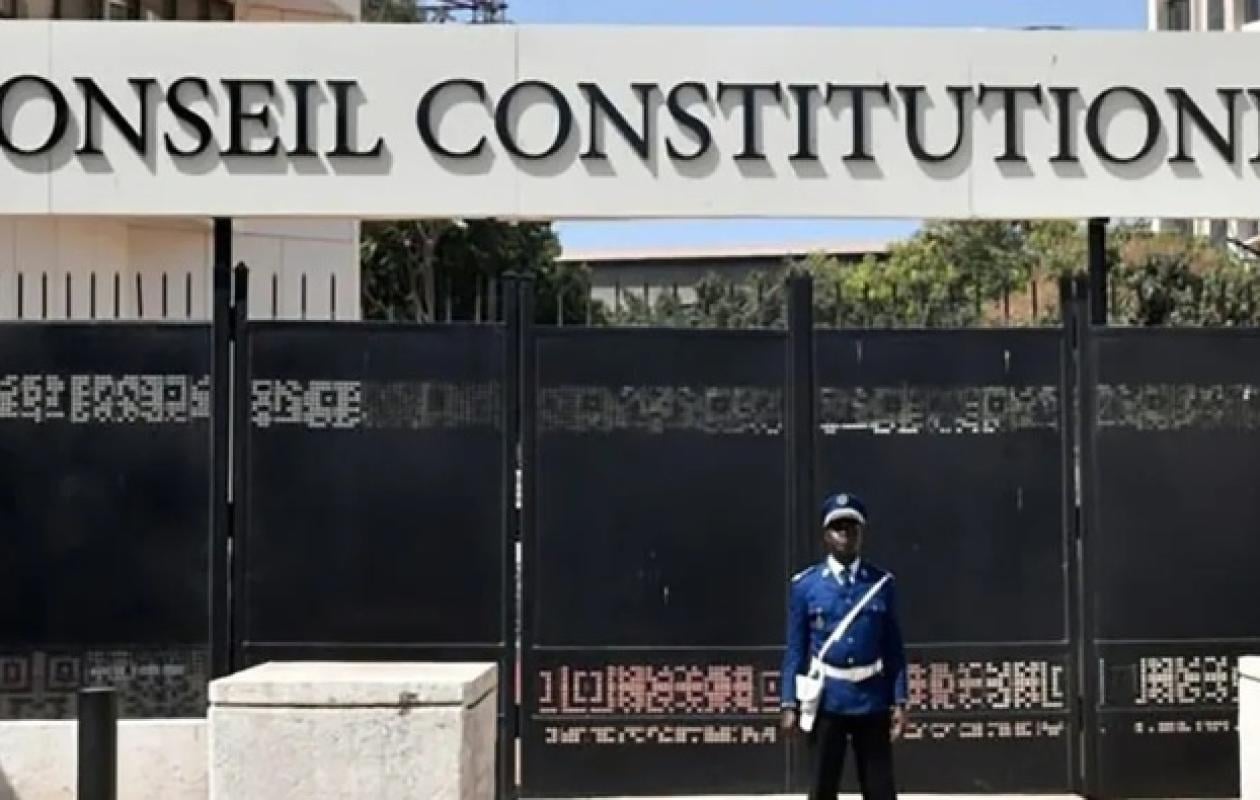
Révision constitutionnelle : Un collectif d'enseignants-chercheurs demande un arbitrage par référendum et s'oppose à la majorité
A war of words is raging within Senegal's academic and intellectual circles regarding the reform of the constitution. A group of professors and researchers, united under the umbrella of the Network of Academics for the Defense of the Constitution and Democracy, published a remarkably vehement statement on Monday, June 29, 2026, the day of the vote in the National Assembly. This text is a direct response to the open letter published the previous day by the writer Boubacar Boris Diop and 142 other prominent figures, who urged members of parliament to enact the proposed constitutional revision.
Taking a stance contrary to that of their peers, the members of the Network reiterate that the Constitution "stands at the pinnacle of all the Republic's values" and must not be amended "in a climate where profound questions persist regarding the approach, the underlying motivations, the content, and the consequences." Denouncing a dynamic of "betrayal and coercion," they assert that parliamentarians are making a historical error of judgment because the major revision of the charter "must be inclusive and impartial, transcending generations." They insist that this revision "must be driven by the people and not by any form of representation, even parliamentary."
Regarding the substance of the text submitted to the vote, the group of academics develops an extremely critical analysis of the institutional balances redefined by the majority. According to them, the parliamentary initiative aims at nothing less than a clandestine systemic shift, asserting that its objective is "to change the political regime of Senegal by imposing a parliamentary system without the people's knowledge." They are concerned that the proposed law "reduces the powers of the President of the Republic to their bare minimum" and imposes oversight that risks generating "an institutional crisis."
The Network is seriously questioning the true motives of the lower house, expressing particular alarm at the new prerogatives of the head of government, asking, "How can the elected President of the Republic share power with the Prime Minister by authorizing appointments to civil positions?" For these academics, this attempt to weaken presidential authority goes beyond the legitimate framework of the legislative process. They therefore level a major historical charge, asserting that "weakening or overthrowing the President of the Republic, even through Parliament, is nothing less than an act of coup d'état."
A solemn appeal for the direct arbitration of President Bassirou Diomaye Faye
Faced with what they describe as legislative encroachment on the executive and judicial branches, the signatories call for a return to consultation procedures and democratic patience. They emphasize that while Parliament possesses the power to amend the Constitution, this power must be exercised "imperatively in consultation with the President of the Republic, who determines the course of action." For them, "a mature democracy is not judged by the speed at which it amends its Constitution."
The group concludes its manifesto by solemnly calling on the President of the Republic, Bassirou Diomaye Diakhar Faye, to stand as a bulwark for "the defense of the Constitution and the rule of law by activating institutional mechanisms through direct popular arbitration." They believe that only a popular consultation via referendum can provide the necessary legitimacy for such an institutional upheaval, refusing to allow any "subterfuge, even a parliamentary one," to be violently imposed on the Senegalese social contract.
In direct response to Boubacar Boris Diop's collective, the Network gathered the signatures of numerous tenured professors and researchers from the country's leading universities. Among the first committed signatories are Professor Amadou Oury Ba of Cheikh Anta Diop University of Dakar (UCAD), Associate Professor Hamath Dia of Assane Seck University of Ziguinchor (UASZ), and Professor Mbacké Diagne of UCAD. They are supported by Bado Ndoye, Professor of Philosophy at UCAD, Ousmane Sall, Professor at Cheikh Hamidou Kane Digital University (UN-CHK), and Balla Diop Ngom, Professor and Vice-President of the African Academy of Sciences.
The list continues with Kalidou Sy, associate professor at Gaston Berger University of Saint-Louis (UGB), Khadim Thiam, professor at UGB, and Mouhamadou Mansour Dia, professor at UN-CHK. The legal and medical fields are also involved through Patrice Samuel Aristide Badji, professor at the Faculty of Law and Political Science (FSJP) of Cheikh Anta Diop University (UCAD), Ousmane Diao, professor at UCAD, and Ansoumana Diatta, full professor of pulmonology at UASZ.
Other leading academics also signed the document, including Oumar Dieye, Associate Professor of French Literature at UCAD; Benjamin Diouf, Associate Professor at UCAD; Ibrahima Diouf, Associate Professor at UCAD; and Lucienne Kodou Ndione, Associate Professor at the Faculty of Law and Political Science (FSJP) at UCAD. Finally, the commitment was completed by Pierre Mbid Hamoudi Diouf, Associate Professor at UCAD; Mor Fall, Lecturer and Researcher at UCAD; Papa Abdou Fall, Associate Professor at UCAD; and Djibrirou Daouda Ba, Geographer and Senior Lecturer at UCAD.









Commentaires (56)
Participer à la Discussion
Règles de la communauté
💡 Astuce : Utilisez des emojis depuis votre téléphone ou le module emoji ci-dessous. Cliquez sur GIF pour ajouter un GIF animé. Collez un lien X/Twitter, TikTok ou Instagram pour l'afficher automatiquement.
Se connecter
Commentez avec votre profil, votre photo, et soyez averti des réponses.