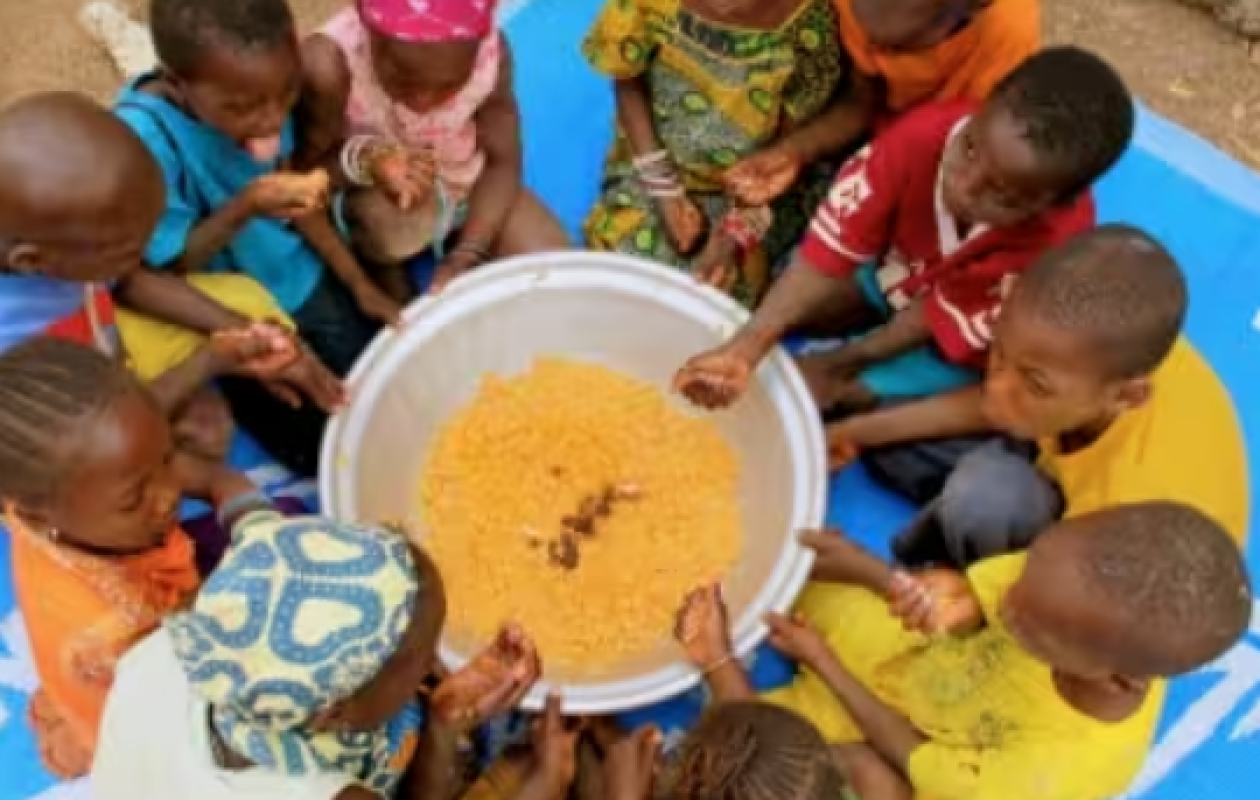
856 millions de dollars de pertes annuelles : Pourquoi la malnutrition reste un défi majeur au Sénégal
Senegal has made significant progress in the fight against malnutrition over the past fifteen years. But behind this progress lie deep disparities and a heavy human and economic cost. Every year, the country loses the equivalent of $856 million due to malnutrition. This figure serves as a stark reminder that the battle is far from over.
When discussing investments to develop a country, attention often turns to roads, infrastructure, or major economic projects. However, according to Dr. Mbaye Sène, Executive Secretary of the National Nutrition Development Council (CNDN), the most profitable investment begins well before birth: that dedicated to nutrition. "When a child does not receive the nutrients they need to grow, learn, and fully develop their potential, the country loses part of its future," he stated during a meeting with media professionals. This statement alone encapsulates the issue. Nutrition is not merely a public health matter. It directly influences learning abilities, academic success, economic productivity, and ultimately, a nation's competitiveness.
Progress that deserves to be commended.
Senegal has not remained idle in the face of this challenge. The results achieved in recent years testify to the efforts made by the government and its partners. The stunting rate among children under five years of age has thus fallen from 26.5% in 2010 to 17.5% in 2023. This significant improvement reflects the effectiveness of interventions in the field of nutrition. These results are based in particular on strengthened nutrition governance centered around the National Nutrition and Health Committee (CNDN), which reports to the Prime Minister. More than twenty sectors and fourteen ministries are now working in a coordinated manner within the framework of a multi-sectoral strategic plan. For specialists, these advances demonstrate that a coherent nutrition policy can produce concrete results for the health and development of populations.
A challenge that remains present in vulnerable areas
Despite these achievements, malnutrition continues to affect thousands of Senegalese families. In several parts of the country, particularly in the most vulnerable areas, children still suffer from undernutrition and micronutrient deficiencies. These nutritional deficits compromise their physical growth and cognitive abilities from the earliest years of life. For Eugène Kaly, president of the Association of Journalists for Health, Population and Development (AJSPD), poverty alone does not explain this situation. According to him, the lack of information is also a major obstacle. Many parents want to feed their children well but do not always have the necessary knowledge about good nutritional practices. "Our role as journalists is to raise awareness among the population about behavioral changes and good nutritional habits," he explained. Last year, the AJSPD mobilized several journalists for a reporting competition in the health districts of Touba, Bambey, and Diourbel. This initiative will continue this year in partnership with the National Nutrition and Health Council (CNDN).
The new face of malnutrition
While undernutrition remains a concern, another phenomenon is gradually gaining ground: overweight and obesity. Senegal's nutritional profile now reveals a paradoxical situation. While some populations still lack essential nutrients, others are facing illnesses linked to diets too high in sugar, fat, and processed foods. Specialists now speak of a "double burden of nutrition." This trend is explained in particular by the nutritional transition observed in the country. Dietary habits are changing, physical activity is decreasing, and diet-related non-communicable diseases are becoming increasingly common. Malnutrition is therefore no longer limited to children. It also affects adolescents, adults, and the elderly.
A colossal economic bill
The consequences extend far beyond health. Every year, Senegal loses nearly $856 million due to malnutrition. Behind this figure lie children who learn less effectively in school, less productive workers, and higher healthcare costs. Conversely, the benefits of good nutrition are considerable. Data presented at the meeting shows that a well-nourished child is more likely to succeed in school and later earn a higher income. A 1% increase in height is associated, on average, with a 2.4% increase in future earnings. Another key finding: every dollar invested in nutrition generates an average of $20 in economic benefits for Senegal.
The media are called upon to play a central role
Faced with these challenges, the authorities are counting on increased media involvement. For Dr. Mbaye Sène, statistics and public policies alone are not enough to change behaviors. "What truly changes behaviors is understanding the issues," he emphasized. When a journalist explains the benefits of exclusive breastfeeding or raises awareness among families about balanced nutrition, they directly contribute to improving public health. The Senegalese government reaffirmed its commitment to strengthening the integration of nutrition into public policies during the Council of Ministers meeting on April 29, 2026. But to achieve this goal, collective mobilization remains essential. Because while progress has been made in recent years, malnutrition continues to deprive Senegal of a portion of its human potential. And in this fight, informing the public is already a form of action.


















Commentaires (1)
Participer à la Discussion
Règles de la communauté
💡 Astuce : Utilisez des emojis depuis votre téléphone ou le module emoji ci-dessous. Cliquez sur GIF pour ajouter un GIF animé. Collez un lien X/Twitter, TikTok ou Instagram pour l'afficher automatiquement.
Se connecter
Commentez avec votre profil, votre photo, et soyez averti des réponses.