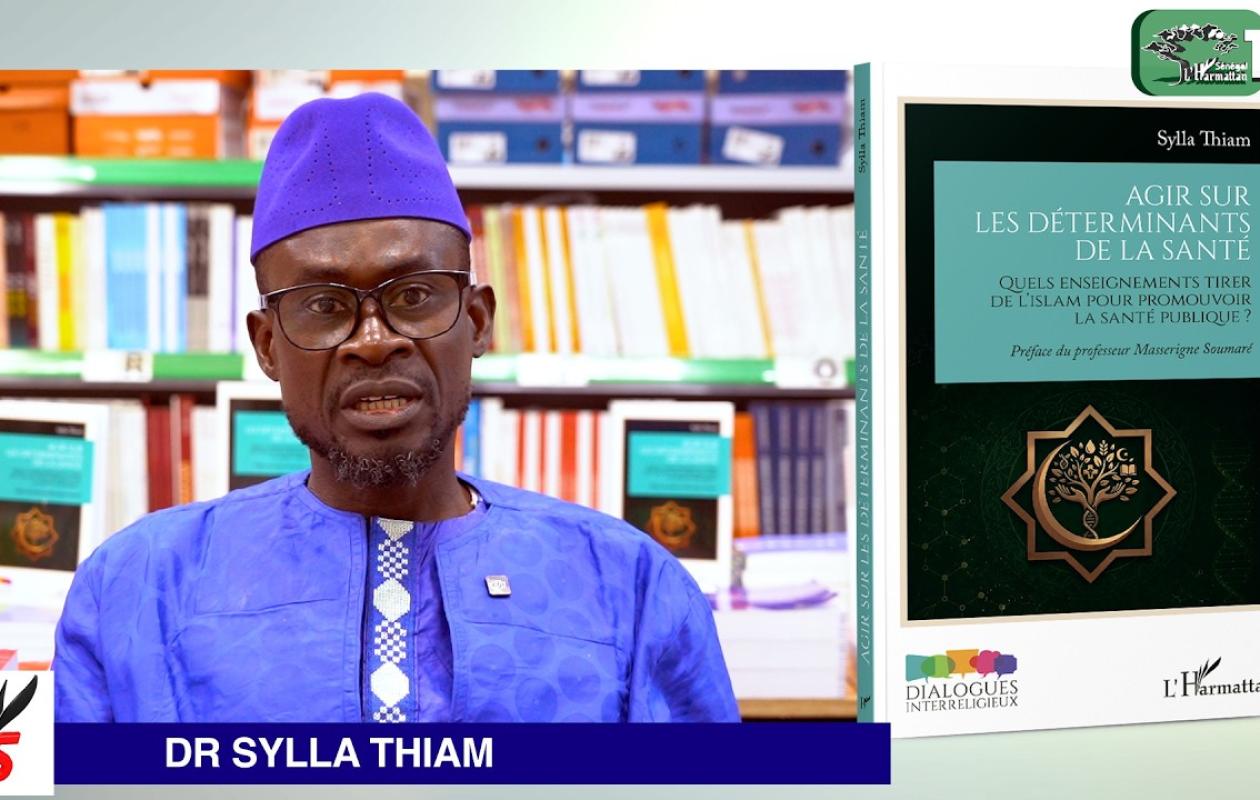
Comment réconcilier science et enseignements de l’islam pour mieux prévenir les maladies: Le professeur Sylla Thiam donne les pistes
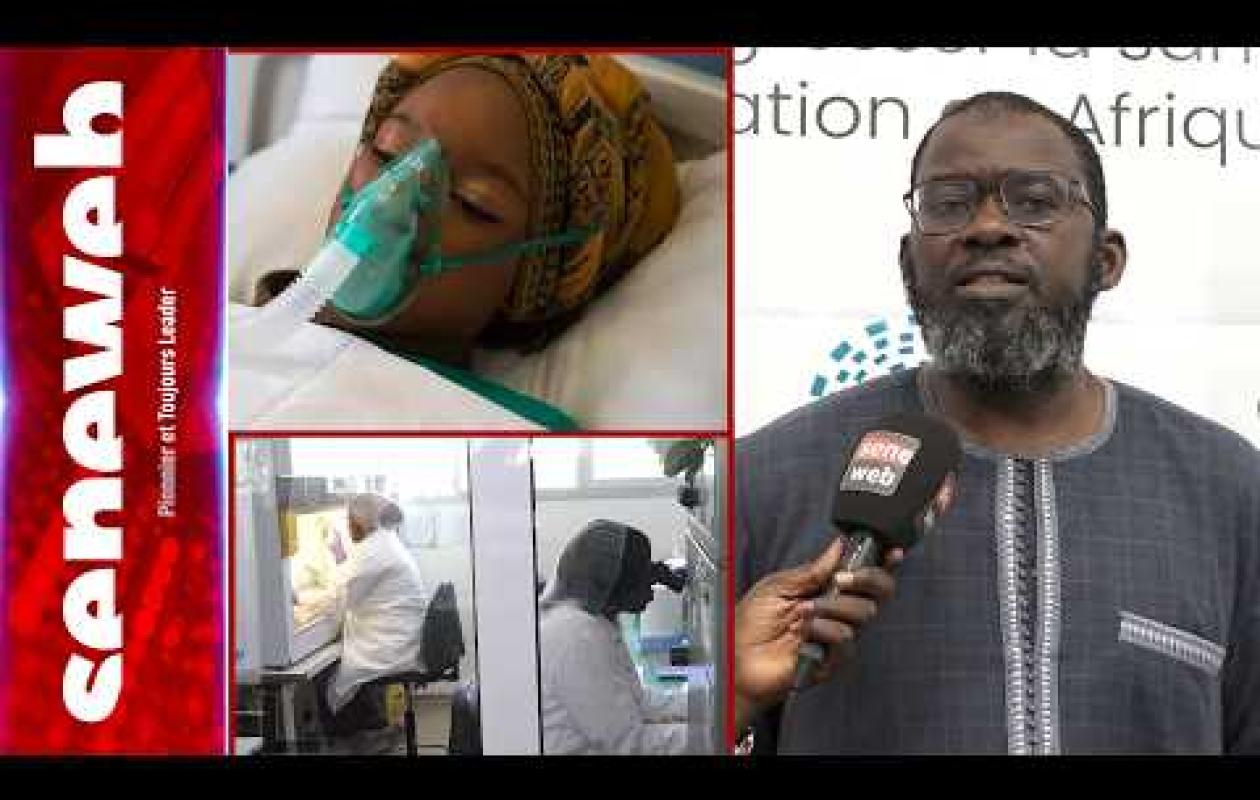
What if the teachings of the Quran and Sunnah could become genuine levers for public health? In his book "Acting on the Determinants of Health," physician and public health expert Sylla Thiam explores the links between Islamic precepts and scientific knowledge. This approach has been praised by Professor Lamine Guèye, a neurologist, who sees it as an original contribution to adapting health strategies to the cultural and religious realities of populations. Health is not solely determined by hospitals and health centers. It is also shaped by dietary habits, daily behaviors, the environment, social practices, and even beliefs. It is around this conviction that Sylla Thiam has built his book "Acting on the Determinants of Health," a reflection that brings modern scientific knowledge into dialogue with the teachings of Islam.
A physician, researcher, and public health expert with over twenty years of experience, the author proposes an interdisciplinary approach structured around five key determinants: genetics and biology, nutrition, lifestyle, the environment, and the healthcare system. His aim is to demonstrate how the precepts of the Quran and Sunna can contribute to strengthening prevention and improving health behaviors.
For Dr. Sylla Thiam, this reflection stems from an observation drawn from his professional experience in Africa. Public health strategies cannot be fully effective when they ignore the cultural and religious realities of the populations they are intended to serve. "When a strategy is not adapted to the cultural and religious beliefs of a population, there is little chance of success," he explains. After more than two decades of experience in various African countries, through health programs and research, he believes it is necessary to rethink certain approaches to better integrate them into social realities. The book, therefore, is not limited to theological reflection. It draws on significant scientific and religious documentation, including 206 modern scientific references, 32 references to cited Quranic verses, and 49 references to hadiths from collections recognized in the Muslim world, notably those of Bukhari and Muslim.
From fasting to prayer, prevention is at the heart of religious practices.
Among the topics covered, the author focuses particularly on the effects of Muslim practices on health. Fasting, prayer, diet, hygiene, breastfeeding, and social relationships are examined from the perspective of their health implications. Fasting is one of the examples cited by Sylla Thiam. According to him, this religious practice deserves special attention in discussions about the prevention of chronic diseases. He specifically mentions its effects on metabolism, the cardiovascular system, immunity, and mental health. Prayer also plays a significant role in his analysis. Beyond its spiritual dimension, the author examines the movements and various positions involved, as well as their potential physiological and psychological effects. Nutrition is another major focus. The book highlights the concept of permissible foods, the dietary habits recommended by Islam, and their relationship to the prevention of certain diseases. Breastfeeding, recommended for two years, is also presented as a means of protecting the health of both mother and child. The discussion extends to genetics, with particular attention paid to the early detection of hereditary diseases such as sickle cell anemia and hemophilia. The author also addresses the risks associated with consanguinity and the need for greater awareness among families.
In total, twelve courses of action are proposed. These include strengthening genetic screening, promoting breastfeeding, improving dietary habits, hygiene and sanitation, oral health, environmental protection, and equitable access to healthcare. Sylla Thiam also advocates for a more structured involvement of imams and other religious leaders in health education. In her view, these figures possess a capacity for mobilization that could be further leveraged in prevention campaigns, beyond periods of health crisis.
Professor Lamine Guèye praises this "original" and well-documented approach.
Present at the book launch, Professor Lamine Guèye, a neurologist, offered a particularly laudatory assessment. He considers this publication a scientific, religious, and educational contribution, informed by the author's dual expertise in public health and Islamic studies. The neurologist notably emphasized Sylla Thiam's methodological approach. For each determinant, Thiam begins by outlining the current state of scientific knowledge before comparing it with the teachings of Islam. Each chapter concludes with recommendations for individuals, communities, religious leaders, and policymakers. "A great deal of clarity, a great deal of relevance, a great deal of scientific transparency," noted Professor Guèye, who also stressed the book's wealth of documentation and the coherence of its argument. One of the major strengths of this publication, according to him, lies in its ability to make religious teachings useful for understanding contemporary health issues. He believes this approach can be of interest to healthcare professionals, the general public, religious authorities, and policymakers alike. The neurologist particularly emphasizes the importance of socio-economic factors and individual behaviors in determining health status. He stresses that prevention cannot rely solely on healthcare facilities, but must also consider lifestyle choices, social conditions, and the environment of populations.
For the authorities, Sylla Thiam calls for better integration of religious realities into health policies. He invites decision-makers to consider the teachings of Islam as complementary tools to existing prevention strategies. The author also announces that he is working on translating his book into Arabic and English. This expansion should allow him to reach a wider audience, particularly in English-speaking regions and within the Muslim world. He clarifies, however, that his book is not intended exclusively for Muslims. In his view, the reflections developed around the preservation of life, hygiene, nutrition, the environment, and prevention have universal relevance. "Acting on the Determinants of Health" thus poses a central question: how can we build more effective health policies by taking into account what truly shapes people's behavior? For Sylla Thiam, the answer also lies in dialogue between science, culture, and beliefs.

















Commentaires (6)
On ne peut pas dire mieux. Un scientifique cherche avant tout la reconnaissance des autres scientifiques de sa spécialité au lieu de manipuler le sentiment religieux. Résultat de cette manipulation en islam : le monde musulman, environ 25 pour cent de la population mondiale, ne produit que 0,01 pour cent (ou 1 pour 1000) des publications scientifiques.
Je suis désolé la science n'a rien à voir avec la religion. Quand cette dernière affirme que les anges existent, elle ne peut pas le démontrer et il est interdit de douter. Sinon, tu peux brûler éternellement en enfer.
Tandis que la science encourage le doute, mais un doute méthodique.
J'ai horreur des scientifiques qui ne prennent pas leur responsabilité et leur courage à pour affirmer que religion et science moderne sont deux mondes complètement différents.
Comme tout le reste de la cohorte maléfique, vous ne peut s' empecher de s' en prendre à Sonko. Cela en devient maladif
Je pense qu'un "NDEUP" collective devrait s'imposer pour certains.
A part cela , une hymne à la gloire de Diagna NDIAYE.
Certainement un autre candidat à une candidature, a qui vous avez pu vous vendre 😂.
Comme vous l'avez deja dit vous-meme dans le journal l'enquete ‘’Tous les journaux que j’ai créés ont fait faillite. Je ne suis donc pas une référence’’, ajoute-t-il pour décourager son interlocutrice. Parmi ces titres : ‘’Boy Dakar’’, ‘’Tract’’, ‘’Trast’’, ‘’Place Publique’’, ‘’Choc Banc Jaxle’’, ‘’Off-Shore’’ et enfin ‘’le P'tit railleur’’.
Cela s'appelle rater sa carriere 😂
Dernier recours: la pr*stitutiOn journalistique.
Participer à la Discussion
Règles de la communauté
💡 Astuce : Utilisez des emojis depuis votre téléphone ou le module emoji ci-dessous. Cliquez sur GIF pour ajouter un GIF animé. Collez un lien X/Twitter, TikTok ou Instagram pour l'afficher automatiquement.
Se connecter
Commentez avec votre profil, votre photo, et soyez averti des réponses.