
Diphtérie au Sénégal : L’épidémie change d’échelle, au-delà du décompte des cas (par Yandé Diop)
Nineteen new confirmed cases and three deaths in the districts of Saraya, Kédougou, and Salémata: the presence of children who have received no vaccinations and are under-vaccinated is worrying health authorities. Diphtheria is no longer a theoretical threat in Senegal. It has taken hold in several health districts in the Kédougou region and continues to mobilize health services. The latest update reports 19 new confirmed cases among 34 contacts being monitored, as well as three deaths. This development brings back to the forefront a disease that vaccination had largely contained.
According to information released on Monday, August 31, by Dr. Ababacar Mbaye, the epidemic incident manager at the Kédougou Regional Epidemic Management Committee (CRGE), these new cases were confirmed in the health districts of Saraya, Kédougou, and Salémata. The profile of those affected is particularly concerning: the ratio is 11 boys to 8 girls, and the median age of confirmed cases is 5 years. The youngest patient is 1 year old and the oldest is 20. Three deaths have been reported.
These three deaths were recorded respectively at the Bambaraya health post (Saraya district), the Ndiormi secondary health center—including one confirmed post-mortem—and the Tenkoto health post (Kédougou district). These tragedies occurred several weeks after an alert had been issued. On July 30, the Prevention Directorate of the Ministry of Health and Public Hygiene was informed of a series of deaths of children under five years old at the Amath Dansokho Regional Hospital Center in Kédougou.
Medical investigations revealed clinical signs suggestive of respiratory diphtheria: severe respiratory distress and difficulty, tonsillar hypertrophy, necrosis of the nasopharynx, and neck swelling. A retrospective review of medical records identified 11 suspected cases, all of whom died between August 2024 and July 2026. Two post-mortem samples were sent to the Pasteur Institute in Dakar, one of which tested positive on August 1, 2026.
From three cases to nineteen new cases
The increasing numbers allow us to measure the evolution of the epidemic. On August 12, three cases were confirmed in the districts of Saraya and Kédougou. By that date, health authorities had recorded 591 suspected cases between May and August 2026, while several child deaths were still under investigation.
On August 20, twelve new cases were confirmed in Saraya and Kédougou among 202 contacts. The median age was 4.5 years, with patients ranging from 4 to 13 years old. A few days later, the Mbour health district reported a case, bringing the total number of confirmed cases nationwide to 14, according to SeneNews . The latest figures released on August 31 mark a further step in the response, with 19 new confirmed cases in the three districts of Kédougou, Saraya, and Salémata, along with three deaths.
The case of Salémata expands the area of vigilance
The emergence of cases in Salémata is a major factor in understanding the epidemic. Until now, the majority of confirmed infections were in the districts of Kédougou and Saraya. Salémata's involvement demonstrates that surveillance must now cover the entire region.
Health authorities have therefore decided to maintain contact tracing, strengthen active case finding, and intensify advanced and mobile vaccination strategies. Samples continue to be sent to the Pasteur Institute in Dakar for analysis.
The real blind spot: the "zero dose" children
Beyond the number of confirmed cases, another figure is striking: 2,406 children aged 0 to 5 have been identified as having received no doses or being under-vaccinated in the region. In Saraya, health services have identified 1,310 under-vaccinated children and 1,096 who have not received any doses. In Kédougou, teams are also continuing to identify and vaccinate children who are insufficiently protected.
This is probably one of the major lessons of this crisis. Diphtheria is a vaccine-preventable disease. When children do not receive the required doses, communities become more vulnerable to the resurgence and spread of the pathogen. The Kédougou epidemic thus highlights a broader problem: that of children whom routine vaccination services are unable to reach.
A response is being organized.
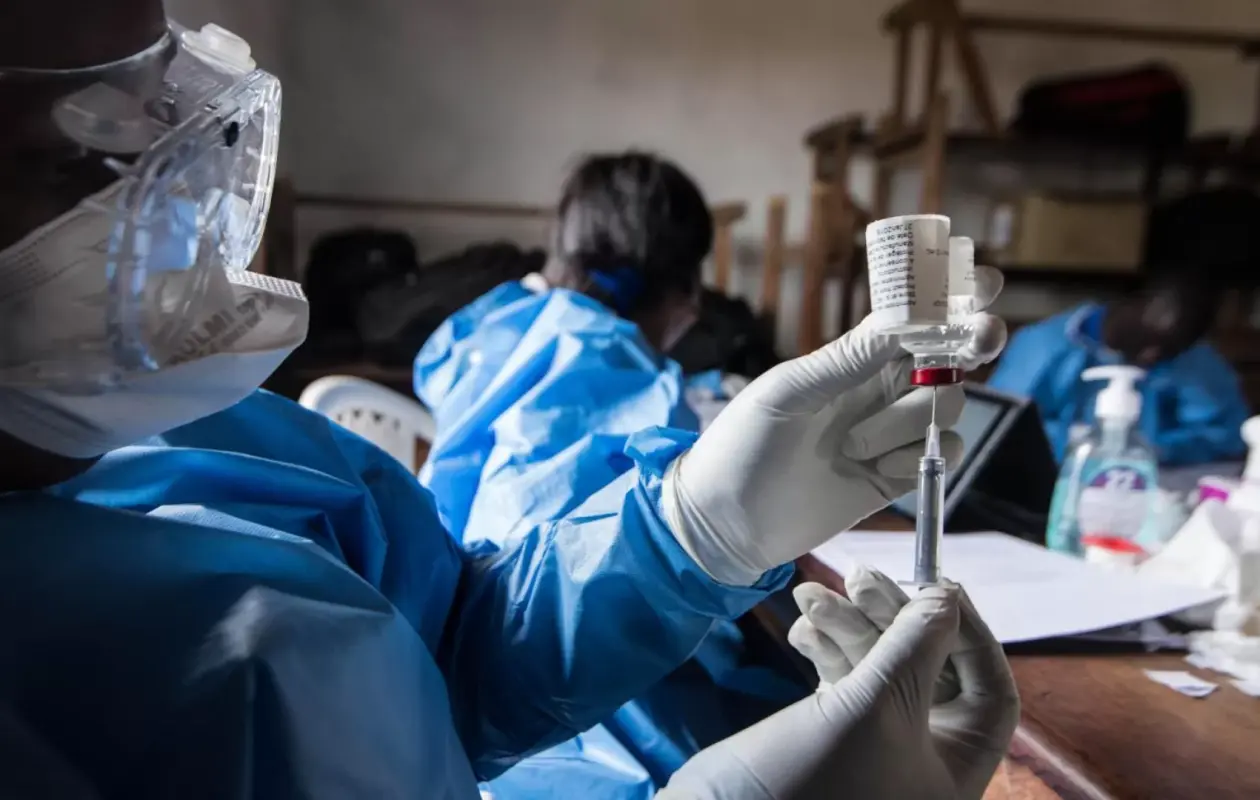
In response to this situation, health authorities have taken several actions. Preventive treatment of contacts is ongoing. Medications have been delivered to the affected health districts and to the Amath Dansokho Regional Hospital in Kédougou. Teams have also intensified community outreach: according to the head of the outbreak response, 187 home visits have already been conducted in 27 localities in Kédougou and 165 in Saraya as part of risk communication and community engagement efforts.
The strategy also relies on actively searching for children who have received no vaccinations and those who are under-vaccinated, in parallel with the supply of antitoxin. A departmental epidemic committee was also scheduled to meet on September 1st to monitor children who are not or insufficiently protected.
Antitoxin, a crucial issue
In the management of diphtheria, vaccination is the primary means of prevention, but it is no longer sufficient once a patient is already infected. Respiratory diphtheria produces a toxin that can severely damage several organs. Severe forms can lead to respiratory, cardiac, or neurological complications.
Access to diphtheria antitoxin is therefore becoming a crucial element of treatment. In Kédougou, health authorities announced the continuation of antitoxin supplies, in addition to making medication available in the affected districts.
Mbour: a signal to watch out for
The emergence of a case in Mbour adds a national dimension to an epidemic initially concentrated in the Southeast. On August 28, SeneNews reported the first case in the Mbour health district and stated that there were 14 confirmed cases nationwide at that time.
Even though the data is evolving rapidly and needs to be consolidated by national health authorities, this signal serves as a reminder that surveillance cannot be limited to the Kédougou region alone. Population movements, interregional exchanges, and family mobility make broader vigilance across the entire territory essential.
An illness that sometimes begins like a simple sore throat
Diphtheria can be misleading in its early stages. Fever, sore throat, fatigue, and swollen lymph nodes can mimic a common ear, nose, and throat infection. However, the onset of difficulty breathing or swallowing, neck swelling, or a whitish or grayish coating in the throat should be a cause for immediate concern. In the current context, any suggestive symptom in a child should prompt a prompt medical consultation. Under no circumstances should diphtheria be treated with self-medication.
Vaccinate to break the chain of transmission
Vaccination remains the essential weapon against the disease. Senegal has strengthened its vaccination program with the introduction of the hexavalent vaccine into the Expanded Program on Immunization (EPI). This vaccine protects against diphtheria, tetanus, pertussis, hepatitis B, Haemophilus influenzae type b infections, and poliomyelitis.
But the current epidemic demonstrates that the mere availability of the vaccine does not automatically guarantee protection for all children. The challenge now lies in the ability to reach those who have remained outside the system: children who have received no doses, under-vaccinated children, or populations living far from health facilities and in hard-to-reach areas.
Behind the epidemic lies the question of vaccine equity.
In Kédougou, the figures relating to unvaccinated children offer a different perspective on the situation. The question is no longer simply how many people have been infected, but also why some children have not been protected. Distances, access to healthcare facilities, information provided to families, the availability of vaccination services, and pediatric follow-up must be re-examined. Because behind every child who has not received a dose, there is potentially a break in the chain of prevention.
The diphtheria epidemic serves as a reminder that the fight against preventable diseases is not won solely in hospitals. It also takes place in health centers, villages, families, and at the heart of communities.
Kédougou under surveillance, Senegal on alert
In mid-August, the regional health director declared the situation "under control" after three cases were confirmed and a vaccination campaign was launched in the region. Since then, investigations have revealed new cases, and three additional deaths were reported in the latest update. The response therefore remains fully active. Contact tracing, case finding, vaccination of unprotected children, antitoxin supply, sample analysis, and community mobilization are now the main tools for containing the epidemic.
Senegal has one of the most effective tools against this disease: the vaccine. But the Kédougou epidemic serves as a reminder of a fundamental public health reality: a disease preventable by vaccination can become deadly again when populations remain insufficiently protected.
In the southeast of the country, the figures already reflect this vulnerability: nineteen new confirmed cases among 34 contacts traced, three deaths, and more than 2,400 children aged 0 to 5 identified as "zero doses" or under-vaccinated. Behind these figures lies the urgent need to ensure that no child is left behind in the vaccination program. The battle against diphtheria is now being fought on two fronts: treating those infected quickly and tracking down, child by child, those who have not yet been protected.
Yandé Diop




















Commentaires (0)
Participer à la Discussion
Règles de la communauté
💡 Astuce : Utilisez des emojis depuis votre téléphone ou le module emoji ci-dessous. Cliquez sur GIF pour ajouter un GIF animé. Collez un lien X/Twitter, TikTok ou Instagram pour l'afficher automatiquement.
Se connecter
Commentez avec votre profil, votre photo, et soyez averti des réponses.