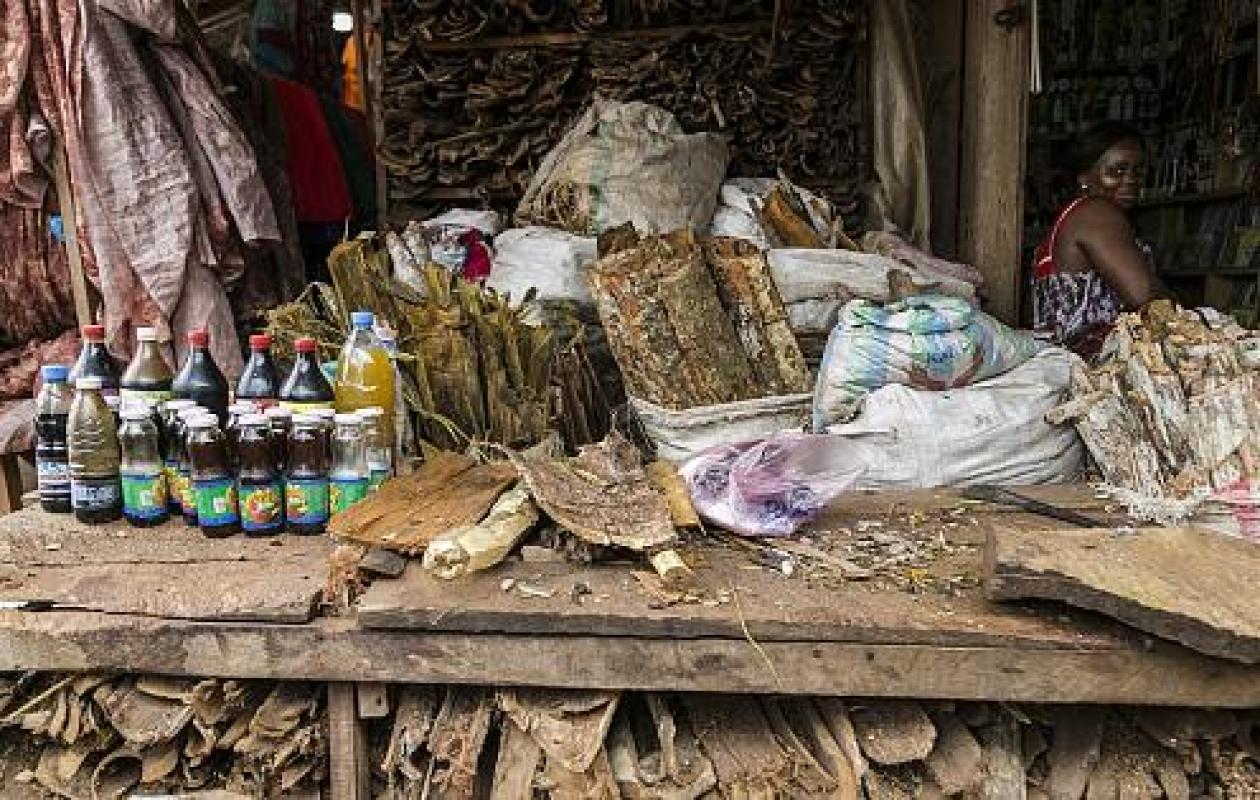
Médecine traditionnelle : Le Sénégal prépare une loi pour encadrer les tradipraticiens et vise 10 phytomédicaments d’ici 2030
Senegal wants to take a new step in the organization of traditional medicine. Representatives from the Administration, researchers, traditional healers and technical and financial partners are working to finalize a draft law intended to regulate traditional, complementary and integrative medicine for health (TCIM).
In parallel, the Local Pharmaceutical Industry Development Project Management Unit (UGP Pharma) aims to make ten phytomedicines from national research available to the population by 2030. Traditional medicine will soon no longer be just a matter of transmitting recipes and ancestral practices.
In Senegal, the authorities want to give it a more structured legal framework, capable of protecting patients, recognizing practitioners, and scientifically valuing the country's medicinal resources. This is the whole point of the workshop dedicated to finalizing and validating the draft law on traditional, complementary, and integrative medicine for health.
The importance of this undertaking is measured in particular by the extent to which these practices are used. According to estimates by the World Health Organization (WHO), up to 80% of the African population relies on traditional medicine to meet their basic health needs. In some rural areas, it even constitutes the main, or even the only, healthcare option available to the population.
This reality, fueled by the cost of conventional care, the shortage of medical staff, and also the reliance placed on therapeutic knowledge passed down from generation to generation, now necessitates better organization of the sector. A legal framework is needed to protect patients and traditional knowledge.
Speaking on behalf of the Minister of Health and Public Hygiene, the technical advisor in charge of pharmacy, Dr. Mor Diagne, noted that Senegal already has certain regulatory instruments in place. Law No. 2023-06 of June 13, 2023, concerning medicines, other health products, and pharmacy, and Decree No. 009189 of April 17, 2026, concerning herbal medicines, specifically address the product-related aspects.
However, these provisions do not sufficiently cover all the issues related to practitioners, their practices, research, the integration of traditional medicine into primary healthcare, or the protection of traditional knowledge and medicinal biodiversity. An initial draft bill was prepared in April 2017, but it was not passed.
In response to developments in the sector and new international trends, the Ministry has undertaken a review and consolidation process. This has resulted in a first draft of the preliminary bill, structured into six sections, 22 chapters, 83 articles, and ten regulatory annexes. Saly's objective is to move from this initial version to a consensus-based version 2.0, after reviewing and amending the various provisions. The text will then be incorporated into the Public Health Code, which is currently being drafted.
But behind this desire for regulation lies the question of food safety. The lack of standardized practices, the sometimes variable quality of products, and therapeutic claims that are not always based on scientific evidence all constitute risks for consumers.
For Dr. Mor Diagne, the challenge is to strike a balance between recognizing traditional healers, protecting patients, and preserving natural resources. He also emphasized the confidentiality of traditional knowledge shared during the work, which he considered a heritage to be protected.
Ten phytomedicines expected by 2030
Senegal intends to use traditional medicine as a lever for the development of its local pharmaceutical industry. This is the ambition championed by the coordinator of UGP Pharma, Professor Yérim Mbagnick Diop.
According to him, pharmaceutical development should not be limited to manufacturing medicines from imported molecules. It must also draw upon the richness of the national medicinal flora and local therapeutic knowledge.
Read also : "Traditional medicine: a traditional healer warns of the proliferation of fake healers"
In this context, UGP Pharma has integrated traditional medicine and herbal remedies into the pillars of its Local Pharmaceutical Industry Development Plan. Several initiatives have already been undertaken, including study missions to Indonesia, India, and Burkina Faso, to learn from the experiences of countries that have made significant progress in structuring this sector.
On the scientific front, 17 research projects dedicated to phytomedicines were validated by the supervisory body during a feedback workshop organized on February 23, 2026. These projects focus on priority pathologies and involve multidisciplinary teams composed of university researchers, clinicians and industrialists.
Ethnobotanical surveys were also conducted, resulting in the creation of monographs on medicinal plants for the Senegalese pharmacopoeia. These documents help define the botanical identity of the species, their characteristics, and the criteria for quality control.
Professor Diop, however, emphasizes a fundamental requirement: a traditional remedy can only be considered a medicine once its quality, safety, and efficacy have been demonstrated. The proposed approach thus relies on plant traceability, botanical identification, phytochemical characterization, standardization of active ingredients, and the necessary preclinical and clinical validations. The stated objective is to make ten phytomedicines developed through national research available to the Senegalese population by 2030. An operational roadmap covering the period 2026-2028 will support this ambition.
The future Centre of Expertise and Research for Drug Development (CERDM), led by UGP Pharma, should also contribute to strengthening national capacities for analysis and development.
For those in charge of the project, the future law represents a crucial step. It must, in particular, establish a legal status for practitioners, secure research activities, protect communities that hold traditional knowledge, and facilitate the development of products that meet regulatory requirements. Over three days, some sixty participants, divided into five thematic groups, will examine the text article by article.
At the end of the workshop, four deliverables are expected: a validated version 2.0 of the draft bill, a consolidated matrix of amendments, a roadmap for its integration into the Public Health Code and a general report.
For Senegal, the challenge is to evolve a widely practiced medicine towards a better regulated, scientifically documented sector capable of contributing to national health and pharmaceutical sovereignty.
















Commentaires (3)
Participer à la Discussion
Règles de la communauté
💡 Astuce : Utilisez des emojis depuis votre téléphone ou le module emoji ci-dessous. Cliquez sur GIF pour ajouter un GIF animé. Collez un lien X/Twitter, TikTok ou Instagram pour l'afficher automatiquement.
Se connecter
Commentez avec votre profil, votre photo, et soyez averti des réponses.