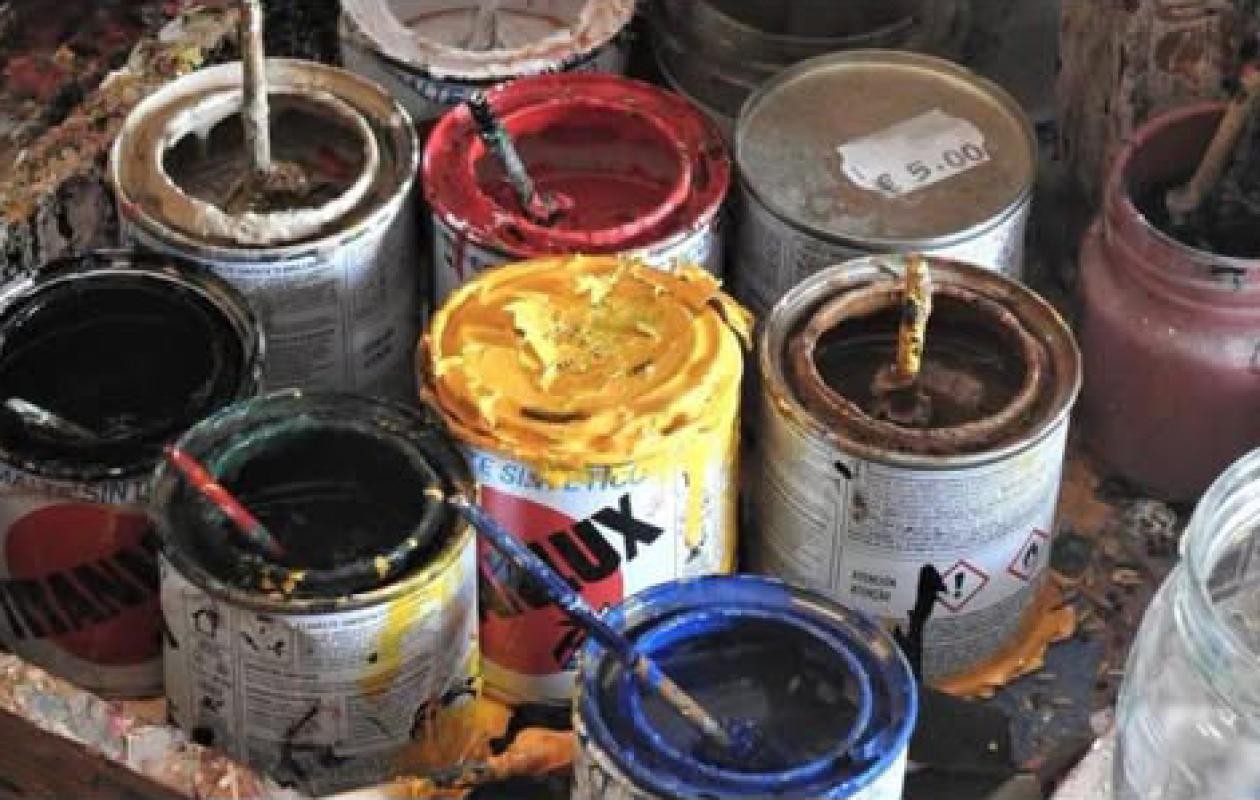
Peintures au plomb au Sénégal : Un poison mortel s'invite dans les maisons, des millions d'enfants menacés
Paints sold in Senegal contain lead concentrations up to four times higher than the WHO's recommended limit of 50 ppm. At least two million children are exposed to concerning levels of lead in their blood, according to UNICEF data reported in a study by the Poison Control Center. Invisible, silent, but extremely toxic. The lead contained in some paints sold in Senegal poses a persistent threat to public health.
Present in homes, schools and preschool facilities, this heavy metal exposes populations, particularly children, to health risks that are sometimes irreversible.
This is the alarming conclusion of a study conducted by the Poison Control Center between 2023 and 2025 and presented by the National Coalition for the Ban on Lead Paints in Senegal. Long used in the paint industry to improve color intensity, product durability, and corrosion resistance, lead remains a concerning contaminant.
However, alternatives exist today to replace it. But in Senegal, paints containing concerning concentrations of this heavy metal continue to be sold. The study's results highlight, in particular, paints whose lead content exceeds the limit of 50 parts per million (ppm) recommended by the World Health Organization (WHO). Some have concentrations nearly four times this threshold. This situation raises concerns about the control of products available on the market and the risks to consumers.
Children, the first victims of this exposure
The danger is all the more concerning because it is present in ordinary living spaces. When paint deteriorates, it releases contaminated dust and flakes. These can be inhaled or ingested, particularly by young children who frequently put their hands and various objects in their mouths. Homes, schools, and preschools and after-school programs are therefore all potential sites of exposure. This contamination can go unnoticed for a long time, without causing any immediately visible symptoms.
From a health perspective, the consequences are particularly serious. In children, lead can impair brain development, cognitive abilities, and learning skills. The damage can be irreversible and affect victims throughout their lives.
In adults, exposure is associated with cardiovascular, renal, and reproductive complications. Even more worrying, no level of lead exposure is considered completely safe. According to UNICEF data reported in the study, at least two million children in Senegal—nearly one in five—have concerning blood lead levels, exceeding 5 micrograms per deciliter.
Beyond individual health, this contamination also represents a considerable economic cost. Lead exposure is estimated to have resulted in losses of 5.9% of gross domestic product (GDP) in 2013, or approximately $1.49 billion. By compromising brain development, learning, and educational attainment, it reduces the income prospects of those exposed from childhood.
The environment is not spared. Lead released from deteriorating paint accumulates in soil and water. Unlike other pollutants, this metal does not degrade naturally. It can therefore persist in the environment for a long time, affecting plants and animals and weakening ecosystems.
Standards have been adopted, but the texts are still awaited.
Faced with this threat, Senegal does have some initial regulatory tools in place. A national standard, NS 09-059, has been developed regarding the lead content of paints. In 2022, the Senegalese Standards Agency also adopted the mandatory standard NS ECOSTAND 092-2022, setting the maximum permitted level of total lead in paints at 90 ppm.
In July 2023, ECOWAS Community Regulation C/REG.13/07/23 reinforced this framework by requiring member states to adopt their national legislation before the end of 2024. However, there is still a long way to go between regulatory commitments and their effective implementation. According to information provided by coalition members, the draft decree has been submitted to the General Secretariat of the Government (SGG), while the draft ministerial order has already been prepared.
None of these texts have been adopted to date. It is precisely this slowness that is causing concern among those involved in the fight against lead. They are now awaiting the publication of the implementing regulations to fully implement consumer protection measures. For behind the colors that beautify the walls of homes and schools sometimes lies a danger that neither parents nor children can see. And as long as paints containing dangerous concentrations of lead continue to be sold, exposure will remain a daily threat.






















Commentaires (6)
La vaisselle peut etre aussi concernee. Des batteries qui trainent encore...
Les alertes ne datent pas d'aujourd'hui. On attend la volonté !
Participer à la Discussion
Règles de la communauté
💡 Astuce : Utilisez des emojis depuis votre téléphone ou le module emoji ci-dessous. Cliquez sur GIF pour ajouter un GIF animé. Collez un lien X/Twitter, TikTok ou Instagram pour l'afficher automatiquement.
Se connecter
Commentez avec votre profil, votre photo, et soyez averti des réponses.