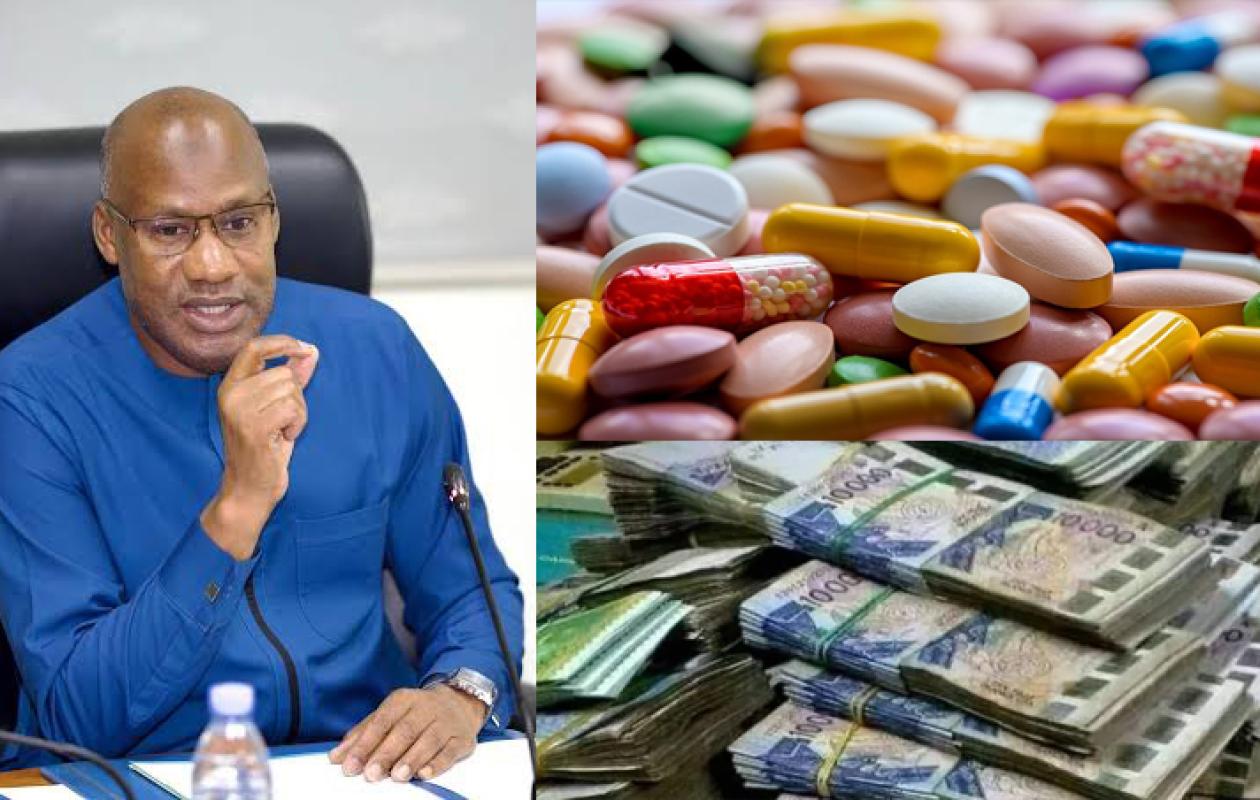
Pénuries de médicaments et coupes sur les soins : Les vérités dérangeantes du budget 2027 de la Santé
A budget rejected in committee despite a projected increase. Theoretically set at 246.6 billion FCFA for 2027 (+13.53%), the budget allocation for the Ministry of Health and Public Hygiene conceals serious structural flaws. A 7.8% drop in the availability of essential medicines, budget cuts to direct healthcare services, non-renewal of external financial support, and delays in maternal health: an X-ray of a budget proposal at the heart of the parliamentary storm.
The draft budget for the Ministry of Health and Public Hygiene was rejected in committee by the National Assembly. Despite this decision, the review report indicates that it will increase to 246.6 billion FCFA for the 2027 fiscal year, compared to 217.2 billion FCFA in 2026. However, behind this theoretical increase of 13.53%, the budget report highlights several critical health emergencies: the declining availability of medicines in public hospitals, insufficient investment in prevention, and persistent delays in prenatal care and newborn care.
On paper, the budget increase appears significant. For 2027, the Ministry of Health and Public Hygiene is forecasting a total budget of 246.6 billion FCFA, compared to 217.2 billion FCFA in 2026, representing an increase of 29.3 billion FCFA (13.53%). But behind this apparent increase, the impact indicators paint a worrying picture. The explanatory report reveals major supply chain disruptions. One of the most alarming figures concerns the availability of medicines and emergency supplies in public hospitals, which has declined by 7.8% compared to 2024. Stock shortages are severely impacting essential products such as IV fluids, antibiotics, anesthetics, anti-inflammatories, and analgesics, highlighting the sector's logistical vulnerability.
Maternal health and prevention: unattainable targets
The department's performance indicators also reveal significant shortcomings in preventive care. In 2025, only 27% of pregnant women received at least four quality prenatal consultations (compared to 17% in 2024), an improvement that remains far below the institutional target of 46%. Neonatal care also shows signs of weakness: the rate of newborn resuscitation declined from 95% in 2024 to 92% in 2025, while the target was 94.4%. The document highlights a pressing need for enhanced training and specialized equipment. On the other hand, the vaccination coverage against measles and rubella (RR1) in children aged 0 to 11 months shows an encouraging increase, climbing from 63.16% in 2024 to 87% in 2025, while remaining below the critical threshold of 95%.
On the non-communicable disease front, screening for hypertension among adults aged 18 and over increased from 5% in 2024 to 14.7% in 2025, still far from the target of 35%. To address these shortcomings, the Ministry has announced the creation of a clinic dedicated to diabetes and hypertension within the Touba health center.
A distribution of funds that raises questions
These financial decisions are raising serious concerns among parliamentarians. While the overall budget is increasing, the resources are not directly benefiting healthcare provision. The "Quality Healthcare Provision" program is indeed undergoing an 8.95% cut, declining from 134.9 billion FCFA in 2026 to 122.8 billion FCFA in 2027. Conversely, the "Steering, Coordination, and Administrative Management" program is skyrocketing, jumping from 58.3 billion to nearly 99 billion FCFA, an increase the ministry justifies by the transfer of personnel expenses from health facilities and districts to this administrative category.
Furthermore, prevention and health promotion account for 24.8 billion FCFA (+3.64%), but investments financed from the State's own resources amount to only a modest 711.3 million FCFA. The report also warns of the non-renewal in 2027 of external funding mobilized in 2026 by Belgium and the Global Fund for Maternal Health, Malaria and Endemic Diseases. Despite the announcement of major projects—such as the reconstruction of the Aristide Le Dantec Hospital, the rehabilitation of the Thiès Regional Hospital, and the Natangué 2026-2030 program—the real challenge will lie in the government's ability to translate these funds into tangible improvements for the daily lives of users.



















Commentaires (1)
Participer à la Discussion
Règles de la communauté
💡 Astuce : Utilisez des emojis depuis votre téléphone ou le module emoji ci-dessous. Cliquez sur GIF pour ajouter un GIF animé. Collez un lien X/Twitter, TikTok ou Instagram pour l'afficher automatiquement.
Se connecter
Commentez avec votre profil, votre photo, et soyez averti des réponses.